
Bureau of Wildlife Management: Impact on Sustainability

Balancing sustainability goals with operational demands can be tough for North American restaurants and hotels striving to make a real environmental impact. Eco-initiatives like biodegradable straw solutions are just part of the picture, as true progress also depends on responsible wildlife management. Federal agencies such as the Bureau of Land Management work to maintain habitats and support biodiversity, setting a valuable example for hospitality leaders who want to protect both business interests and local ecosystems.
Table of Contents
- Bureau of Wildlife Management Defined
- Types And Functions In North America
- Legal Frameworks And Stakeholder Roles
- Challenges Affecting Foodservice And Hospitality
- Benefits For Eco-Initiative And Sustainability Goals
- Integrating Wildlife Management With Biodegradable Products
Key Takeaways
| Point | Details |
|---|---|
| Wildlife Management Importance | The Bureau of Wildlife Management is essential for protecting diverse ecosystems and ensuring sustainable wildlife populations. |
| Collaborative Governance | Effective wildlife management requires coordination among federal, state, tribal, and local entities, incorporating varied local knowledge. |
| Legal Frameworks | North American wildlife management operates within complex legal guidelines that clarify responsibilities and foster cooperation among stakeholders. |
| Sustainability Challenges | The foodservice industry must address the intertwining challenges of wildlife management, such as habitat loss and supply chain vulnerabilities, to ensure operational sustainability. |
Bureau of wildlife management defined
The Bureau of Wildlife Management represents a critical governmental framework designed to protect, conserve, and sustainably manage wildlife populations across diverse ecosystems. This specialized organization applies scientific principles and local knowledge to steward wild animal populations and their habitats, ensuring ecological balance and environmental preservation.
At its core, wildlife management involves several key strategic approaches:
- Population monitoring and assessment
- Habitat conservation and restoration
- Scientific research on species dynamics
- Sustainable ecosystem management
- Collaborative governance across multiple jurisdictions
The Bureau of Land Management (BLM) manages wildlife under a comprehensive mandate that considers multiple use and sustained yield principles. This approach means balancing conservation efforts with other land use requirements, ensuring that wildlife populations remain healthy while supporting broader environmental and human needs.
Wildlife management is not merely about protecting individual species but understanding complex ecological interactions. Scientific and local knowledge guide wildlife stewardship to maintain sustainable populations, mitigate potential overpopulation challenges, and support critical ecosystem processes.
Collaborative Management Principles
Successful wildlife management requires intricate coordination between various stakeholders:
- Federal agencies
- State wildlife departments
- Tribal governments
- Local conservation organizations
- Scientific research institutions
Wildlife management transcends bureaucratic boundaries, representing a holistic approach to environmental conservation and ecosystem health.
Pro tip: Develop a comprehensive understanding of local wildlife systems before implementing any management strategies, as context-specific knowledge is crucial for effective conservation efforts.
Types and functions in North America
Wildlife management in North America encompasses diverse approaches and organizational structures designed to protect and sustain ecological systems across complex landscapes. Federal agencies manage wildlife habitats through comprehensive programs targeting multiple species and ecosystem types.
The primary types of wildlife management functions in North America include:
- Conservation and preservation of endangered species
- Habitat restoration and protection
- Population monitoring and research
- Ecological balance maintenance
- Sustainable resource management
- Human-wildlife interaction regulation
Organizational Management Frameworks
Forest Service and Bureau of Land Management collaborate to implement strategic wildlife management across designated wilderness areas. These agencies work together to balance wilderness protection with comprehensive wildlife stewardship, addressing critical ecological needs.
North American wildlife management typically involves multiple stakeholder groups:
- Federal wildlife agencies
- State conservation departments
- Tribal wildlife management organizations
- Academic research institutions
- Non-governmental conservation groups
Species-Specific Management Approaches
The wildlife management approach varies significantly depending on the target species and ecological context. Managers must consider complex interactions between:
- Mammalian populations
- Avian species
- Reptile and amphibian communities
- Endangered and threatened wildlife
Effective wildlife management requires adaptive strategies that respond to changing environmental conditions and ecological dynamics.
Pro tip: Develop interdisciplinary collaboration and integrate multiple scientific perspectives to create more comprehensive and effective wildlife conservation strategies.
Legal frameworks and stakeholder roles
North American wildlife management operates within a complex legal landscape that defines responsibilities, jurisdictions, and collaborative mechanisms across multiple governmental levels. The Wilderness Act establishes fundamental management guidelines for preserving ecological integrity while allowing strategic wildlife interventions.
Key Legal Frameworks include:
- Federal wildlife protection statutes
- State-level conservation regulations
- Tribal wildlife management agreements
- Migratory bird conservation treaties
- Endangered species protection laws
- Public land management regulations
Stakeholder Jurisdictional Responsibilities
BLM recognizes complex stakeholder interactions in managing wildlife populations. The legal framework strategically balances multiple perspectives, ensuring comprehensive and cooperative ecological management.

The primary stakeholders in wildlife management include:
Here is a summary of how key stakeholders contribute to effective wildlife management roles:
| Stakeholder Type | Primary Role | Value to Wildlife Management |
|---|---|---|
| Federal Wildlife Agencies | Set national guidelines | Ensure consistency and scientific rigor |
| State Conservation Departments | Manage local policies | Adapt strategies to regional circumstances |
| Tribal Governance Structures | Integrate traditional knowledge | Enhance cultural and ecological outcomes |
| Scientific Research Institutions | Provide data and analysis | Support evidence-based decisions |
| Local Environmental Offices | Implement actions on the ground | Ensure community engagement and compliance |
- Federal wildlife agencies
- State conservation departments
- Tribal governance structures
- Local environmental management offices
- Scientific research institutions
Interagency Coordination Mechanisms
Successful wildlife management requires intricate legal protocols that enable:
- Shared information systems
- Joint research initiatives
- Coordinated policy development
- Integrated conservation strategies
- Mutual resource allocation
Legal frameworks must remain flexible enough to adapt to changing ecological conditions while maintaining clear jurisdictional boundaries.
Pro tip: Develop comprehensive memorandums of understanding between agencies to clarify roles, responsibilities, and collaborative mechanisms in wildlife management.
Challenges affecting foodservice and hospitality
The foodservice and hospitality industries face increasingly complex challenges related to wildlife management and sustainable sourcing. Wildlife management confronts multiple ecological disruptions that directly impact food supply chains and operational sustainability.
Critical Sustainability Challenges include:
- Habitat loss from agricultural expansion
- Climate change ecosystem disruptions
- Disease transmission risks
- Unsustainable wildlife commercialization
- Biodiversity preservation constraints
- Supply chain vulnerability
Emerging Health and Safety Risks
Disease monitoring in wildlife populations presents significant challenges for food-related industries. These health risks require comprehensive strategies to ensure product safety and maintain consumer confidence.
The primary challenges impacting foodservice and hospitality sectors encompass:
- Food sourcing integrity
- Wildlife-related health risks
- Supply chain sustainability
- Regulatory compliance complexity
- Environmental conservation requirements
Economic and Ecological Interconnections
Sustainable wildlife management directly influences hospitality sector operational strategies by:
- Limiting available protein sources
- Increasing procurement costs
- Requiring advanced traceability systems
- Demanding more sophisticated risk management
- Necessitating transparent supply chains
Successful adaptation requires holistic approaches that balance ecological preservation with economic sustainability.
Pro tip: Develop robust supplier verification protocols that track wildlife sourcing practices and health certification to mitigate potential supply chain disruptions.
Benefits for eco-initiative and sustainability goals
The Bureau of Wildlife Management plays a pivotal role in advancing organizational sustainability through strategic ecosystem conservation and biodiversity protection. Wildlife management supports crucial ecosystem health by maintaining diverse populations and creating resilient environmental frameworks.
Key Sustainability Benefits include:
- Enhanced biodiversity preservation
- Ecological system restoration
- Climate change mitigation strategies
- Long-term resource conservation
- Sustainable economic development
- Reduced environmental vulnerability
Ecological Impact Mechanisms
National biodiversity policies demonstrate how wildlife management integrates green growth principles that minimize environmental disruption while promoting economic competitiveness.
The primary sustainability advantages encompass:
- Habitat protection and restoration
- Species population management
- Ecosystem resilience development
- Sustainable resource utilization
- Carbon sequestration support
Strategic Conservation Approaches
Sustainable wildlife management drives eco-initiatives through:
- Implementing conservation-focused research
- Developing adaptive management protocols
- Creating cross-sector collaboration frameworks
- Monitoring environmental change indicators
- Supporting regenerative ecosystem practices
Effective wildlife management transforms environmental challenges into opportunities for sustainable development and ecological preservation.
Pro tip: Integrate comprehensive ecological monitoring systems that track biodiversity indicators and provide real-time insights into ecosystem health and conservation progress.
Integrating wildlife management with biodegradable products
Biodegradable products represent a critical innovation in wildlife management strategies, offering sustainable solutions that minimize environmental impact and support ecosystem preservation. Wildlife management practices increasingly emphasize biodegradable technologies to reduce pollution and protect natural habitats.
Key Integration Strategies include:
- Reducing synthetic material contamination
- Minimizing wildlife habitat disruption
- Supporting ecosystem regeneration
- Promoting sustainable resource use
- Decreasing long-term environmental pollution
- Enhancing wildlife conservation efforts
Ecological Impact Considerations
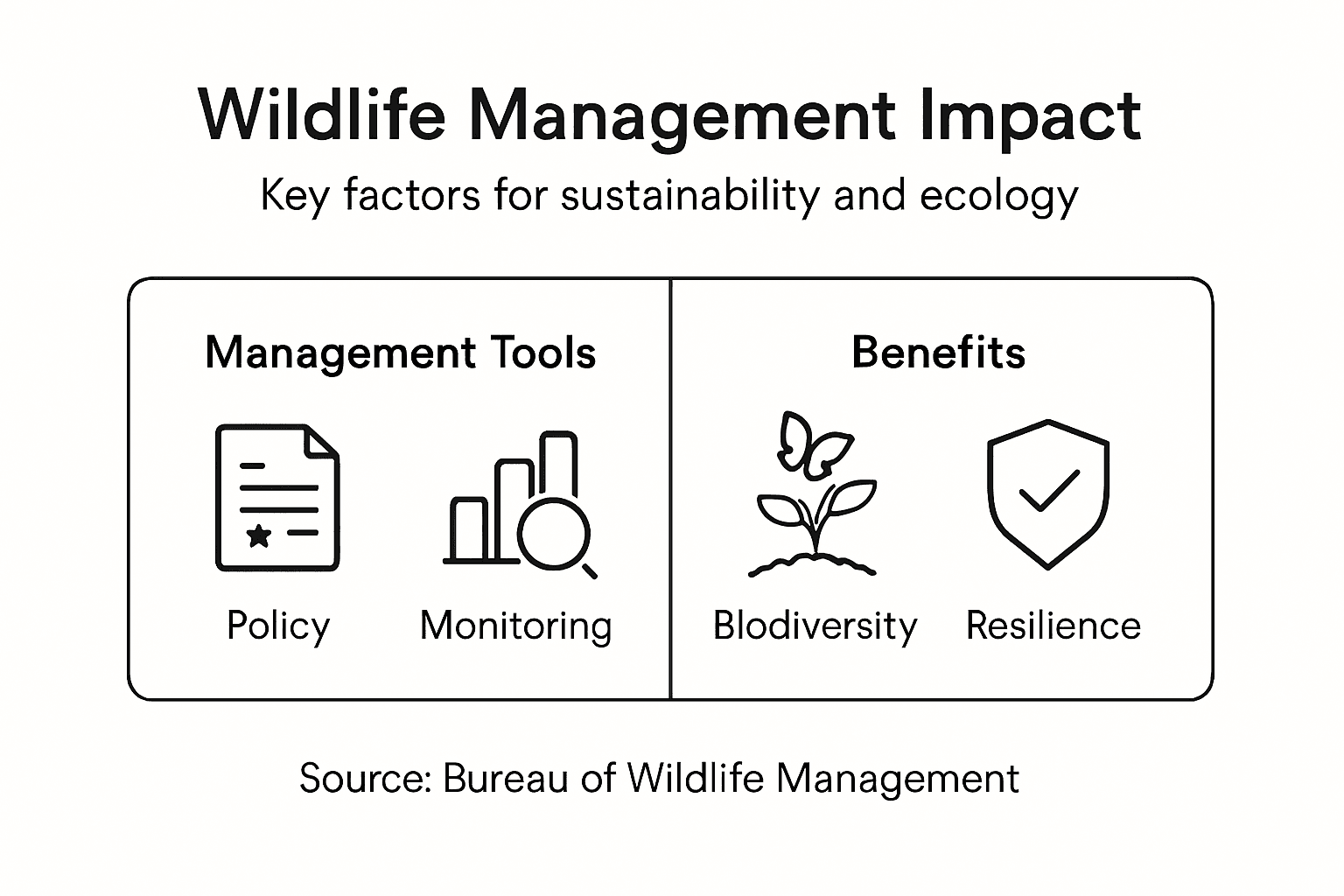
Sustainability policies prioritize biodiversity preservation through environmentally friendly material selection and waste management approaches that directly support wildlife conservation objectives.
The primary integration mechanisms encompass:
The table below outlines how biodegradable products enhance wildlife management strategies:
| Integration Area | Biodegradable Solution Example | Environmental Benefit |
|---|---|---|
| Habitat Restoration | Compostable erosion control mats | Minimize soil and water pollution |
| Wildlife Tracking | Biodegradable radio collars | Reduce material waste in ecosystems |
| Research Equipment | Plant-based sample containers | Lower toxic residue in habitats |
| Infrastructure Development | Renewable-source fences and signs | Protect native plant and animal life |
- Replacing traditional plastics with biodegradable alternatives
- Developing eco-friendly research equipment
- Creating sustainable monitoring tools
- Designing wildlife tracking materials
- Implementing habitat restoration technologies
Technological Convergence
Biodegradable product integration supports wildlife management through:
- Advanced material engineering
- Reduced chemical contamination
- Improved ecological restoration capabilities
- Enhanced conservation research tools
- Sustainable infrastructure development
Effective biodegradable technology integration transforms wildlife management from potential environmental disruptors to regenerative conservation partners.
Pro tip: Conduct comprehensive environmental impact assessments when introducing new biodegradable technologies to ensure they genuinely support ecosystem health and wildlife conservation.
Promote Sustainability with Eco-Friendly Solutions in Wildlife Management
The Bureau of Wildlife Management highlights critical challenges such as habitat disruption, pollution, and the urgent need for biodegradable products to preserve ecosystems and support biodiversity. For professionals in the foodservice and hospitality industry, integrating sustainable practices that reduce environmental impact is essential. Our innovative wood and plant-based straws offer a durable, safe, and fully biodegradable alternative to single-use plastics. This supports wildlife conservation efforts by minimizing synthetic waste that harms natural habitats and contributes to pollution.
Choose solutions that align with your sustainability goals and reflect responsible stewardship endorsed by wildlife management principles. At TheOceanStraw.com, we provide eco-conscious businesses with quality reusable straws designed to lower plastic contamination and promote green initiatives effectively. Discover how integrating sustainable products can enhance your eco-initiative while meeting regulatory compliance and customer expectations.

Take action today to reduce your environmental footprint and contribute to ecosystem resilience. Explore our trusted, environmentally responsible straw options at TheOceanStraw.com and start making a positive impact for wildlife and sustainability now.
Frequently Asked Questions
What is the role of the Bureau of Wildlife Management in sustainability?
The Bureau of Wildlife Management plays a crucial role in promoting sustainability by protecting ecosystems, conserving biodiversity, and implementing strategies that balance wildlife population health with human needs.
How does wildlife management contribute to climate change mitigation?
Wildlife management contributes to climate change mitigation by preserving diverse ecosystems, enhancing carbon sequestration, and supporting strategies that manage human impact on natural habitats, all of which help in reducing greenhouse gas emissions.
What kind of challenges does wildlife management face in foodservice and hospitality?
Wildlife management faces challenges such as habitat loss, climate change, disease transmission risks, and complexities in regulatory compliance, all of which can impact sustainability in food sourcing and operational practices.
How can biodegradable products enhance wildlife management strategies?
Biodegradable products can enhance wildlife management strategies by minimizing pollution, reducing habitat disruption, and supporting sustainable resource use, ultimately leading to healthier ecosystems.