Newsroom
How to Reduce E Waste with Sustainable Straw Solutions

How to Reduce E Waste with Sustainable Straw Solutions
Over 500 million straws are used daily by American businesses, yet most end up as waste rather than being reused or recycled. For sustainable product managers worldwide, the challenge of balancing convenience with environmental responsibility grows each year. This guide breaks down actionable steps for global food and beverage teams, offering clear methods to assess, improve, and document how reusable straw solutions can genuinely reduce electronic and material waste.
Table of Contents
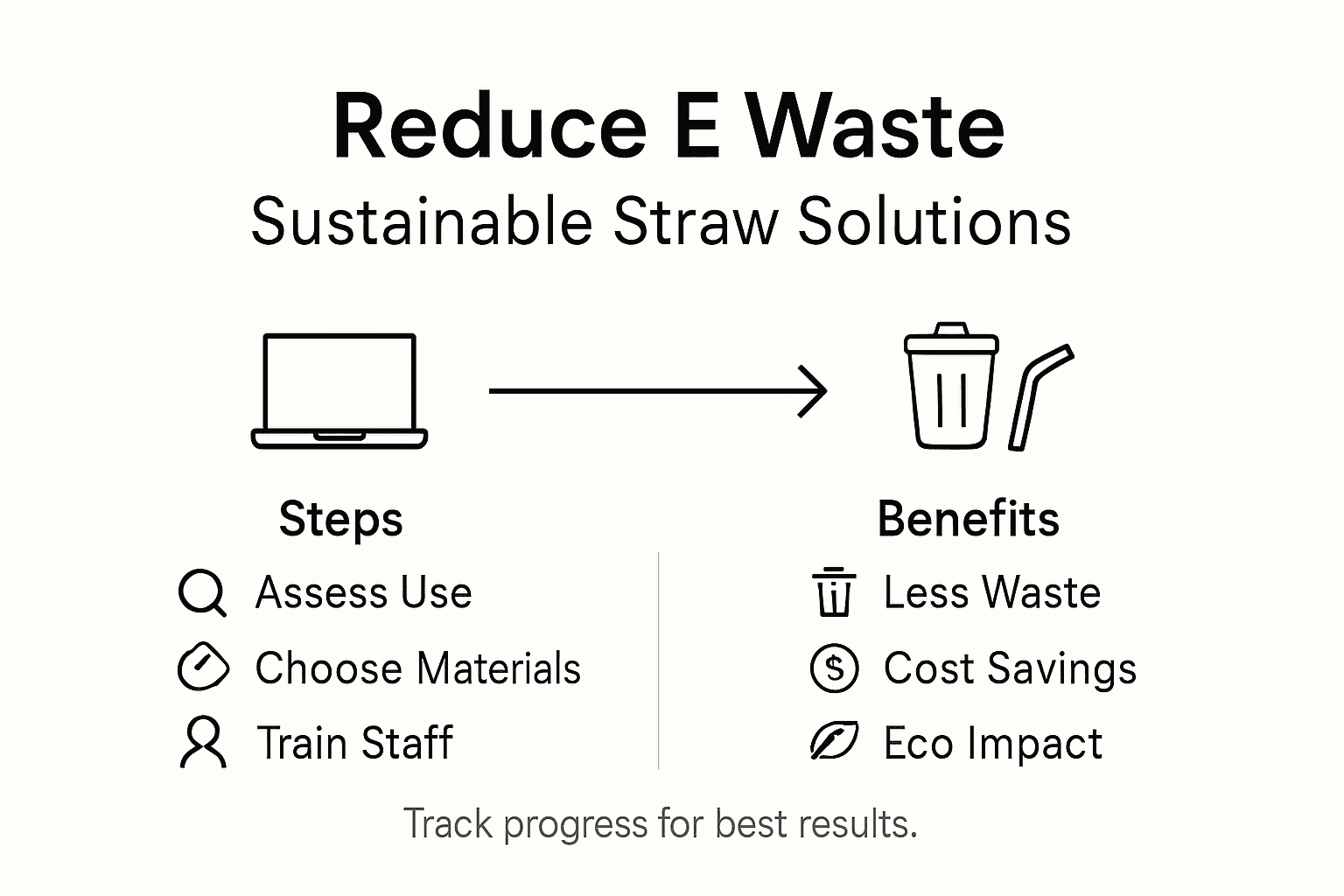
- Step 1: Assess Current Straw Use And Disposal
- Step 2: Identify Reusable Straw Alternatives
- Step 3: Implement Sustainable Straw Procurement
- Step 4: Train Staff On Proper Reuse Protocols
- Step 5: Verify Reduced E Waste Outcomes
Quick Summary
| Key Point | Explanation |
|---|---|
| 1. Assess current straw use and disposal | Document your straw inventory and waste management practices to identify areas for improvement and develop eco-friendly strategies. |
| 2. Identify reusable straw alternatives | Explore various reusable straw materials; conduct pilot tests to evaluate their durability, cleaning ease, and sustainability. |
| 3. Implement sustainable straw procurement | Develop clear procurement principles prioritizing environmental and social responsibility in supplier selection and contracts. |
| 4. Train staff on proper reuse protocols | Create training programs covering straw handling and maintenance to ensure staff understand sustainability’s importance. |
| 5. Verify reduced e-waste outcomes | Track metrics on straw waste reduction and environmental impact to demonstrate progress and refine sustainability efforts. |
Step 1: Assess current straw use and disposal
Identifying your organization’s existing straw consumption and waste management practices is the critical first step toward reducing electronic waste through sustainable solutions. By conducting a comprehensive assessment, you can pinpoint areas of improvement and develop targeted strategies for implementing more environmentally responsible alternatives.
Begin by documenting your current straw inventory and tracking usage patterns across different departments or service areas. Calculate the total number of straws consumed annually, noting the material composition and disposal methods. This detailed analysis will help you understand the environmental impact of your current practices. Consider analyzing straw disposal techniques similar to agricultural straw management strategies, which provide systematic evaluation tools for responsible resource utilization.
Next, examine your existing waste streams and identify opportunities for implementing more sustainable disposal protocols. Map out the current disposal routes for single use straws and evaluate potential recycling or composting alternatives. Understanding the full lifecycle of your straw consumption will enable more informed decision making about transitioning to eco-friendly solutions.
Pro tip: Create a digital tracking spreadsheet to monitor straw consumption and waste metrics, enabling real-time insights and easier reporting for sustainability initiatives.
Step 2: Identify reusable straw alternatives
Reducing electronic waste requires a strategic approach to selecting sustainable straw alternatives that meet your organization’s specific needs. Understanding the landscape of reusable straw options will help you make informed decisions that minimize environmental impact while maintaining functional requirements.
Explore the diverse range of reusable straw materials available in the market. Consider comprehensive alternatives beyond traditional plastic that balance durability, safety, and environmental responsibility. Evaluate materials like stainless steel, bamboo, glass, and plant based options according to your specific industry requirements. Each material offers unique benefits such as temperature resistance, recyclability, and biodegradability.
Critically assess the performance characteristics of potential straw alternatives by conducting pilot tests in your operational environment. Consider factors like material longevity, cleaning ease, customer acceptance, and overall sustainability profile. Document comparative results to help stakeholders understand the environmental and practical advantages of transitioning to more sustainable straw solutions.
Pro tip: Create a side by side comparison matrix of different reusable straw materials to objectively evaluate their performance and sustainability metrics.
Here’s a side-by-side look at popular reusable straw material characteristics:
| Material | Durability | Ease of Cleaning | Environmental Impact |
|---|---|---|---|
| Stainless Steel | Extremely durable | Dishwasher safe | Fully recyclable |
| Bamboo | Moderately durable | Hand wash recommended | Naturally biodegradable |
| Glass | Breakable but long lasting | Easy to inspect | Can be recycled entirely |
| Plant-Based | Less durable | May require special care | Compostable in ideal conditions |
Step 3: Implement sustainable straw procurement
Transitioning to sustainable straw procurement requires a comprehensive strategy that aligns your organization’s environmental goals with practical sourcing practices. By developing a robust procurement approach, you can significantly reduce electronic waste and support broader sustainability initiatives.
Begin by developing sustainable procurement principles that prioritize environmental and social responsibility. Create a detailed evaluation framework that assesses potential straw suppliers based on their sustainability credentials, including material sourcing, manufacturing processes, carbon footprint, and waste management practices. This framework should include specific criteria such as recyclability, biodegradability, production transparency, and long term environmental impact.

Establish direct relationships with suppliers who demonstrate a genuine commitment to sustainable manufacturing. Request comprehensive documentation about their production processes, including lifecycle assessments, environmental certifications, and transparency reports. Implement a scoring system that weights environmental considerations alongside traditional procurement metrics like cost and performance. Develop clear contractual requirements that mandate ongoing sustainability improvements and regular reporting on environmental metrics.
Pro tip: Develop a dynamic supplier scorecard that continuously tracks and incentivizes sustainability performance, allowing for iterative improvements in your procurement strategy.
This table summarizes essential supplier sustainability criteria for procurement:
| Criterion | Description | Business Impact |
|---|---|---|
| Material Sourcing | Uses eco-friendly raw materials | Reduces resource depletion |
| Production Transparency | Open reporting of processes | Enhances supplier credibility |
| Waste Management | Responsible disposal & recycling | Lowers operational footprint |
| Environmental Certifications | Holds recognized sustainability certificates | Builds stakeholder trust |
Step 4: Train staff on proper reuse protocols
Effective staff training is crucial for successfully implementing sustainable straw solutions and ensuring consistent environmental practices across your organization. By developing comprehensive training protocols, you can transform your team into proactive sustainability champions who understand the importance of reducing electronic waste.
Develop targeted training guidelines that cover every aspect of straw handling, cleaning, and maintenance. Create interactive training modules that emphasize practical skills such as proper cleaning techniques, inspection protocols, and quality assessment methods. Include hands on demonstrations that show staff how to identify wear and tear, sanitize reusable straws effectively, and understand the environmental impact of their handling practices.
Implement a continuous learning approach that goes beyond initial training. Establish regular refresher sessions, create visual reference materials, and develop a feedback mechanism that allows staff to share insights and challenges related to reuse protocols. Develop a recognition program that rewards staff members who consistently demonstrate excellent sustainable practices, reinforcing the importance of their role in reducing electronic waste and promoting environmental responsibility.
Pro tip: Create a digital training passport that tracks individual staff members’ sustainability skills and certifications, providing a clear pathway for professional development in environmental practices.
Step 5: Verify reduced e waste outcomes
Tracking and measuring the environmental impact of your sustainable straw initiatives is crucial for validating your waste reduction strategies and demonstrating meaningful progress. By implementing a robust verification process, you can quantify the tangible benefits of your sustainability efforts and communicate your achievements effectively.
Analyze comprehensive e-waste reduction metrics that go beyond simple volume measurements. Develop a multifaceted evaluation framework that captures both quantitative and qualitative data points, including total straw waste reduction, material recovery rates, lifecycle extension of reusable straws, and overall environmental impact. Create detailed tracking dashboards that compare your current performance against baseline measurements, highlighting specific improvements in waste generation, resource conservation, and carbon footprint reduction.
Establish a systematic approach to data collection and reporting that ensures transparency and credibility. Implement regular audit processes that involve third-party verification, conduct periodic environmental impact assessments, and develop comprehensive reports that showcase your organization’s progress. Integrate technology solutions that enable real time monitoring and provide actionable insights, allowing you to continuously refine and improve your sustainable straw management strategies.
Pro tip: Develop an interactive digital dashboard that visualizes your e-waste reduction progress, making complex environmental data accessible and engaging for stakeholders.
Transform Your E-Waste Strategy with Sustainable Straw Solutions
The challenge of reducing electronic waste through sustainable straw alternatives requires careful assessment, smart procurement, and effective staff training. By addressing pain points such as the durability and biodegradability of materials, as well as proper reuse protocols, businesses can achieve meaningful environmental impact while maintaining functionality. At TheOceanStraw.com, you will find innovative wood and plant-based reusable straws designed specifically for the foodservice and hospitality industries that combine durability, safety, and environmental responsibility.
Join the growing movement of businesses reducing their footprint by switching to reusable, biodegradable straws that support sustainability goals. Explore detailed product specifications, benefits, and wholesale options on TheOceanStraw.com. Act now to enhance your eco-initiatives by integrating high-quality sustainable straw solutions with trusted certifications and local distribution partners. Discover how your organization can lead the way in reducing e-waste effectively by visiting sustainable straw solutions. Take the next step and request samples or get in touch to start your sustainability journey today.
Frequently Asked Questions
How can I assess my organization’s current straw use to reduce e-waste?
To assess your organization’s straw use, document your current straw inventory and track usage patterns across different departments. Calculate total annual consumption and evaluate disposal methods to identify areas for improvement within the next month.
What reusable straw alternatives should I consider to minimize electronic waste?
Consider using materials like stainless steel, bamboo, glass, or plant-based options when selecting reusable straws. Evaluate these alternatives based on their durability and ease of cleaning to determine the best fit for your organization within the next few weeks.
How can I establish sustainable straw procurement practices?
Develop sustainable procurement principles that prioritize environmental responsibility when sourcing straws. Create an evaluation framework for assessing potential suppliers based on their sustainability credentials, completing this within 60 days to ensure responsible sourcing.
What training should I provide staff on proper straw reuse protocols?
Train staff on proper cleaning and maintenance of reusable straws to support sustainability initiatives. Develop interactive training modules and hands-on demonstrations, aiming to complete initial training sessions within 30 days.
How can I verify the reduction of electronic waste from my sustainability efforts?
Track and measure the environmental impact of your straw initiatives by developing a framework that captures both quantitative and qualitative data. Implement regular audits and reporting processes to ensure transparency and evaluate progress quarterly.
Recommended
- Understanding Biodegradable Wheat Straw for Sustainable Choices – The Ocean Straw
- How to Dispose of Straw Sustainably in Hospitality – The Ocean Straw
- How to Dispose of Plastic Straws Responsibly in 2025 – The Ocean Straw
- Understanding the Environmental Impact of Straws – The Ocean Straw
- Batterien recyceln: Alles, was Sie wissen sollten - accu.blog