Newsroom
How to Reduce Electronic Waste: Actionable Steps for Businesses

How to Reduce Electronic Waste: Actionable Steps for Businesses
Most American restaurants and hotels generate more than 50 million tons of electronic waste every year, driving urgent conversations around sustainability and responsible management. For owners across North America, tracking electronic devices and reducing single-use plastics is key to meeting eco-friendly goals while cutting costs. You will discover the most impactful steps to assess your current practices, prioritize upgrades, and build lasting solutions that protect your brand and the environment.
Table of Contents
- Step 1: Assess Current Electronic Waste Practices
- Step 2: Identify High-Impact Electronics for Replacement
- Step 3: Implement Sustainable Procurement Policies
- Step 4: Introduce Reuse and Recycling Programs
- Step 5: Verify and Monitor Waste Reduction Results
Quick Summary
| Key Insight | Explanation |
|---|---|
| 1. Conduct a Comprehensive Inventory | Start by documenting all electronic devices and their statuses to inform waste management strategies. |
| 2. Prioritize High-Impact Electronics | Identify devices contributing most to waste, focusing on replacements that improve sustainability. |
| 3. Implement Sustainable Procurement | Develop purchasing policies that prioritize energy efficiency and recyclability to reduce e-waste. |
| 4. Establish Reuse and Recycling Programs | Create systems for reusing, refurbishing, and recycling electronics to manage waste effectively. |
| 5. Monitor Waste Reduction Progress | Track and report on waste metrics regularly to evaluate and improve electronic waste management efforts. |
Step 1: Assess Current Electronic Waste Practices
Successfully managing electronic waste begins with a thorough understanding of your current waste generation and disposal practices. This step will help you develop a comprehensive strategy for reducing your organization’s electronic waste footprint.
Start by conducting a comprehensive inventory of all electronic devices within your business. This includes computers, servers, mobile devices, printers, networking equipment, and any specialized technological tools specific to your industry. The Global E-waste Monitor 2020 highlights the rapid growth of electronic waste worldwide, making this assessment critical for responsible management.
Documentate each device’s age, condition, and current usage status. Create a detailed spreadsheet tracking model numbers, purchase dates, last maintenance records, and potential replacement timelines. Pay special attention to older equipment that may be nearing end of life or operating inefficiently. By understanding your current electronic inventory, you can make strategic decisions about potential upgrades, repairs, or responsible disposal.
Next, analyze your current electronic waste disposal methods. Review existing contracts with waste management providers and assess whether they offer certified electronic recycling services. The International Labour Organization report indicates that less than one quarter of global e-waste is handled through formal collection systems, so verifying your provider’s credentials is crucial.
Pro tip: Consider scheduling a professional e-waste audit to get an independent, comprehensive assessment of your current electronic waste management practices.
Step 2: Identify High-Impact Electronics for Replacement
Reducing electronic waste requires strategic identification of devices with the most significant environmental impact. This step will help you pinpoint critical electronics that contribute most substantially to your organization’s waste stream and potential sustainability challenges.

MIT research highlights the importance of targeting specific electronic devices that pose major recycling challenges. Focus on key categories like smartphones, laptops, servers, networking equipment, and specialized technological tools that frequently become obsolete or difficult to recycle. Evaluate each device based on several critical factors including age, technological relevance, energy efficiency, and recyclability potential.
Create a comprehensive assessment matrix that ranks your electronic inventory according to replacement priority. Consider factors such as device performance, maintenance costs, energy consumption, and compatibility with modern sustainable technologies. Researchers at the University of Kentucky emphasize the critical value of devices like smartphones and laptops that contain valuable materials such as lithium, cobalt, and nickel, making their strategic replacement crucial for both waste reduction and resource conservation.
Pay special attention to devices over three years old, as these typically represent the most significant opportunities for sustainable upgrades. Look for replacement options that offer improved energy efficiency, modular design, and better recyclability. Document each device’s current specifications, estimated remaining useful life, and potential environmental impact to support your decision making process.
Here is a summary of common e-waste categories and their specific management considerations:
| Device Category | Management Priority | Main Environmental Concern |
|---|---|---|
| Computers & Servers | High, frequent upgrades | Hard-to-recycle composite materials |
| Smartphones | Critical, fast obsolescence | Rare metals require special handling |
| Printers | Moderate, less frequent | Plastics and ink residue |
| Networking Equipment | High, widespread use | Embedded metals and circuit boards |
| Specialized Devices | Varies by industry | Unknown components and toxicity |
Pro tip: Develop a rolling replacement schedule that staggers electronics upgrades to minimize sudden waste generation and distribute sustainability investments over time.
Step 3: Implement Sustainable Procurement Policies
Establishing sustainable procurement policies transforms your organization’s approach to purchasing and can significantly reduce electronic waste. This step will guide you through creating comprehensive policies that prioritize environmental responsibility and long term sustainability.
Sustainable procurement involves integrating environmental, social, and economic considerations into purchasing decisions, requiring a strategic and holistic approach. Begin by conducting a thorough audit of your current procurement processes, identifying areas where sustainability can be enhanced. Develop clear criteria for evaluating electronic equipment that go beyond traditional cost and performance metrics, including factors such as energy efficiency, recyclability, manufacturer sustainability practices, and potential lifecycle environmental impact.
The International Organization for Standardization provides guidance for developing sustainable procurement frameworks that can help streamline your policy development. Create a structured evaluation matrix that assigns weighted scores to sustainability criteria. This might include assessing suppliers based on their environmental certifications, waste reduction strategies, material sourcing practices, and commitment to circular economy principles. Establish minimum sustainability thresholds that potential electronics suppliers must meet to be considered for procurement.
Implement a comprehensive tracking and reporting system that monitors your procurement policies effectiveness. Regularly review and update your sustainability requirements to ensure they remain aligned with emerging technologies and environmental standards. Engage key stakeholders across departments to build organizational commitment to sustainable procurement practices.
The table below compares sustainable procurement criteria to traditional procurement focus areas:
| Evaluation Criteria | Sustainable Procurement | Traditional Procurement |
|---|---|---|
| Energy Efficiency | Mandatory | Often optional |
| Device Recyclability | Key requirement | Rarely considered |
| Supplier Environmental Practices | Major selection factor | Seldom reviewed |
| Lifecycle Impact | Comprehensive, multi-stage focus | Mainly purchase cost |
Pro tip: Develop a collaborative sustainability scorecard that allows department heads to contribute insights and track progress towards your electronic waste reduction goals.
Step 4: Introduce Reuse and Recycling Programs
Designing effective electronic waste management requires implementing comprehensive reuse and recycling strategies that minimize environmental impact and maximize resource recovery. This step will help you create a structured approach to managing electronic devices throughout their lifecycle.
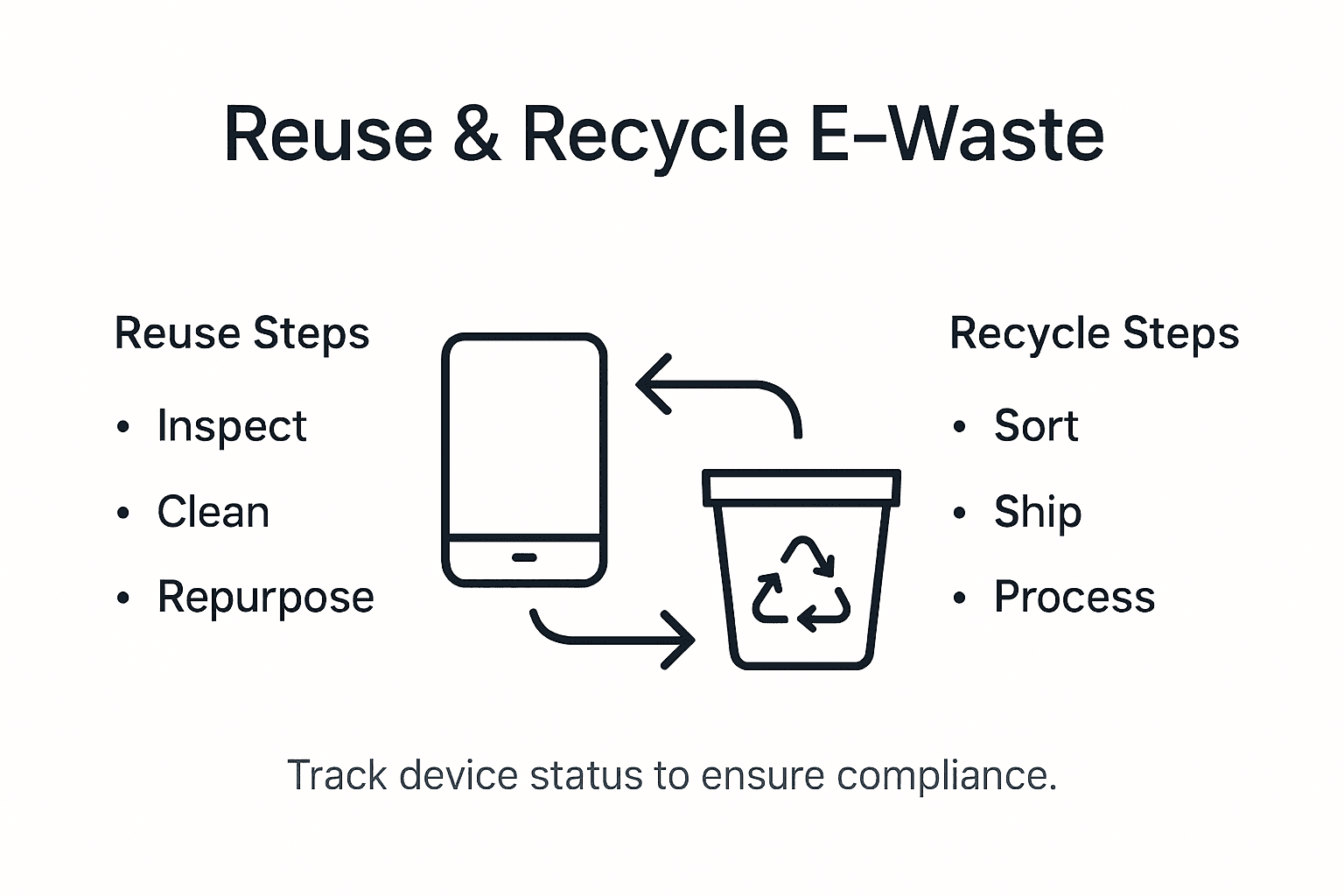
Certified recycling programs offer crucial pathways for safely managing electronic waste and recovering valuable materials. Begin by establishing partnerships with specialized electronics recycling vendors who can handle different types of electronic equipment. Develop a clear protocol for categorizing devices based on their condition: functional devices suitable for donation, devices requiring refurbishment, and those needing complete recycling.
Material reuse programs can significantly extend product lifecycles and reduce overall waste generation. Create an internal system that encourages employees to participate in device assessment and reuse initiatives. This might include setting up collection points for used electronics, implementing a tracking mechanism for device status, and establishing guidelines for determining whether a device can be refurbished, repurposed, or must be recycled.
Design a comprehensive tracking mechanism that documents each electronic device from acquisition to final disposal. Develop clear reporting protocols that measure your organization’s waste reduction progress, materials recovered, and environmental impact. Collaborate with department heads to create incentives that encourage responsible electronic asset management.
Pro tip: Create a centralized electronic waste inventory system that allows real time tracking of device status and supports transparent sustainability reporting.
Step 5: Verify and Monitor Waste Reduction Results
Tracking and validating your electronic waste reduction efforts transforms strategic planning into measurable environmental progress. This step focuses on establishing robust monitoring systems that provide transparent and actionable insights into your waste management performance.
The Global E-waste Monitor 2020 emphasizes comprehensive methodologies for tracking electronic waste generation and recycling rates, providing a framework for systematic evaluation. Develop a standardized data collection protocol that captures key metrics including total electronic waste generated, percentage recycled, devices refurbished, and materials recovered. Create detailed quarterly reports that showcase your organization’s waste reduction trajectory, highlighting specific improvements and identifying areas requiring additional attention.
United Nations Development Programme frameworks recommend implementing transparent monitoring systems that support continuous improvement. Integrate digital tracking tools that enable real time monitoring of waste streams, providing immediate visibility into your electronic waste management performance. Establish clear benchmarks and key performance indicators that align with industry best practices and your organization’s specific sustainability goals.
Engage cross functional teams in regular review sessions to analyze waste reduction data, celebrate achievements, and collaboratively develop strategies for ongoing improvement. Consider creating visual dashboards that make complex waste management data accessible and understandable across different departments.
Pro tip: Implement an annual sustainability audit that compares your electronic waste metrics against industry standards and identifies innovative opportunities for waste reduction.
Take Action on Electronic Waste Reduction with Sustainable Solutions
The challenge of reducing electronic waste requires businesses to rethink their environmental impact and adopt smarter, sustainable practices. Key steps like implementing reuse and recycling programs and integrating sustainable procurement policies can drive meaningful change. At the same time, addressing everyday plastic waste in your operations enhances your overall sustainability commitment. This is where choosing eco-friendly products like reusable drinking straws made from wood and plant-based materials can make a significant difference.
Elevate your business’s sustainability initiatives by joining the movement at TheOceanStraw.com. Our durable, biodegradable straws provide an easy, effective way to reduce single-use plastic waste and complement your electronic waste reduction goals. Explore how our wholesale options and detailed product benefits support your commitment to environmental responsibility. Start making a tangible impact today by integrating sustainable alternatives that your customers will appreciate. Visit TheOceanStraw.com to learn more and request samples for your business.
Discover the full potential of combining electronic waste reduction strategies with eco-conscious procurement by visiting TheOceanStraw.com and taking the next step toward a greener future.
Frequently Asked Questions
How can I assess my current electronic waste practices in my business?
Start by conducting a comprehensive inventory of all electronic devices within your organization. Document each device’s age, condition, and usage status, and analyze your current waste disposal methods within 30 days to identify areas for improvement.
What types of electronics should I prioritize for replacement to reduce waste?
Focus on key categories such as smartphones, laptops, and servers, as they contribute significantly to electronic waste. Create an assessment matrix to rank devices by age, energy efficiency, and recyclability within the next month.
How can I create sustainable procurement policies for electronic devices?
Develop procurement policies by integrating environmental criteria into your purchasing decisions. Start an audit of your current procurement processes and establish minimum sustainability thresholds for suppliers within 60 days to guide future purchases.
What steps can I take to implement reuse and recycling programs in my organization?
Establish partnerships with certified recycling vendors and create clear protocols for categorizing devices based on their condition. Initiate a device assessment and reuse program within the next quarter to encourage responsible management and extend product lifecycles.
How do I verify and monitor my electronic waste reduction efforts?
Implement a standardized data collection protocol to track key metrics such as total electronic waste generated and percentage recycled. Conduct regular reviews and produce quarterly reports to assess progress and identify areas needing attention, starting within the next three months.
Recommended
- How to Prevent Plastic Pollution in the Ocean: A Practical Guide – The Ocean Straw
- How to Reduce the Use of Plastic Bags in Your Business – The Ocean Straw
- How to Reduce E Waste with Sustainable Straw Solutions – The Ocean Straw
- How to Reduce Reuse and Recycle for Foodservice Success – The Ocean Straw
- Nachhaltig Mit Batterien Umgehen: Der Komplettguide - accu.blog