Newsroom
How to Reduce the Use of Plastic Bags in Your Business
How to Reduce the Use of Plastic Bags in Your Business
Most American businesses use far more plastic bags than they realize, with recent studies showing that audits often uncover usage rates at least 30 percent higher than expected. For any business aiming to meet modern environmental standards and satisfy eco conscious customers, reducing plastic bag waste is more important than ever. This guide offers clear, actionable steps to help American companies track their plastic bag habits, switch to sustainable alternatives, and build meaningful change from the inside out.
Table of Contents
- Step 1: Assess Current Plastic Bag Usage And Needs
- Step 2: Implement Reusable Alternatives For Carryout
- Step 3: Train Staff To Encourage Sustainable Practices
- Step 4: Engage Customers With Incentives And Education
- Step 5: Verify Reductions And Adjust Processes
Quick Summary
| Key Point | Explanation |
|---|---|
| 1. Audit Plastic Bag Usage | Track and assess current plastic bag usage across departments to identify areas for reduction. |
| 2. Introduce Reusable Options | Implement sustainable alternatives like cotton tote bags and incentivize their use to minimize plastic waste. |
| 3. Train Staff Effectively | Educate employees on sustainability practices to encourage customer adoption of reusable bags. |
| 4. Engage Customers with Incentives | Create loyalty programs and educational materials that motivate customers to choose reusable bags. |
| 5. Measure and Adjust Strategies | Regularly track plastic bag reductions and be ready to adapt strategies based on data and feedback. |
Step 1: Assess Current Plastic Bag Usage and Needs
Understanding your business’s current plastic bag consumption is the critical first step toward meaningful waste reduction. This assessment will help you pinpoint exactly where and how plastic bags are being used across different operational areas.
Start by conducting a comprehensive audit of your plastic bag usage. Track the quantity and types of plastic bags utilized in various departments such as sales, packaging, shipping, and customer service. Examining single use plastic impact reveals that most businesses significantly underestimate their plastic consumption. Create a detailed log documenting bag sizes, frequencies of use, and specific departmental requirements. Pay special attention to areas like retail checkout, product packaging, takeaway services, and shipping operations.
Next, analyze your current bag usage patterns. Calculate monthly plastic bag volumes, identify peak usage periods, and assess the purposes behind each bag type. Some bags might serve critical functions like product protection, while others could be unnecessary or easily replaceable with sustainable alternatives. Engage your team members in this assessment process. Their frontline insights can help uncover waste reduction opportunities that management might overlook.
Pro tip: Assign a sustainability champion in each department to track and report plastic bag usage weekly. This approach creates accountability and helps maintain ongoing awareness about your waste reduction goals.
Step 2: Implement Reusable Alternatives for Carryout
Reducing single use plastic bags requires strategic implementation of sustainable carryout solutions that meet both customer needs and environmental goals. This step focuses on transitioning your business toward more eco friendly packaging alternatives.
Sustainable alternatives to single use plastic bags offer numerous options for businesses seeking to minimize environmental impact. Consider introducing a range of reusable bag choices such as sturdy cotton tote bags, canvas shopping bags, and mesh produce bags. These alternatives not only reduce plastic waste but also provide customers with durable and attractive packaging solutions. Develop a comprehensive strategy that includes offering these bags for sale at checkout or providing discounts to customers who bring their own reusable containers.
Transition your carryout operations by training staff on the new bag alternatives and creating clear communication strategies. Develop signage explaining your sustainability initiatives, highlighting the environmental benefits of reusable bags. Consider implementing a small fee or discount system that incentivizes customers to choose reusable options over traditional plastic bags. This approach not only reduces waste but also educates customers about sustainable practices.
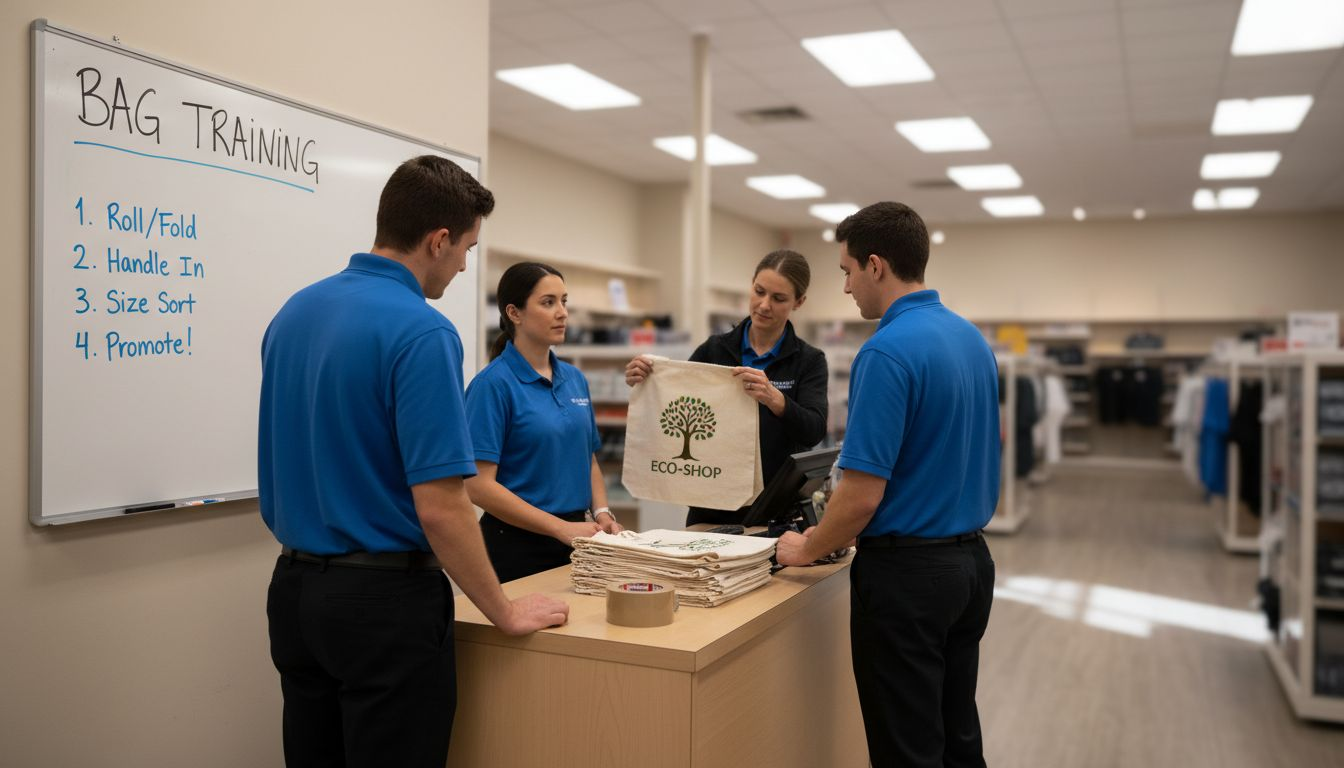
Pro tip: Create a branded reusable bag program that turns your sustainable packaging into a marketing opportunity. Design attractive, high quality bags that customers will want to use repeatedly, effectively transforming your packaging into a mobile advertisement for your business.
Here’s a summary of common reusable bag alternatives and their business advantages:
| Alternative Bag Type | Durability | Customer Appeal | Environmental Benefit |
|---|---|---|---|
| Cotton Tote Bag | High | Stylish, reusable | Biodegradable, reduces waste |
| Canvas Shopping Bag | Very high | Premium feel, large capacity | Long lifespan, eco-friendly |
| Mesh Produce Bag | Moderate | Lightweight, transparent | Replaces plastic produce bags |
| Recycled Plastic Bag | High | Familiar, foldable | Lowers new plastic demand |
Step 3: Train Staff to Encourage Sustainable Practices
Engaging your team is crucial in successfully reducing plastic bag consumption across your business. This step focuses on transforming your staff into active sustainability champions who can drive meaningful change.
Staff education on plastic reduction represents a powerful strategy for implementing sustainable practices. Design a comprehensive training program that educates employees about the environmental impact of single use plastic bags and equips them with practical communication techniques. Create interactive workshops that demonstrate how to positively encourage customers to choose reusable alternatives. Include practical scenarios that help staff understand how to communicate sustainability messages without seeming confrontational or preachy.
Implement a structured approach to staff training that goes beyond theoretical knowledge. Develop role specific training modules that show employees exactly how they can contribute to reducing plastic waste in their daily interactions. For checkout staff, this might involve techniques for suggesting reusable bags. For packaging teams, it could mean finding innovative ways to minimize plastic usage. Consider creating incentive programs that reward staff members who demonstrate exceptional commitment to sustainability goals.
Pro tip: Develop a monthly sustainability recognition program that highlights and rewards staff members who most effectively promote and implement plastic reduction strategies in their daily work.
Step 4: Engage Customers With Incentives and Education
Successfully reducing plastic bag usage requires a strategic approach that motivates and educates your customers. This step focuses on creating compelling incentives and communication strategies that inspire sustainable behavior.
Customer incentive programs for reducing plastic bag usage can dramatically transform customer behavior. Design a multifaceted loyalty program that rewards customers for bringing reusable bags. Consider offering meaningful incentives such as discounts on purchases, bonus loyalty points, or small monetary credits that accumulate with each reusable bag used. Create clear visual tracking mechanisms that help customers understand their positive environmental impact tracking the number of plastic bags they have prevented from entering waste streams.
Develop comprehensive educational materials that explain the environmental consequences of single use plastic bags. Use engaging infographics, short video content, and concise messaging displayed at checkout areas, on receipts, and through digital communication channels. Focus on transforming abstract environmental concepts into relatable, personal narratives that demonstrate how individual actions contribute to broader sustainability goals. Implement QR codes linking to detailed sustainability information that allows interested customers to dive deeper into understanding their environmental impact.
Pro tip: Create a gamified sustainability challenge that encourages customers to track and share their plastic reduction achievements on social media, turning environmental responsibility into an interactive and rewarding experience.
The table below compares different customer incentive strategies for encouraging reusable bag use:
| Incentive Strategy | Customer Motivation | Potential Business Outcome |
|---|---|---|
| Purchase Discount | Immediate savings | Increases repeat visits |
| Bonus Loyalty Points | Rewards accumulation | Grows loyalty program |
| Reusable Bag Credit | Cumulative benefit | Promotes sustainable choice |
| Gamified Challenges | Social sharing fun | Enhances brand engagement |
Step 5: Verify Reductions and Adjust Processes
The final stage of your plastic bag reduction strategy involves systematic measurement and continuous improvement. This step ensures your sustainability efforts deliver meaningful and measurable results.
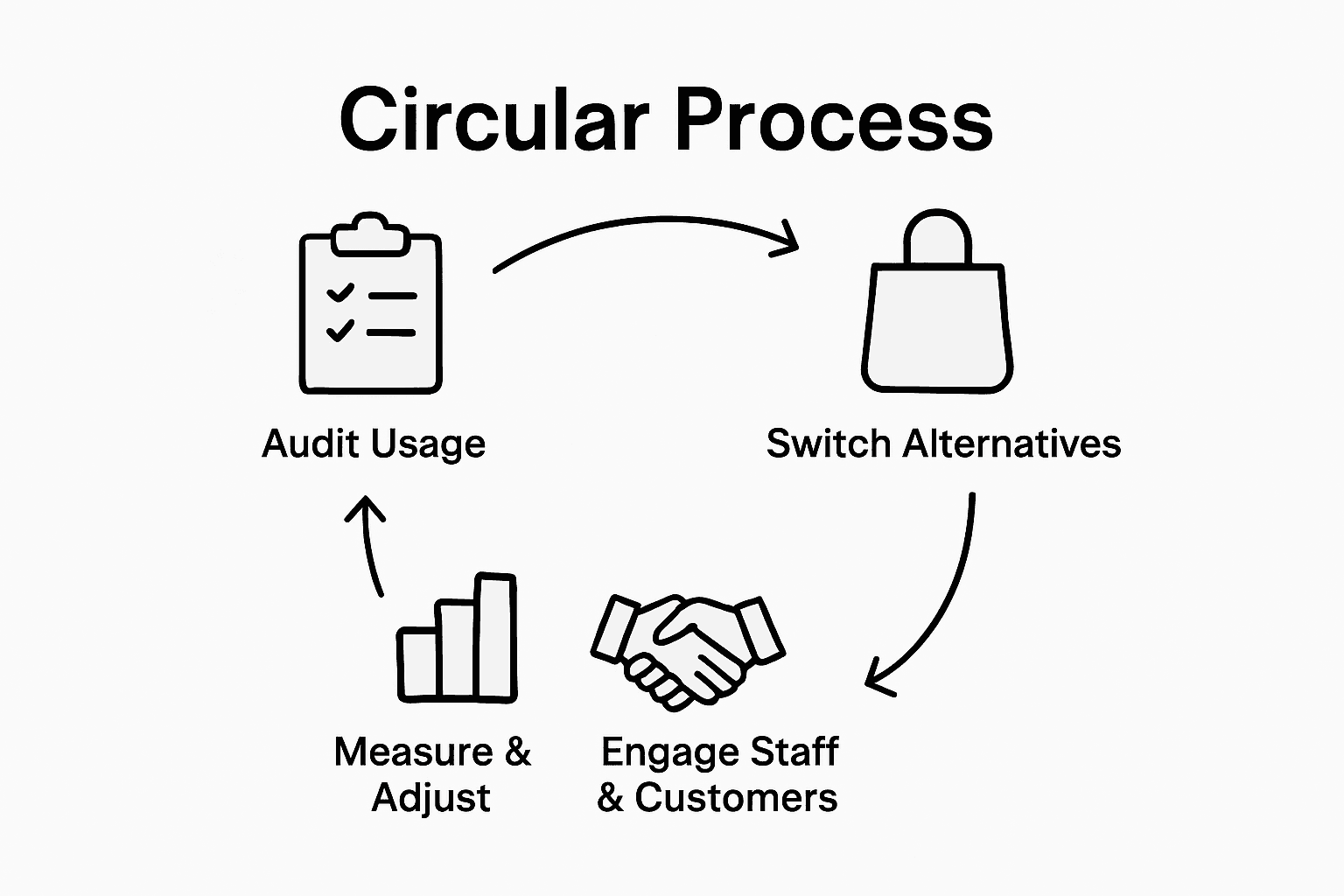
Monitoring plastic bag usage reduction strategies requires establishing clear tracking mechanisms. Develop a comprehensive data collection system that quantifies plastic bag consumption across different business departments. Use digital tracking tools to record monthly plastic bag usage, tracking metrics such as total bags distributed, percentage of customers using reusable bags, and cost savings from reduced plastic consumption. Create visual dashboards that make these statistics easily understandable for your team and stakeholders.
Conduct quarterly reviews of your plastic reduction strategies to identify successful approaches and areas requiring modification. Analyze customer feedback, staff observations, and quantitative data to refine your sustainability initiatives. Be prepared to experiment with different incentive structures, educational approaches, and bag alternatives based on your findings. Successful sustainability is an iterative process that demands flexibility and a commitment to continuous learning and improvement.
Pro tip: Implement a digital feedback system that allows customers and staff to suggest plastic reduction innovations, transforming your sustainability effort into a collaborative and dynamic process.
Enhance Your Business Sustainability With Innovative Eco Solutions
The challenge of reducing single use plastic bags in your business is just one part of a larger commitment to environmental responsibility. The article highlights critical pain points like the need for durable, attractive reusable alternatives and engaging both staff and customers in sustainable practices. Alongside transitioning to reusable bags, consider expanding your eco-friendly offerings with products that match your business’s sustainability goals.
At TheOceanStraw.com, we provide durable, biodegradable straws made from innovative wood and plant-based materials that perfectly complement your efforts to phase out single use plastics. By integrating our sustainable straws into your foodservice or hospitality operations, you create a cohesive environmentally conscious experience for your customers. This addition not only supports your plastic reduction strategies but also reinforces your brand’s dedication to eco-initiatives with scientifically backed, certified products.
Take the next step to fully transform your business’s plastic footprint by exploring TheOceanStraw.com today. Discover how our reusable straw solutions work hand in hand with your plastic bag reduction efforts. Act now to build a greener future that resonates with customers and inspires your entire team.
Frequently Asked Questions
How can I assess my business’s current plastic bag usage?
Perform a comprehensive audit of your plastic bag consumption by tracking the quantities and types of bags used in different departments, such as sales and shipping. Create a detailed log that documents bag sizes and frequencies of use, focusing on areas like retail checkout and packaging.
What reusable alternatives can I implement for carryout options?
Introduce a range of reusable bag options, like cotton tote bags and canvas shopping bags, to replace single-use plastic bags. Train your staff on these alternatives and consider offering discounts to encourage customers to use them instead of plastic options.
How can I train my staff to promote sustainable practices effectively?
Develop a structured training program that educates employees about the environmental impact of plastic bags and equips them with practical techniques for encouraging customers to choose reusable bags. Include role-specific scenarios to demonstrate how they can contribute to reducing plastic waste.
What customer incentives can I create to encourage the use of reusable bags?
Create a loyalty program that rewards customers for bringing their reusable bags, offering discounts or bonus points for repeated use. Use clear visual tracking methods to help customers see the positive impact of their choices on reducing plastic use.
How do I measure the effectiveness of my plastic bag reduction efforts?
Establish a data collection system to track plastic bag consumption across different departments and measure the percentage of customers using reusable bags. Conduct quarterly reviews to analyze feedback and adjust your strategies based on observed successes and areas needing improvement.