
Understanding the Effects of Plastic on Environment

Plastic has shaped modern life from grocery bags to high-tech gadgets. Most people focus on littered beaches or floating trash, but the numbers tell a deeper story. About 8 million tonnes of plastic waste pour into our oceans every year and the real shock is that most of it never truly disappears. It simply breaks down into microplastics, haunting the environment for centuries.
Table of Contents
- What Is Plastic And Its Environmental Impact?
- Why The Effects Of Plastic Matter For Businesses
- How Plastic Pollution Disrupts Ecosystems
- Key Concepts Of Plastic Lifecycle And Waste Management
- Real-World Examples Of Plastic’s Environmental Effects
Quick Summary
| Takeaway | Explanation |
|---|---|
| Plastic production contributes significantly to climate change. | The manufacturing of plastic generates substantial greenhouse gas emissions and consumes vast energy resources, worsening climate issues globally. |
| Consumers prefer sustainable brands. | Increasingly, people are making purchasing decisions favoring companies that demonstrate genuine commitment to sustainability and eco-friendly practices. |
| Plastic waste management poses critical challenges. | Global recycling efforts are hampered by complicated sorting processes, economic viability issues, and inadequate infrastructure, making management difficult. |
| Businesses face stricter regulations on plastic. | Governments are imposing tighter controls on plastic production and waste, requiring companies to adapt their practices to avoid penalties. |
| Innovative models can turn challenges into opportunities. | Companies can leverage eco-friendly product alternatives and circular economy practices to enhance sustainability while potentially improving their market position. |
What is Plastic and Its Environmental Impact?
Plastic represents a complex synthetic material engineered from polymers derived primarily from petroleum and natural gas, transforming global manufacturing and consumption patterns over the past century. Research from National Geographic reveals that approximately 8 million tonnes of plastic waste enter our oceans annually, creating significant environmental challenges.
Chemical Composition and Manufacturing
At its core, plastic consists of long molecular chains called polymers, typically created through polymerization processes that link smaller molecular units into robust, versatile materials. These synthetic compounds are designed to be durable, lightweight, and resistant to degradation, which paradoxically becomes their most problematic characteristic from an environmental perspective. Manufacturers can create different types of plastics with varying properties by altering molecular structures and incorporating specific chemical additives.
Environmental Consequences of Plastic Production
The environmental impact of plastic extends far beyond its visible waste. Plastic production generates substantial greenhouse gas emissions, contributing significantly to global climate change. During manufacturing, substantial energy resources are consumed, and toxic chemicals are released into atmospheric and aquatic systems. Moreover, most plastics do not biodegrade but instead break down into microplastics that persist in ecosystems for hundreds of years.
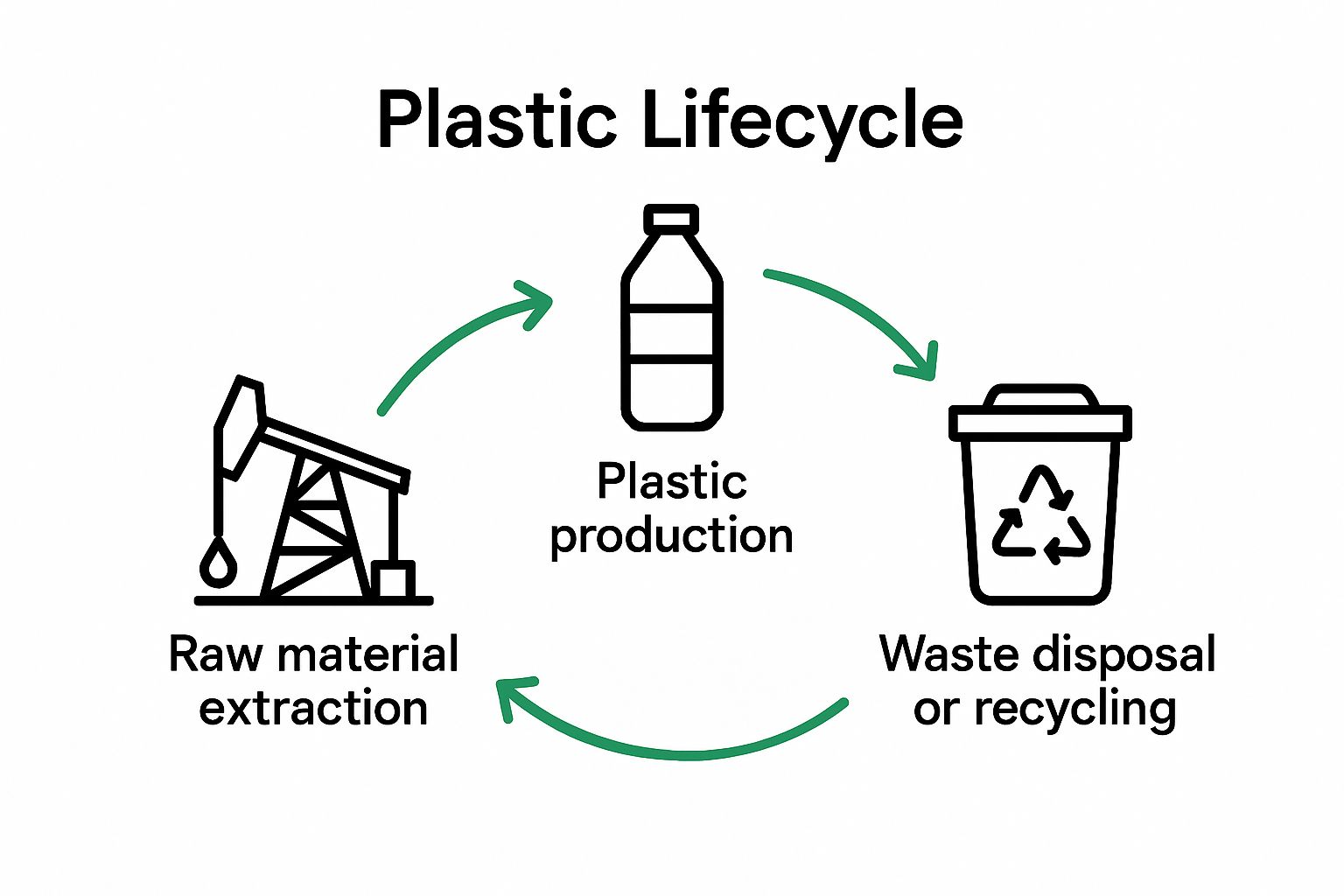
Understanding the full scope of plastic’s environmental footprint requires recognizing its lifecycle: from raw material extraction through manufacturing, distribution, usage, and ultimately, its prolonged environmental presence. Read more about our guide on understanding environmental damage to gain deeper insights into these complex ecological interactions.
Why the Effects of Plastic Matter for Businesses
Businesses across various sectors are increasingly recognizing the critical importance of understanding and mitigating plastic’s environmental impact. According to McKinsey & Company, consumer awareness and demand for sustainable practices have become primary drivers for corporate environmental responsibility.
Economic and Regulatory Implications
The economic landscape surrounding plastic usage is rapidly transforming. Governments worldwide are implementing stricter regulations on plastic production and waste management, creating significant compliance challenges for businesses. Companies now face potential financial penalties, increased operational costs, and reputational risks associated with unsustainable plastic practices. These regulatory shifts require businesses to proactively redesign their product packaging, supply chains, and waste management strategies to align with emerging environmental standards.
Reputation and Consumer Expectations
Modern consumers are more environmentally conscious and actively support brands demonstrating genuine commitment to sustainability. Key considerations for businesses include:
- Consumer purchasing decisions increasingly favor environmentally responsible companies
- Negative public perception can significantly impact brand loyalty and market share
- Transparent sustainability reporting builds trust and attracts environmentally aware customers
Strategic Business Opportunities
Innovative businesses are transforming plastic’s environmental challenges into competitive advantages. Read more about sustainable alternatives in our environmental damage guide to explore potential strategic approaches. By developing eco-friendly solutions, companies can differentiate themselves, reduce long-term costs, and contribute to global environmental preservation while maintaining economic viability.

How Plastic Pollution Disrupts Ecosystems
Plastic pollution represents a profound threat to global ecosystems, causing intricate and far-reaching environmental disruptions. Scientific research from the United Nations Environment Programme indicates that plastic waste fundamentally alters biological systems, creating cascading negative impacts across marine and terrestrial environments.
Marine Ecosystem Destruction
Plastic pollution systematically undermines marine biodiversity through multiple destructive mechanisms. Marine organisms frequently mistake plastic debris for food, leading to fatal digestive blockages and nutritional deficiencies. Microplastics penetrate food chains at microscopic levels, accumulating toxins and transferring harmful chemical compounds between species. Vulnerable marine populations including sea turtles, seabirds, and marine mammals suffer catastrophic population declines due to plastic-related environmental stressors.
Toxic Contamination of Natural Habitats
As plastics degrade, they release persistent organic pollutants and chemical additives that contaminate surrounding environments. These toxic substances disrupt complex ecological interactions, impacting reproductive capabilities, genetic structures, and overall species health.
- Direct chemical leaching into water systems
- Absorption of harmful compounds by marine sediments
- Bioaccumulation of toxins within food webs
- Genetic mutations caused by prolonged chemical exposure
Interconnected Ecosystem Vulnerabilities
The environmental consequences of plastic pollution extend beyond immediate observable damage. Read more about the negative effects of ocean pollution to comprehend the intricate relationships between plastic waste and global ecological systems. Plastic pollution creates systemic vulnerabilities that compromise entire ecosystems, threatening biodiversity, disrupting natural regeneration processes, and potentially accelerating broader environmental collapse.
Key Concepts of Plastic Lifecycle and Waste Management
Understanding the comprehensive journey of plastic from production to disposal reveals the complex challenges of environmental sustainability. Research from the World Economic Forum highlights the critical need for transformative approaches to plastic waste management.
Stages of Plastic Production and Consumption
Plastic lifecycle encompasses multiple interconnected stages that contribute to environmental impact. The process begins with raw material extraction from fossil fuels, followed by complex manufacturing processes that transform petroleum derivatives into versatile polymers. Manufacturers create plastic products through energy-intensive procedures, producing materials designed for specific applications ranging from packaging to industrial components. Each stage of production generates significant carbon emissions and consumes substantial natural resources.
Waste Management and Recycling Challenges
The current global waste management infrastructure struggles to address plastic’s persistent environmental challenges. Key recycling limitations include:
- Complicated sorting processes for different plastic types
- Low economic viability of recycling certain plastic grades
- Contamination issues that reduce recycling effectiveness
- Limited global recycling infrastructure
Circular Economy and Sustainable Alternatives
Innovative approaches are emerging to address plastic’s environmental challenges. Read more about single-use plastic impacts to explore potential solutions. Progressive organizations are developing circular economy models that prioritize waste reduction, material reuse, and sustainable alternative materials. These strategies aim to minimize plastic’s environmental footprint by redesigning production systems, promoting recyclable materials, and developing biodegradable alternatives that align with ecological preservation goals.
For a clearer understanding of the challenges and approaches in plastic lifecycle management, this table summarizes the main characteristics, problems, and solutions discussed in the article.
| Aspect | Characteristics & Challenges | Potential Solutions & Approaches |
|---|---|---|
| Plastic Lifecycle | Raw material extraction, energy-intensive production, persistent environmental fate | Redesign processes, prioritize sustainable sourcing and manufacturing |
| Waste Management | Complex sorting, low recycling viability, contamination, limited infrastructure | Improve sorting tech, invest in recycling, expand infrastructure |
| Circular Economy Models | Encourage waste reduction, material reuse, sustainable alternatives | Use biodegradable/recyclable materials, promote system redesign |
| Environmental Impact | High carbon emissions, long-term pollution, toxic leaching | Reduce production/waste, adopt alternative materials and strategies |
Real-World Examples of Plastic’s Environmental Effects
Plastic pollution manifests through numerous tangible environmental scenarios that demonstrate its profound global impact. Scientific research from Nature provides compelling evidence of plastic’s widespread ecological consequences across diverse environments.
Marine Ecosystem Devastation
Plastic pollution creates catastrophic marine ecosystem disruptions through multiple observable phenomena. The Great Pacific Garbage Patch represents a striking example of concentrated plastic accumulation, spanning approximately 1.6 million square kilometers. Marine organisms suffer devastating consequences, with scientific studies documenting over 700 marine species directly impacted by plastic debris. Microplastic contamination now permeates oceanic food chains, causing systemic biological disruptions that extend from microscopic plankton to large marine predators.
Terrestrial Ecosystem Transformation
Plastic pollution extends far beyond marine environments, fundamentally altering terrestrial ecosystems. Agricultural lands increasingly contain microplastic particles that infiltrate soil structures, potentially compromising crop yields and soil fertility. Key terrestrial plastic contamination impacts include:
- Reduced soil microbial diversity
- Potential disruption of plant root systems
- Accumulation of toxic chemical compounds
- Interference with natural nutrient cycling processes
Global Environmental Consequences
The cascading effects of plastic pollution transcend localized environmental damage. Read more about environmental impacts of single-use plastics to understand broader ecological implications. From Arctic sea ice to remote mountain ecosystems, plastic particles now represent a ubiquitous environmental contaminant, demonstrating the unprecedented scale of human-induced ecological transformation. The pervasive nature of plastic pollution underscores the urgent need for comprehensive global strategies to mitigate its long-term environmental consequences.
To help clarify how plastic pollution impacts different ecosystems and the global environment, the following table compares key effects across marine, terrestrial, and worldwide scales.
| Environmental Impact | Marine Ecosystems | Terrestrial Ecosystems | Global Consequences |
|---|---|---|---|
| Main Manifestation | Accumulation in Great Pacific Garbage Patch, food chain entry | Microplastic infiltration in soil, crop and soil disturbance | Plastic contamination from Arctic ice to mountain regions |
| Affected Species/Habitats | Over 700 marine species (sea turtles, seabirds, mammals) | Microbial diversity, plant root systems, crop production | Ecosystems worldwide, including remote areas |
| Main Damage Mechanisms | Ingestion, entanglement, toxin transfer, food web disruption | Reduced soil fertility, toxic build-up, nutrient cycling loss | Ubiquitous contamination, broad ecological transformation |
| Example Consequence | Fatal blockages, population decline, toxin bioaccumulation | Lower yields, compromised natural cycles | Accelerated biodiversity loss, ecosystem vulnerability |
| Persistence | Microplastics remain for centuries | Persistent microplastic presence | Long-term, global-scale pollution |
Ready to Make a Real Change Against Plastic Pollution?
If reading about the environmental damage caused by plastics has you worried about your business’s impact, you’re not alone. The article highlighted heavy challenges like microplastics in food chains, toxic contamination of water systems, and rising compliance costs for businesses. Now is the time to take action against environmental threats and rising pressures from customers who expect sustainable solutions. One powerful way for the Horeca market to reduce its plastic footprint is by switching to truly compostable products made from natural materials.
Make the switch today and show your customers your commitment to a cleaner future. Visit The Ocean Straw to discover straws made only from wood and plant-based materials. Our compostable straws help your business cut plastic waste and meet modern sustainability goals. Learn how simple it is to join the businesses leading positive change by starting with The Ocean Straw now. Be part of the solution and protect our environment for generations to come.
Frequently Asked Questions
What are the main environmental impacts of plastic?
Plastic pollution harms ecosystems by disrupting habitats, poisoning wildlife, and contributing to greenhouse gas emissions. To mitigate these effects, focus on reducing plastic use and exploring sustainable alternatives in your daily life.
How does plastic production contribute to climate change?
Plastic production generates significant greenhouse gas emissions and consumes large amounts of energy, increasing your carbon footprint. To help, consider decreasing your reliance on plastic products and supporting companies that prioritize sustainable practices.
What role do microplastics play in environmental damage?
Microplastics can accumulate in ecosystems, entering food chains and threatening wildlife health. To combat this issue, choose biodegradable or recyclable materials and reduce your consumption of single-use plastics to lower microplastic generation.
What can businesses do to reduce their plastic footprint?
Businesses can implement strategies to redesign product packaging, enhance waste management systems, and adopt recycling practices. Start by assessing your current plastic usage and set measurable goals to reduce plastic waste by 20% over the next year.
How can I identify sustainable alternatives to plastic in everyday use?
Look for products labeled as biodegradable, compostable, or made from recycled materials. Take action by replacing single-use items, such as straws or shopping bags, with reusable options to significantly decrease your plastic consumption.
What should I do with plastic waste to minimize its environmental impact?
Prioritize recycling appropriate plastics according to local guidelines while minimizing contamination. To effectively reduce plastic waste, establish a composting habit for organic materials and aim to recycle at least 50% of your plastic items each week.