
Biodegradable Plastic – Impact on Eco-Friendly Dining

Finding reliable alternatives to single-use plastics can be challenging for American and Canadian restaurant owners committed to sustainability. As demand grows for eco-friendly dining solutions, understanding the chemistry behind biodegradable plastics becomes essential. This guide offers clear insights into key concepts, material types, and real-world disposal challenges, empowering you to make informed choices that support your environmental goals and local regulations.
Table of Contents
- What Makes Plastic Biodegradable? Key Concepts
- Types of Biodegradable Plastics Explained
- How Biodegradable Plastics Break Down
- Industry Certifications and Safety Standards
- Challenges with Disposal and Mislabeling
- Comparing Biodegradable Plastics to Alternatives
Key Takeaways
| Point | Details |
|---|---|
| Understanding Biodegradability | Biodegradable plastics are designed to break down through microbial processes, depending on polymer characteristics and environmental factors. |
| Types of Biodegradable Plastics | There are three main categories: Biobased Non-Biodegradable, Biobased Biodegradable, and Fossil-Based Biodegradable, each with distinct features and applications. |
| Importance of Certification | Rigorous certification standards ensure biodegradability claims are credible, which is essential for environmentally responsible disposal practices. |
| Challenges in Disposal | Mislabeling and inconsistent regulations complicate the effective disposal of biodegradable plastics, emphasizing the need for better consumer education and proper disposal protocols. |
What Makes Plastic Biodegradable? Key Concepts
Understanding what makes plastic biodegradable requires diving into complex polymer science and environmental interactions. Biodegradable plastics are specialized materials engineered to break down naturally through microbial processes, transforming into harmless environmental compounds.
At its core, biodegradability depends on specific polymer characteristics that enable microorganisms to decompose the material. Complex polymer structures determine how quickly and completely these materials can be broken down. The key factors influencing biodegradation include:
- Chemical composition of the polymer
- Molecular weight of the material
- Presence of specific chemical bonds
- Environmental conditions like temperature and moisture
- Microbial population in the decomposition environment
Biodegradable plastics fundamentally differ from traditional petroleum-based plastics by their ability to be consumed by microorganisms. These specialized polymers can be transformed into natural compounds such as:
- Carbon dioxide
- Water
- Biomass
- Simple organic molecules
The decomposition process varies significantly based on environmental conditions. Biodegradation mechanisms are influenced by soil composition, ambient temperature, humidity levels, and the specific microbial ecosystem present.
Pro Tip: When selecting biodegradable plastics for your restaurant, always verify the specific decomposition conditions and timeframes to ensure proper environmental disposal.
Types of Biodegradable Plastics Explained
The world of biodegradable plastics is complex and multifaceted, offering restaurant owners and sustainability professionals innovative solutions for reducing environmental impact. Biodegradable plastic categories encompass three primary groups that provide unique environmental and functional characteristics.
These categories include:
- Biobased Non-Biodegradable Plastics: Derived from renewable sources but not capable of complete microbial decomposition
- Biobased Biodegradable Plastics: Created from biological sources and engineered to break down naturally (e.g., Polylactic Acid or PLA)
- Fossil-Based Biodegradable Plastics: Petroleum-derived materials designed with specific additives to enable microbial breakdown
Biobased Polymers represent a significant innovation in sustainable materials. Emerging sustainable materials like lignin-polyester copolymers showcase promising developments in creating more environmentally friendly plastic alternatives. These specialized polymers offer improved degradation pathways and potential industrial applications.

Understanding the nuanced characteristics of each biodegradable plastic type helps restaurants make informed choices about their diningware and packaging materials. Different plastics decompose under varying environmental conditions, with factors like temperature, humidity, and microbial presence playing crucial roles in their breakdown process.
Here’s a summary of the main types of biodegradable plastics and their primary characteristics:
| Plastic Type | Source Material | Biodegrades Where | Common Applications |
|---|---|---|---|
| Biobased Non-Biodegradable | Renewable resources | Rarely decomposes naturally | Bottles, durable goods |
| Biobased Biodegradable | Biological sources | Composting, soil, water | Food packaging, utensils |
| Fossil-Based Biodegradable | Petroleum-based | Industrial composting sites | Bags, agricultural films |
Pro Tip: When selecting biodegradable plastics for your restaurant, request detailed decomposition specifications and verify compatibility with your local waste management infrastructure.
How Biodegradable Plastics Break Down
Biodegradation represents a complex microbial process where specialized organisms transform plastic materials into simpler compounds. Microbial enzyme mechanisms involve bacteria secreting specific enzymes that systematically deconstruct polymer chains into metabolizable components.
The biodegradation process typically follows several critical stages:
- Initial Hydrolysis: Breaking down high molecular weight polymers into smaller fragments
- Enzymatic Deconstruction: Microorganisms targeting specific chemical bonds
- Metabolic Conversion: Transforming plastic remnants into energy and basic compounds
- Environmental Integration: Releasing carbon dioxide, water, and biomass
Plastic Decomposition varies dramatically based on environmental conditions. Anaerobic degradation processes demonstrate how different plastic types like poly(butylene adipate-co-terephthalate) and polylactic acid break down through complex biochemical pathways. Temperature, humidity, microbial diversity, and oxygen availability significantly influence decomposition rates and effectiveness.
Restaurant owners should understand that biodegradable plastics do not universally decompose at identical rates. Some materials require specific industrial composting conditions, while others can break down more readily in natural environments. The molecular structure and chemical composition play crucial roles in determining how quickly and completely a plastic material will decompose.
Pro Tip: Always consult manufacturer specifications about precise decomposition conditions to ensure proper disposal and maximize environmental benefits.
Industry Certifications and Safety Standards
Biodegradable plastics demand rigorous certification processes to ensure environmental safety and performance reliability. Compostable plastics specifications establish comprehensive guidelines for evaluating materials across multiple critical dimensions.
Key international certification standards include:
- ISO 17088:2021: Specifications for industrial composting environments
- ASTM D6400: Compostable plastics labeling requirements
- ASTM D6954: Oxo-biodegradable plastics testing protocols
- European EN 13432: Packaging recovery and recyclability standards
Biodegradable plastic testing methods evaluate several essential performance indicators. These comprehensive assessments examine critical factors such as:
- Rate of material disintegration
- Ultimate aerobic biodegradation potential
- Environmental impact on terrestrial organisms
- Chemical constituent safety
- Decomposition under controlled conditions
Restaurant owners and sustainability professionals must recognize that certification is more than a simple label. These standards provide a critical framework for verifying environmental claims, ensuring that biodegradable products genuinely contribute to waste reduction and ecosystem protection. Thorough documentation and transparent testing processes help build consumer trust and demonstrate a genuine commitment to sustainable practices.
Pro Tip: Request complete certification documentation from manufacturers to validate the actual environmental performance of biodegradable plastic products.
Challenges with Disposal and Mislabeling
Biodegradable plastics face significant hurdles in effective waste management and consumer understanding. Bioplastic environmental challenges stem from widespread mislabeling and regulatory inconsistencies that create substantial confusion for businesses and consumers alike.
Key challenges in biodegradable plastic disposal include:
- Inconsistent federal regulatory standards
- Lack of uniform biodegradability testing protocols
- Misleading environmental marketing claims
- Complex disposal infrastructure requirements
- Variability in decomposition conditions
Biodegradation assessment complexities reveal deeper environmental risks. Improper disposal can produce potentially toxic by-products that harm soil ecosystems. Without rigorous validation of actual environmental performance, restaurants and food service providers may inadvertently contribute to ecological damage instead of mitigating it.
The current landscape of biodegradable plastics demands heightened scrutiny. Many products marketed as environmentally friendly fail to deliver genuine sustainability due to:
- Incomplete decomposition in real-world conditions
- Lack of transparency in environmental claims
- Limited consumer education about proper disposal
- Insufficient waste management infrastructure
Pro Tip: Develop a comprehensive disposal protocol that includes staff training on correctly identifying and separating biodegradable materials to minimize environmental contamination.
Comparing Biodegradable Plastics to Alternatives
Biodegradable plastics represent a complex technological solution with nuanced environmental implications. Bioplastic design challenges reveal significant considerations beyond simple material replacement, requiring comprehensive evaluation of performance, lifecycle, and ecological impact.
Key comparative dimensions include:
- Production scalability
- Degradation rates
- Environmental compatibility
- Infrastructure integration
- Economic feasibility
- Waste management requirements
Renewable material alternatives demonstrate that bioplastics are not a universal solution, but part of a broader sustainability strategy. Traditional plastics still dominate due to established manufacturing processes, lower production costs, and consistent performance characteristics.
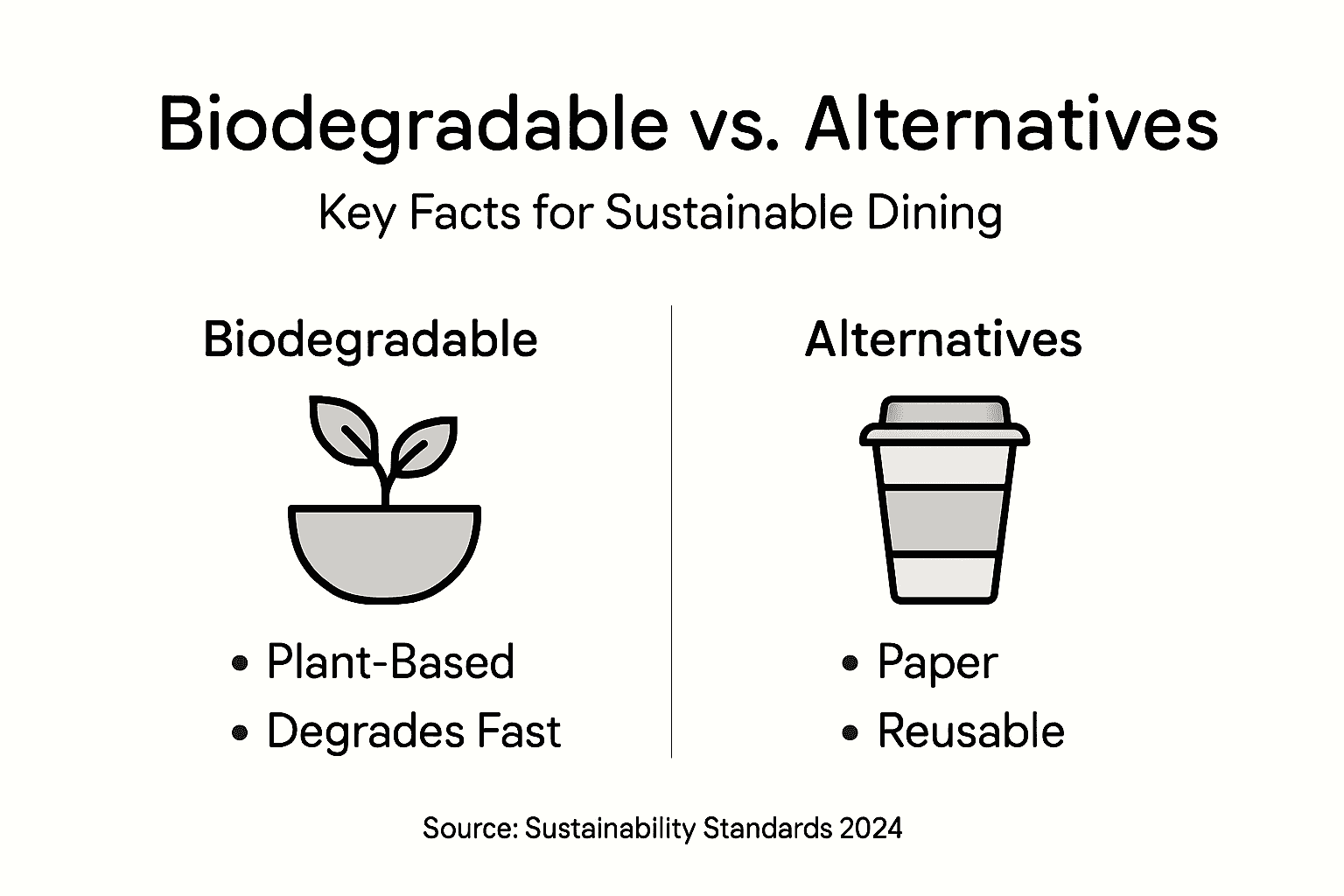
Restaurants and food service providers must critically assess biodegradable plastics across multiple performance metrics:
The table below contrasts biodegradable plastics with conventional options on essential performance dimensions:
| Attribute | Biodegradable Plastics | Traditional Plastics | Compostable Alternatives |
|---|---|---|---|
| Decomposition Speed | Variable, can be rapid | Extremely slow, decades | Fast in composting facilities |
| Cost | Typically higher | Lower due to scale | Moderate, varies by source |
| Environmental Impact | Reduced under ideal disposal | High, persistent pollution | Minimal when properly managed |
| Disposal Needs | Often special infrastructure | Standard landfill/recycling | Requires dedicated composting |
- Durability under food service conditions
- Thermal stability
- Cost-effectiveness
- Decomposition predictability
- Potential environmental contamination risks
- Compliance with health and safety regulations
Pro Tip: Conduct pilot testing with multiple biodegradable plastic alternatives to understand their specific performance characteristics in your unique food service environment.
Embrace Truly Sustainable Dining with Durable, Biodegradable Straws
The challenge many restaurants face today is selecting truly biodegradable products that align with sustainability goals while ensuring durability and safety. This article highlights key issues such as inconsistent biodegradation, environmental impact risks, and the importance of verifying certification and decomposition conditions. At TheOceanStraw.com, we address these pain points by offering innovative wood and plant-based reusable straws designed for eco-friendly dining environments that prioritize both biodegradability and long-lasting performance.
Take your restaurant’s green initiatives to the next level by choosing straws that meet rigorous environmental standards and perform reliably in real-world conditions. Visit TheOceanStraw.com to explore detailed product specifications, environmental benefits, and wholesale options. Act now to integrate sustainable straw solutions that enhance your eco-credentials and delight environmentally conscious customers. Discover how simple changes can make a big impact on both waste reduction and customer satisfaction today.
Frequently Asked Questions
What are biodegradable plastics, and how do they differ from traditional plastics?
Biodegradable plastics are designed to break down naturally through microbial processes, turning into harmless environmental compounds. Unlike traditional plastics, which can take decades to decompose, biodegradable plastics can be consumed by microorganisms and broken down into carbon dioxide, water, and biomass, provided they are in the right conditions.
What types of biodegradable plastics are available, and what are their key characteristics?
There are three primary types of biodegradable plastics: biobased non-biodegradable plastics (from renewable sources but not decomposable), biobased biodegradable plastics (such as PLA, designed to break down naturally), and fossil-based biodegradable plastics (petroleum-derived materials with additives for microbial breakdown). Each type has unique applications and environmental impacts.
How do environmental conditions affect the biodegradation process of plastics?
The biodegradation process is heavily influenced by environmental factors such as temperature, humidity, and microbial population. Different biodegradable plastics may have varying rates of decomposition, with some requiring specific industrial composting conditions while others can break down in natural environments.
What certifications should I look for when selecting biodegradable plastics for my restaurant?
When choosing biodegradable plastics, look for certifications such as ISO 17088:2021 for industrial composting compatibility, ASTM D6400 for compostable materials, and EN 13432 for packaging recovery. These certifications validate the environmental claims and ensure the materials meet specific safety and performance standards.
Recommended
- Eco Friendly Plastic: Impact on Foodservice Sustainability – The Ocean Straw
- Plastic vs Biodegradable Plastic: What Foodservice Needs – The Ocean Straw
- Eco Friendly Disposable Forks: Impact on Food Service – The Ocean Straw
- Eco Friendly Disposable Spoons: Reducing Single-Use Plastic – The Ocean Straw
- Por Qué Barcelona Es Destino Gastronómico Emblemático