
Burning Plastics—How It Impacts Our Environment

Finding truly sustainable waste solutions can be challenging for foodservice professionals who want to balance convenience with environmental responsibility. Burning plastics releases hazardous pollutants such as dioxins, furans, and heavy metals, putting human and ecosystem health at risk far beyond what meets the eye. Understanding the complex and often misunderstood consequences of plastic combustion will empower Canadian and American foodservice leaders to make informed eco-friendly choices that align with both regulatory trends and growing customer expectations.
Table of Contents
- Burning Plastics Defined And Common Myths
- Major Types Of Plastics And Burning Behaviors
- Key Pollutants And How They Harm Health
- Environmental Consequences Of Plastic Burning
- Foodservice Industry Responsibilities And Solutions
- Safer Waste Practices And Eco-Friendly Alternatives
Key Takeaways
| Point | Details |
|---|---|
| Hazards of Burning Plastics | Burning plastics releases toxic pollutants that threaten human health and ecosystems. Proper disposal methods should be prioritized over open burning. |
| Myth vs. Fact | Common misconceptions about harmless burning of plastics are dangerous and contradict scientific evidence on environmental impacts. Awareness and education are essential. |
| Plastic Types and Emissions | Different types of plastics release varying toxic compounds when burned, with significant differences in health risks and environmental impacts. Understanding these can aid in waste management strategies. |
| Role of the Foodservice Industry | The foodservice sector has a responsibility to switch to sustainable materials and practices to mitigate plastic pollution and should focus on innovative waste management solutions. |
Burning Plastics Defined and Common Myths
Burning plastics represents a dangerous yet frequently misunderstood waste management practice with profound environmental consequences. Despite widespread misconceptions, this method of disposal releases extremely hazardous pollutants that threaten human and ecosystem health. Open burning of plastic wastes continues to be a global challenge, driven by inadequate waste management infrastructure and persistent myths about its safety.
Common myths surrounding plastic burning often minimize its devastating impacts. Many people incorrectly assume that burning plastic is a harmless disposal method or that the visible reduction of plastic waste somehow mitigates environmental risks. However, scientific research definitively contradicts these beliefs. The combustion process generates toxic chemicals including dioxins, furans, and other carcinogenic compounds that contaminate air, soil, and water systems.
The myths perpetuating plastic burning are particularly dangerous in regions with limited waste management resources. Researchers have identified several persistent misconceptions:
To better understand misconceptions about burning plastics, see this myth vs. fact comparison:
| Common Myth | Scientific Fact | Real-World Impact |
|---|---|---|
| Burning plastics makes them disappear | Hazardous toxins persist in environment | Long-term health and ecosystem risks |
| All plastic types burn safely | Different plastics release unique toxins | Inconsistent emissions complicate management |
| Small burn piles are harmless | Even small burns emit significant toxins | Cumulative pollution harms communities |
| Visible smoke means full destruction | Residual chemicals remain long after burning | Pollutants contaminate soil and water |
- Burning plastics eliminates waste completely
- Small-scale burning has no significant environmental impact
- All plastics burn similarly and safely
- Visible smoke means the plastic has been fully destroyed
- Burning is cheaper than proper recycling or disposal
Toxic emissions from burning plastics create long-lasting environmental damage. These pollutants do not simply disappear but instead circulate through ecosystems, contaminating food chains and posing serious health risks to humans and wildlife. Hazardous pollutant emissions can persist in the environment for decades, causing chronic contamination far beyond the initial burning site.

Pro tip: Always seek professional waste management services and advocate for sustainable disposal methods instead of burning plastics.
Major Types of Plastics and Burning Behaviors
Plastic materials are not uniform in their composition or environmental impact, with each type presenting unique challenges during combustion. Combustion behavior varies significantly across different polymer types, making waste management a complex environmental issue. Understanding these differences is crucial for developing targeted strategies to mitigate potential harm.
Researchers have identified several primary plastic categories with distinct burning characteristics. Engineered plastics derived from petroleum products demonstrate particularly problematic combustion profiles. Plastic burning behaviors can be broadly categorized into two primary groups:
-
Petroleum-based plastics
- Polypropylene (PP)
- High-density polyethylene (HDPE)
- Polyethylene terephthalate (PET)
- Polystyrene
-
Bio-based plastics
- Polylactic acid (PLA)
- Polyhydroxyalkanoates (PHA)
- Starch-based plastics
Each plastic type releases different toxic compounds when burned. Polystyrene, for instance, produces hazardous styrene gas, while polyethylene generates carbon monoxide during incomplete combustion. Toxic emissions from these materials can persist in the environment, causing long-term ecological and health risks.
Environmental Impact Comparison:
| Plastic Type | Burning Emission | Toxicity Level |
|---|---|---|
| Polystyrene | Styrene gas | High |
| Polyethylene | Carbon monoxide | Moderate |
| PET | Multiple toxins | High |
| Polypropylene | Complex hydrocarbons | Moderate |
Pro tip: Always consult local environmental regulations before attempting any plastic disposal to minimize ecological damage.
Key Pollutants and How They Harm Health
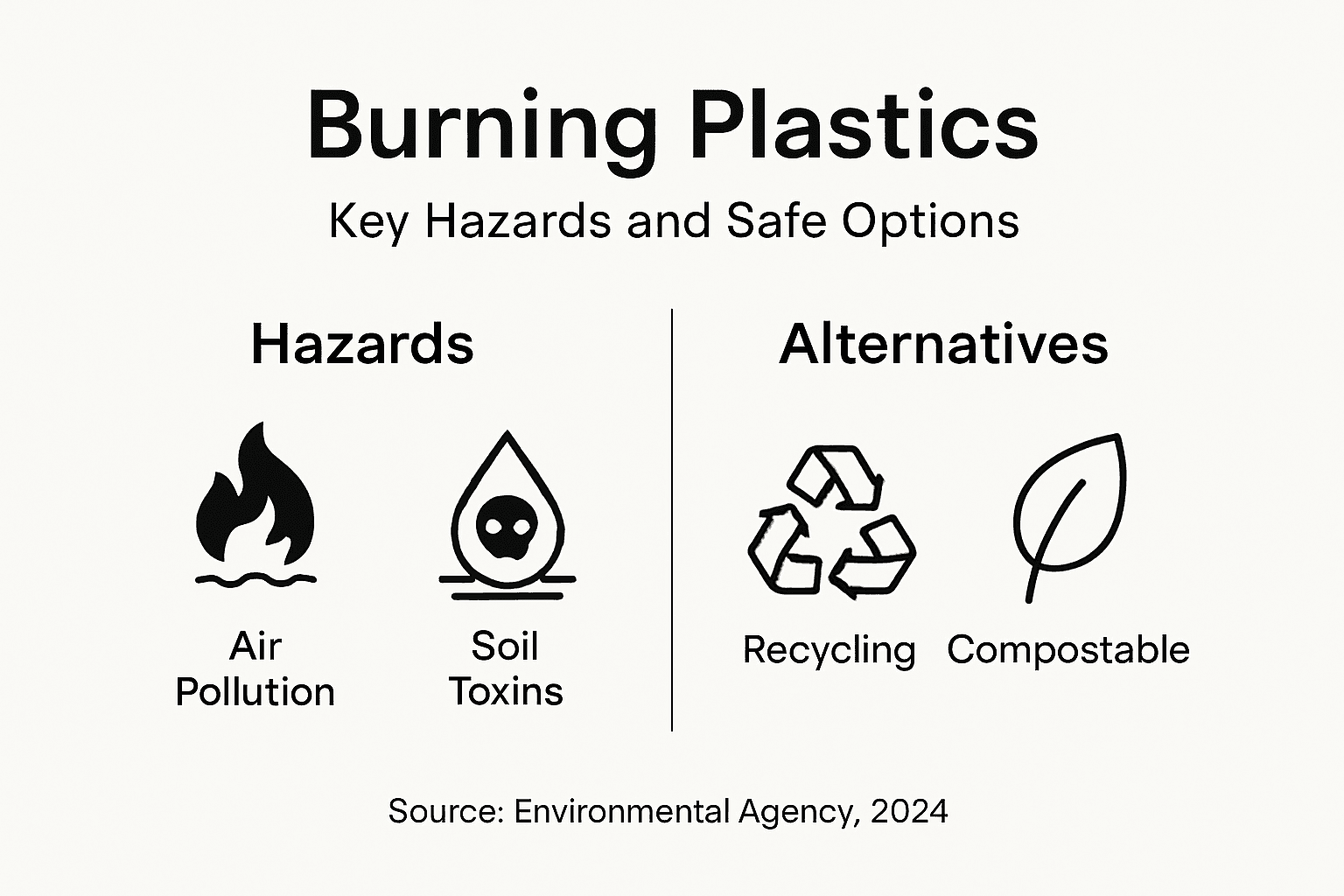
Plastic burning releases a complex array of hazardous pollutants that pose significant risks to human health. These toxic emissions create a dangerous cocktail of chemicals that can cause long-term and potentially irreversible damage to human biological systems. Understanding the specific pollutants and their mechanisms of harm is crucial for comprehending the full scope of environmental health threats.
The primary pollutants generated through plastic combustion include several dangerous chemical compounds:
- Dioxins: Extremely toxic industrial byproducts
- Furans: Highly carcinogenic organic compounds
- Phthalates: Endocrine-disrupting chemicals
- Heavy metals: Persistent environmental contaminants
- Particulate matter: Microscopic respiratory irritants
Specific Health Risks emerge from prolonged exposure to these pollutants. Open burning of plastic waste can trigger a range of severe medical conditions, with particularly devastating consequences for vulnerable populations like women and children. The health impacts span multiple critical biological systems:
- Respiratory System: Chronic lung diseases
- Reproductive Health: Fertility complications
- Neurological Function: Developmental disorders
- Immune Response: Compromised defense mechanisms
- Genetic Integrity: Potential DNA damage
Exposure to plastic combustion pollutants can cause long-term health complications that may not manifest immediately but can significantly impact individual and public health.
Vulnerable Population Impact Comparison:
| Population Group | Primary Health Risks | Exposure Sensitivity |
|---|---|---|
| Children | Neurodevelopmental issues | High |
| Women | Reproductive harm | High |
| Elderly | Respiratory complications | Moderate |
| Industrial Workers | Chronic exposure risks | Very High |
Pro tip: Minimize potential health risks by avoiding burning plastics and supporting proper waste management infrastructure in your community.
Environmental Consequences of Plastic Burning
Plastic burning generates profound environmental degradation that extends far beyond immediate visible damage. The combustion process unleashes a cascade of destructive environmental impacts, contaminating multiple ecological systems and accelerating global environmental challenges. These consequences create long-lasting disruptions to natural ecosystems and planetary health.
The primary environmental consequences of plastic burning encompass several critical domains:
- Air Pollution: Toxic gas emissions
- Soil Contamination: Chemical residue deposition
- Water System Degradation: Persistent organic pollutant infiltration
- Climate Change Acceleration: Greenhouse gas generation
- Biodiversity Disruption: Ecosystem damage
Ecosystem Impact Mechanism involves multiple interconnected environmental systems. The pollutants released during plastic combustion do not remain isolated but create complex, far-reaching contamination networks. These toxic compounds can travel through air currents, water systems, and soil networks, creating widespread environmental destruction.
Environmental Damage Comparison:
| Environmental System | Contamination Level | Recovery Time |
|---|---|---|
| Atmospheric Systems | Extremely High | Decades |
| Soil Ecosystems | High | 50-100 Years |
| Aquatic Environments | Very High | Generations |
| Terrestrial Biodiversity | High | Centuries |
Plastic burning represents a silent environmental catastrophe, transforming localized waste disposal into a global ecological threat.
Pro tip: Prioritize sustainable waste management practices and support community initiatives that promote responsible plastic disposal.
Foodservice Industry Responsibilities and Solutions
The foodservice industry plays a critical role in addressing plastic pollution through strategic waste management and sustainable material choices. The sector’s widespread use of single-use plastics has historically contributed significantly to environmental degradation, creating an urgent need for transformative approaches to packaging, utensils, and waste disposal.
Key responsibilities and innovative solutions for the foodservice industry include:
-
Material Transformation
- Replacing single-use plastics with compostable alternatives
- Utilizing biodegradable materials like bamboo and cornstarch
- Implementing recycled material sourcing
-
Waste Management Strategies
- Developing comprehensive recycling programs
- Training staff in sustainable practices
- Reducing overall packaging volume
Sustainable Transition Pathways require multifaceted approaches. Hospitality sector initiatives increasingly focus on eliminating problematic plastics through collaborative industry frameworks that promote circular economy principles.
Sustainability Intervention Comparison:
| Intervention Type | Impact Level | Implementation Difficulty |
|---|---|---|
| Compostable Materials | High | Moderate |
| Reusable Alternatives | Very High | High |
| Packaging Reduction | Moderate | Low |
| Recycling Programs | Moderate | Moderate |
Sustainable transformation requires collective commitment from industry leaders, policymakers, and individual businesses.
Pro tip: Conduct a comprehensive waste audit and gradually implement sustainable alternatives to minimize environmental impact and demonstrate corporate responsibility.
Here is a summary of how foodservice plastics compare to other sectors in addressing plastic pollution:
| Sector | Main Plastic Usage | Waste Reduction Priority | Adoption of Alternatives |
|---|---|---|---|
| Foodservice | Single-use cutlery, containers | High | Increasing rapidly |
| Retail | Packaging, shopping bags | Moderate | Gradually improving |
| Healthcare | Medical disposables, packaging | Low | Challenging due to safety |
| Industrial | Pallets, strapping, wraps | Low | Limited adoption |
Safer Waste Practices and Eco-Friendly Alternatives
Comprehensive waste management strategies represent critical pathways for addressing plastic pollution and environmental degradation. Moving beyond traditional disposal methods requires innovative approaches that prioritize sustainability, community engagement, and systemic infrastructure improvements.
Eco-friendly waste management alternatives encompass multiple strategic interventions:
-
Waste Collection Systems
- Regular municipal pickup services
- Segregated waste streams
- Community recycling centers
-
Material Transformation Strategies
- Renewable resource-based substitutes
- Biodegradable material development
- Circular economy design principles
Sustainable Material Alternatives offer promising solutions for reducing plastic waste. Sustainable substitutes from renewable resources can dramatically minimize environmental impact while creating economic opportunities.
Alternative Materials Comparison:
| Material Type | Environmental Impact | Biodegradability |
|---|---|---|
| Bagasse | Low | High |
| Agricultural Residue Plastics | Moderate | High |
| Marine-based Polymers | Low | Moderate |
| Cornstarch Derivatives | Very Low | Very High |
Transforming waste management requires holistic approaches that integrate technological innovation, policy support, and community participation.
Pro tip: Implement a phased transition to eco-friendly materials, starting with the most accessible and impactful alternatives in your specific context.
Take Action Against Plastic Pollution with Sustainable Solutions
The dangers of burning plastics are clear. Toxic emissions harm our environment, poison air, water, and soil, and pose serious health risks to communities. If you are committed to reversing these damaging effects and avoiding the persistent myths that make plastic burning seem harmless, it is time to embrace real, eco-friendly alternatives. Businesses in the foodservice and hospitality industry play a key role in this transformation by choosing reusable, biodegradable products that prevent excess plastic waste from ever starting the harmful burning cycle.
Discover how you can reduce your environmental footprint by switching to durable wood and plant-based straws from TheOceanStraw.com. Our innovative, eco-conscious products are designed to align with sustainability initiatives while ensuring safety and quality for your customers. Visit TheOceanStraw.com today to explore wholesale options, request samples, and take the first step toward responsible plastic alternatives. Act now to protect your community’s health and join the movement away from plastic pollution and harmful waste practices.
Frequently Asked Questions
What are the dangers of burning plastic waste?
Burning plastic waste releases hazardous pollutants, including dioxins and furans, which can contaminate air, soil, and water. These toxins pose serious long-term health risks to humans and wildlife.
How does burning plastic affect the environment?
Burning plastic generates toxic emissions that contribute to air pollution, soil contamination, and water system degradation. This can lead to widespread ecological disruption and exacerbate climate change.
Are all types of plastic safe to burn?
No, different types of plastic release various toxic compounds when burned. For instance, polystyrene emits styrene gas, while polyethylene generates carbon monoxide, both of which are harmful to health and the environment.
What are safer alternatives to burning plastics for disposal?
Safer alternatives include professional waste management services, recycling programs, and utilizing eco-friendly materials like compostables and biodegradable plastics to minimize plastic usage and environmental impact.
Recommended
- Impact of Plastic Waste on Marine Life: Complete Guide – The Ocean Straw
- Understanding Environmental Damage Created by Plastic – The Ocean Straw
- Understanding the Effects of Plastic on Environment – The Ocean Straw
- Environmental Impact of Plastic Packaging – Risks and Solutions – The Ocean Straw
- Spa Water Recycling: Sustainable Hot Tub Solutions UK - ClearSpa™