
Eco Certified Meaning: Impact on Sustainable Straws

Finding certified sustainable straws for your restaurant can feel confusing with so many green claims in the market. Choosing straws that meet real environmental and social standards signals genuine commitment to customers and helps reduce regulatory risks. This guide explains the meaning, core concepts, and business value of eco certifications so you can confidently select verified products that support your sustainability goals and protect your brand reputation.
Table of Contents
- Eco Certified Meaning And Core Concepts
- Recognized Eco Certification Types Explained
- Requirements And Standards For Certification
- Impact Of Eco Certification In Foodservice
- Avoiding Greenwashing And False Claims
Key Takeaways
| Point | Details |
|---|---|
| Understanding Eco Certifications | Eco certifications are verified commitments that ensure products meet established environmental and social standards. They are essential for informed purchasing decisions. |
| Importance of Independent Verification | Certifications must be backed by third-party verification, ensuring transparency and accountability in sustainability claims. |
| Consumer Trust Through Certification | Certified products enhance customer trust, proving your commitment to sustainability and reducing skepticism around greenwashing. |
| Strategic Selection of Certifications | Selecting appropriate and recognized certifications for straws can enhance your brand reputation and compliance with sustainability standards. |
Eco Certified Meaning and Core Concepts
Eco certifications are more than marketing labels. They’re verified commitments that products meet real environmental and social standards set by independent organizations. When you see a certification on a straw, it means a third party has audited the production process and confirmed it meets specific sustainability criteria.
For foodservice managers, understanding what these certifications mean directly impacts your purchasing decisions. A certified straw isn’t just greener—it’s accountable. The organization behind the certification guarantees transparency across production and supply chains.
What Makes a Certification Legitimate
Eco-certifications are voluntary labels verified by independent organizations indicating that products, services, or companies meet environmental, social, or ethical standards. Think of them as proof that a manufacturer didn’t just claim something was sustainable—they had outside auditors verify it.
Key characteristics of legitimate certifications include:
- Third-party verification (not self-certified by the manufacturer)
- Regular audits and ongoing compliance monitoring
- Clear, publicly available standards
- Transparent supply chain documentation
- Accountability mechanisms for violations
When selecting sustainable straws for your establishment, verify that certifications come from recognized bodies, not internal company standards.
How Certifications Build Consumer Trust
Your customers increasingly expect proof that your business cares about the environment. Certified products provide that tangible proof. When guests see a recognized certification symbol, they understand your commitment is real and verified.
Certifications reduce consumer skepticism about greenwashing. Without third-party verification, companies could claim sustainability with zero accountability. A legitimate certification removes that doubt.
Certified products give your customers confidence that your sustainability efforts are genuine, not just marketing speak.
Why Independent Verification Matters
Organizations like Ecocert provide independent verification through rigorous audits and assurance processes. They evaluate everything from raw materials sourcing to final product composition and manufacturing practices.
For straws made from sustainable materials, independent audits examine:
- Material sourcing and harvesting practices
- Manufacturing energy consumption and waste management
- Worker safety and fair labor standards
- Product durability and actual environmental benefit
- Biodegradability claims and testing
This verification level protects your business. You’re not just taking a vendor’s word—you have documented proof of sustainability claims.
The Business Case for Certified Products
Certified sustainable straws aren’t a cost center; they’re a business advantage. They demonstrate your commitment to conscious consumers, reduce regulatory risk, and strengthen your brand reputation.
Foodservice operations using certified eco-friendly materials report increased customer loyalty and reduced liability concerns around plastic waste. Certification also simplifies compliance with emerging plastic reduction regulations.
Pro tip: Request certification documentation from straw suppliers before purchasing—verify the certifying body is internationally recognized and check when their most recent audit occurred.
Recognized Eco Certification Types Explained
Not all certifications are created equal. Different certification bodies focus on different aspects of sustainability, and understanding which ones matter for sustainable straws helps you make informed purchasing decisions for your foodservice operation.
The certification landscape includes options tailored to specific industries and production methods. For straw manufacturers, the most relevant certifications address material sourcing, manufacturing processes, and product end-of-life impact.
Major Certification Standards You’ll Encounter
Numerous sustainability certifications exist worldwide, each addressing different environmental and social criteria. The most recognized ones include the Forest Stewardship Council for forestry, Rainforest Alliance for responsible sourcing, and ISO 14001 for environmental management.
For foodservice operations, these certifications matter most:
- FSC Certification - Verifies sustainable forestry and responsible wood sourcing for plant-based straws
- ISO 14001 - Confirms environmental management systems in manufacturing facilities
- Rainforest Alliance - Ensures responsible agricultural practices and worker protections
- B Corporation - Demonstrates commitment to broader social and environmental accountability
- Ecocert Standards - Covers eco-product certification specifically for sustainable materials
Each certification serves a purpose. FSC protects forests. ISO 14001 reduces manufacturing waste. Rainforest Alliance protects workers and ecosystems simultaneously.

Here’s how major eco certifications for straws differ:
| Certification Standard | Main Focus | Example Impact for Straws |
|---|---|---|
| FSC | Sustainable forestry | Ensures plant-based straws come from responsibly managed forests |
| ISO 14001 | Environmental management | Reduces waste and emissions during production |
| Rainforest Alliance | Ethical sourcing and labor | Guarantees fair agricultural practices and worker protections |
| B Corporation | Overall social and environmental performance | Shows broader business accountability and transparency |
| Ecocert | Eco-product verification | Validates material sustainability and biodegradability |
How Ecocert Certification Works for Straws
Ecocert provides over 150 certification standards globally, including specialized options for agri-food and eco-products sectors. Their certifications focus on promoting best environmental and social practices across supply chains.
For sustainable straw manufacturers, Ecocert certification typically covers:
- Raw material sourcing and verification
- Manufacturing process audits
- Biodegradability testing and validation
- Supply chain transparency requirements
- Worker safety and fair labor standards
The certification process involves selecting appropriate standards, undergoing rigorous audits, and maintaining compliance with transparent criteria. This rigorous approach enhances credibility and market access internationally.
Selecting straws with multiple relevant certifications shows comprehensive commitment to sustainability across sourcing, manufacturing, and end-of-life impact.
Why Certification Combinations Matter
A straw with both FSC and Ecocert certification provides stronger proof than either alone. FSC covers the forest source. Ecocert covers the manufacturing process and biodegradability claims.
For your business, certifications work together. Combined certifications demonstrate that manufacturers didn’t cut corners on any aspect of sustainability. This matters when marketing your commitment to environmentally conscious customers.
Choosing the Right Certifications for Your Straws
When evaluating sustainable building practices for your brand, remember that certification selection depends on your specific needs and customer expectations.
Focus on certifications that:
- Address your primary environmental concerns
- Are recognized in your region and industry
- Require ongoing verification and updates
- Are backed by independent third parties
Don’t prioritize obscure certifications. Stick with widely recognized standards that your customers understand and trust.
Pro tip: Request certification documentation from suppliers showing the issue date and expiration date—certifications require renewal, so outdated certifications indicate lapsed compliance.
Requirements and Standards for Certification
Certification doesn’t happen by accident. Behind every legitimate eco-certified straw sits a detailed framework of requirements and standards that manufacturers must meet. Understanding these benchmarks helps you evaluate whether a supplier’s claims are backed by real compliance.
Eco certification standards are voluntary consensus standards designed to indicate product sustainability. They cover lifecycle impacts from raw material sourcing through manufacturing to end-of-life disposal. When a straw carries certification, it means a manufacturer jumped through specific hoops to prove compliance.
What Standards Actually Require
Certification standards stipulate environmental and social criteria that manufacturers must document and maintain. These aren’t vague guidelines—they’re precise, measurable requirements with inspection protocols and control measures built in.
Typical certification requirements include:
- Documented sourcing procedures proving sustainable material origins
- Manufacturing process controls reducing waste and emissions
- Worker safety and fair labor practice verification
- Biodegradability testing using standardized methods
- Supply chain traceability from source to finished product
- Regular internal audits and record-keeping
Each requirement exists for a reason. Documentation proves the manufacturer isn’t cutting corners. Testing validates performance claims. Traceability prevents fraud throughout the supply chain.
Third-Party Audits and Verification
Environmental performance standards require independent third-party assessment to verify manufacturer compliance. This is what separates real certifications from self-claimed sustainability.
An independent auditor will visit the manufacturing facility, examine records, test products, and interview workers. They confirm that the company actually does what it claims. This verification process removes manufacturer bias from the equation.
Independent audits transform certification from a marketing claim into verified fact.
Ecocert’s Specific Compliance Framework
Ecocert certifications require organizations to comply with specific standards stipulating environmental and social criteria. Their process includes onsite audits, documented control measures, and inspection protocols that have global applicability.
For straw manufacturers seeking Ecocert certification, the process involves:
- Selecting appropriate Ecocert standards matching their product and practices
- Implementing documented procedures meeting all requirements
- Undergoing initial onsite audit by independent assessors
- Receiving certification upon compliance verification
- Maintaining compliance through annual surveillance audits
Local audits ensure traceability and reliability specific to regional conditions. This flexibility allows standards to apply globally while respecting local context.
Standards Covering Sustainability Across Operations
Modern certification standards address resource efficiency, biodiversity conservation, ethical labor, and transparency simultaneously. A single certification covers multiple sustainability dimensions rather than just one aspect.
For foodservice managers, this means certified straws represent commitment across several areas:
- Environmental: Material sourcing and manufacturing impact
- Social: Worker wages, safety, and community welfare
- Economic: Sustainable business practices supporting long-term viability
- Transparency: Open supply chain documentation and third-party verification
This comprehensive approach prevents manufacturers from gaming single-issue certifications while ignoring other sustainability aspects.
Pro tip: Request copies of certification audit reports from suppliers—legitimate certifications include recent audit documentation showing specific compliance findings and any corrective actions required.
Impact of Eco Certification in Foodservice
Eco certification isn’t just about feeling good about environmental choices. For foodservice operations, it directly impacts your bottom line, brand reputation, and operational efficiency. Certified sustainable straws are part of a larger strategy that transforms how your business operates.
When your establishment commits to certified products, you signal to customers that sustainability matters. This builds loyalty among environmentally conscious diners and creates competitive advantage in increasingly crowded markets. The impact extends far beyond drinking straws.
Carbon Reduction Through Certified Sourcing
Eco-certification in the foodservice industry aids in carbon reduction by promoting professional knowledge and technical competencies toward sustainability. This works because certified products align with broader operational practices that collectively lower your carbon footprint.
Key practices that work together include:
- Green procurement - Sourcing from suppliers with aligned sustainability certifications
- Energy management - Reducing kitchen facility consumption
- Water management - Implementing conservation across operations
- Seasonal sourcing - Reducing transportation distances and storage needs
- Waste reduction - Using certified sustainable products that minimize landfill impact
Each practice alone helps. Combined, they transform your operation into a genuinely sustainable foodservice business that reduces environmental impact significantly.
Consumer Trust and Transparency
Sustainability certifications ensure transparency and promote sustainable production chains by evaluating environmental impact, social responsibility, and resource management comprehensively.
Customers want proof, not promises. When you serve drinks in certified sustainable straws as part of broader eco-friendly practices, guests see concrete evidence of your commitment. This transparency influences purchasing decisions and builds customer loyalty.
Certified products transform sustainability from a marketing claim into demonstrable operational reality.
Meeting Regulatory and Market Demands
Regulations around single-use plastics continue tightening across North America. Certified sustainable alternatives help you stay ahead of requirements rather than scrambling to comply when mandates take effect.
Beyond compliance, certifications signal to vendors, partners, and investors that your business takes environmental stewardship seriously. This matters increasingly for supply contracts and partnerships with major distributors or corporate accounts.
Operational Benefits Beyond Marketing
Eco-certified sourcing practices actually improve kitchen efficiency and reduce operational costs over time. Better procurement systems reduce waste. Water management lowers utility bills. Energy optimization decreases overhead.
These certified practices support governmental, educational, and industry sustainability efforts simultaneously. You’re not just running a restaurant—you’re contributing to meaningful change in food supply chains.
Building Competitive Advantage
Foodservice operations that embrace certification demonstrate genuine commitment to environmental stewardship. This differentiates you from competitors still using single-use plastics and outdated practices.
Environmentally conscious consumers, corporate event planners, and institutional clients increasingly require certified sustainable options. Meeting this demand positions your business for growth in emerging market segments.
Pro tip: Start with certified straws and use this as a foundation to audit other supplies—identify the highest-impact items in your operation and certify them strategically over time rather than attempting complete overhaul at once.
Avoiding Greenwashing and False Claims
Not every product labeled “eco-friendly” is actually sustainable. Greenwashing is rampant in the straw market, and as a foodservice manager, you need to spot the difference between genuine certification and clever marketing smoke screens.
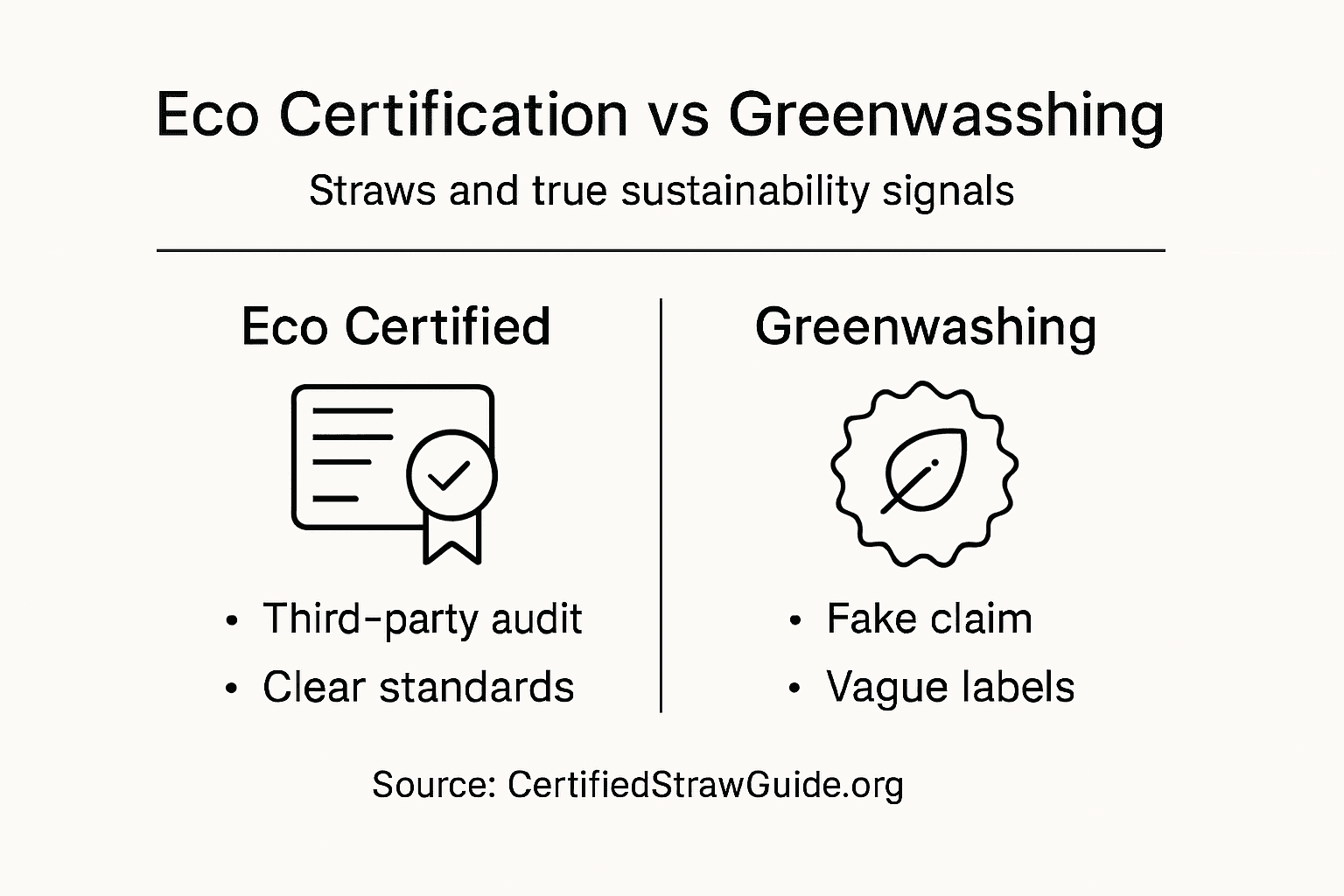
Greenwashing refers to misleading or false environmental claims that exaggerate or fabricate a company’s sustainability credentials. It can look incredibly convincing, which is exactly why it works. The goal is to influence your purchasing decisions without backing up claims with real verification.
How Greenwashing Tactics Work
Greenwashing manifests through selective, vague, or deceptive communication designed to look sustainable without the substance. Common tactics include:
- Using green colors and nature imagery without explaining actual practices
- Making broad “eco-friendly” claims without specific certifications
- Highlighting one small sustainable element while ignoring larger environmental impacts
- Using unofficial-looking “certifications” designed by the company itself
- Claiming sustainability improvements without baseline data or third-party proof
- Using vague terms like “natural” or “green” without defining what they mean
Each tactic preys on consumer desire to make sustainable choices. Companies count on you not digging deeper.
Red Flags in Straw Marketing
When evaluating straw suppliers, watch for these warning signs that suggest greenwashing rather than genuine commitment.
Suspect any claim without supporting documentation. If a manufacturer says straws are “biodegradable,” ask for testing results from independent labs. Real certification includes audit reports you can request and review.
False or misleading environmental marketing claims threaten consumer trust and sustainable consumption across industries.
Verification Questions to Ask Suppliers
Demand concrete answers before committing to any supplier. These questions expose whether claims are real or marketing fiction.
- Which independent certifications does the product hold? (Request documentation)
- When was the most recent audit conducted? (Check expiration dates)
- What testing proves biodegradability claims? (Ask for lab reports)
- Who certifies these claims? (Verify the certifying body is legitimate)
- Can you provide references from other foodservice clients? (Talk to actual users)
- What are the specific environmental impacts of the manufacturing process?
- How does sourcing actually work? (Demand supply chain transparency)
Legitimate suppliers answer these questions directly with documentation. Greenwashers deflect or provide vague responses.
Use this quick reference when evaluating supplier claims:
| Question to Ask | What It Reveals | Why It Matters |
|---|---|---|
| Date of last audit | Currentness of certification | Proof compliance is maintained, not expired |
| Certifying body name | Legitimacy of verification | Confirms third-party approval, not self-claimed |
| Biodegradability test results | Environmental impact | Validates actual benefit, avoids greenwashing |
The Transparency Standard
Addressing greenwashing requires rigorous disclosure, independent verification, and transparency measures that protect public trust. This means suppliers should openly share audit results, certification details, and manufacturing practices.
You deserve complete information. Any hesitation from a supplier should trigger suspicion. When evaluating straw options, understand how to avoid greenwashing by demanding evidence, not just promises.
Governments and consumer protection authorities worldwide now prioritize combating greenwashing through enforcement and enhanced collaboration. This regulatory pressure means legitimate manufacturers have strong incentives to provide real certifications and transparent documentation.
Pro tip: Request ISO 14001 certification for manufacturing facilities and FSC or Ecocert certifications for materials—these certifications are difficult to fake because they require third-party audits, making them the strongest indicators of genuine sustainability.
Elevate Your Sustainability with Truly Certified Eco-Friendly Straws
Choosing the right sustainable straws goes beyond simple green claims. As the article explains, understanding eco certifications, independent verification, and the risks of greenwashing are essential to confidently source products that genuinely support your foodservice operation’s green goals. Your customers deserve transparent proof of your commitment, not vague marketing messages.
Discover how TheOceanStraw.com directly aligns with the highest sustainability standards. Our innovative wood and plant-based straws come with verified certifications that guarantee durability, biodegradability, and ethical sourcing. By partnering with us, you access thoughtfully crafted solutions designed for wholesale and B2B collaborations that help you meet regulatory demands and build lasting consumer trust. Start strengthening your eco-initiatives today by exploring our reliable, eco-certified straw options at TheOceanStraw.com and learn more about our commitment to sustainable materials and manufacturing processes.
Frequently Asked Questions
What does eco certification mean for straws?
Eco certification for straws indicates that the products meet specific environmental and social standards verified by independent organizations. This verification process ensures transparency and accountability in the production and supply chain.
How can I identify a legitimate eco certification for straws?
Legitimate eco certifications are characterized by third-party verification, regular audits, clear public standards, and transparent supply chain documentation. Always check if the certification is from recognized bodies rather than internal company standards.
Why is independent verification important for sustainable straws?
Independent verification is crucial because it ensures that the sustainability claims made by manufacturers are valid. It involves rigorous audits and can confirm everything from material sourcing to fair labor practices, giving businesses documented proof of the product’s sustainability.
How can eco-certified straws benefit my foodservice operation?
Using eco-certified straws can enhance your brand reputation, attract environmentally conscious customers, and help meet regulatory requirements and market demands for sustainable practices. It also reduces liability concerns associated with plastic waste and can contribute to long-term operational efficiencies.
Recommended
- Eco Friendly Plastic: Impact on Foodservice Sustainability – The Ocean Straw
- Most Sustainable Packaging Material: Impact on Eco-Friendly Businesses – The Ocean Straw
- Complete Guide to Eco-Friendly Material Options – The Ocean Straw
- Eco‑Friendly Takeaway Containers: Sustainable Packaging You Can Trust – The Ocean Straw