
Eco Friendly Disposable Forks: Impact on Food Service

Most American restaurants toss out thousands of plastic utensils every week, fueling a problem that stretches far beyond landfill waste. With growing customer demand for visible environmental responsibility, eco-conscious restaurant owners must rethink their operations. This guide explores the principles behind eco friendly forks, highlighting how biodegradable options can satisfy both sustainability goals and regulatory expectations—all while keeping your service reliable and your green reputation strong.
Table of Contents
- Definition And Core Concepts Of Eco Friendly Forks
- Types And Materials Of Disposable Forks
- Performance, Safety, And Certifications Explained
- Environmental Benefits And Comparative Impact
- Cost, Compliance, And Common Mistakes
Key Takeaways
| Point | Details |
|---|---|
| Eco-Friendly Materials | Eco-friendly forks are made from renewable, biodegradable materials like PLA, bamboo, and wood, reducing reliance on fossil fuels. |
| Certification Importance | Look for recognized certifications such as BPI and ASTM D6400 to ensure safety and environmental compliance. |
| Performance Standards | Ensure that eco-friendly forks meet industry standards for durability and food safety in food service environments. |
| Long-Term Benefits | Transitioning to biodegradable forks can significantly lower carbon emissions and promote sustainable practices within food service operations. |
Definition and Core Concepts of Eco Friendly Forks
Eco friendly disposable forks represent a sustainable alternative to traditional single-use plastic utensils, engineered to minimize environmental impact throughout their lifecycle. These innovative utensils are designed to address the growing global concern about plastic waste and environmental pollution in the food service industry.
At their core, eco friendly forks are utensils specifically crafted from renewable, biodegradable materials that can naturally decompose without leaving harmful residues. Unlike conventional petroleum-based plastic forks, these eco-conscious alternatives are typically manufactured from plant-based compounds like polylactic acid (PLA), corn starch, and sugarcane derivatives. The fundamental goal is to reduce reliance on fossil fuels and create products that seamlessly integrate with natural decomposition processes.
The environmental philosophy behind eco friendly forks extends beyond material selection. These products embody a comprehensive approach to sustainability, focusing on responsible manufacturing, reduced carbon footprints, and supporting circular economy principles. Key characteristics include:
- Derived from renewable biological sources
- Capable of complete biodegradation
- Produced using low-energy manufacturing processes
- Designed to minimize waste and environmental pollution
Pro Tip: When selecting eco friendly forks for your food service operation, always verify the specific biodegradation timeframe and confirm the product meets recognized environmental certifications.
Types and Materials of Disposable Forks
Disposable forks have undergone significant transformation in recent years, transitioning from traditional petroleum-based materials to more sustainable alternatives. Conventional disposable forks were historically manufactured from non-biodegradable plastics like polystyrene and polypropylene, creating substantial environmental challenges due to their long decomposition periods.
Modern eco-conscious food service operations now have multiple material options for disposable forks. Biodegradable materials have emerged as leading alternatives, offering impressive environmental benefits. These innovative materials include:
- Polylactic Acid (PLA): Derived from fermented plant starch
- Wood-based materials: Sourced from sustainably managed forests
- Bamboo: A rapidly renewable resource with natural biodegradation properties
- Starch-based blends: Combining multiple plant-derived compounds
The evolution of disposable fork materials reflects a broader shift towards sustainable material choices that minimize environmental impact. Each material offers unique advantages, from rapid biodegradation to reduced carbon footprint. Restaurants and catering services can now select utensils that align with their sustainability goals while maintaining functional performance.
Here’s how key disposable fork materials stack up for sustainability:
| Material Type | Renewable Source | Average Decomposition Time | Commercial Compostable |
|---|---|---|---|
| Polylactic Acid | Corn or sugarcane | 3-6 months | Yes |
| Wood | Sustainably managed trees | 90-120 days | Yes |
| Bamboo | Fast-growing bamboo | 60-90 days | Yes |
| Petroleum Plastic | Fossil fuels | Centuries | No |
Pro Tip: When selecting disposable forks, request detailed environmental certifications and compare the complete lifecycle carbon impact of different material options.
Performance, Safety, and Certifications Explained
Performance standards are crucial for eco-friendly disposable forks, ensuring they meet rigorous industry requirements beyond environmental considerations. Eco-friendly disposable forks undergo extensive testing to verify durability, heat resistance, and food contact safety, guaranteeing reliable performance in professional food service environments.
Multiple certification bodies play a critical role in validating the safety and sustainability of these innovative utensils. Key certifications that food service professionals should recognize include:
- BPI (Biodegradable Products Institute) Certification
- ASTM D6400 Compostability Standard
- OK Compost International Approval
- FDA Food Contact Material Authorization
Systematic research confirms that certified eco-friendly forks undergo rigorous testing to prevent harmful chemical migration, ensuring they meet strict environmental and human safety standards. These certifications provide restaurants and catering services with confidence in their disposable utensil choices, demonstrating a commitment to both consumer safety and environmental responsibility.
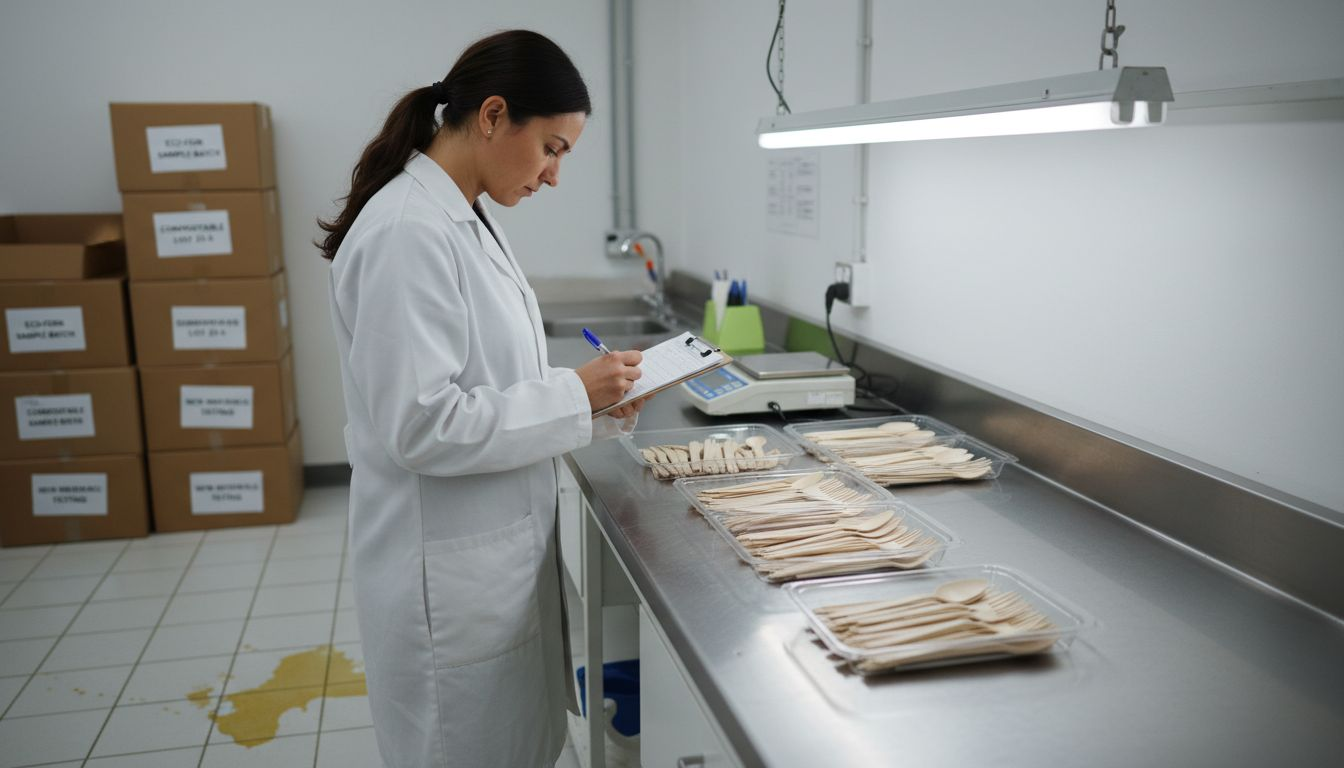
The certification process involves comprehensive evaluations of material composition, decomposition rates, and potential environmental impact. Manufacturers must prove their products can safely break down in industrial composting facilities without leaving toxic residues, providing transparent documentation of their environmental credentials.
Pro Tip: Request comprehensive certification documentation from manufacturers and verify that their eco-friendly forks meet all relevant regional environmental and safety standards.
Environmental Benefits and Comparative Impact
Biodegradable forks represent a transformative solution in reducing environmental waste and carbon emissions, offering food service businesses a meaningful pathway to sustainable operations. These innovative utensils go far beyond simple waste reduction, providing comprehensive environmental advantages that address multiple ecological challenges.
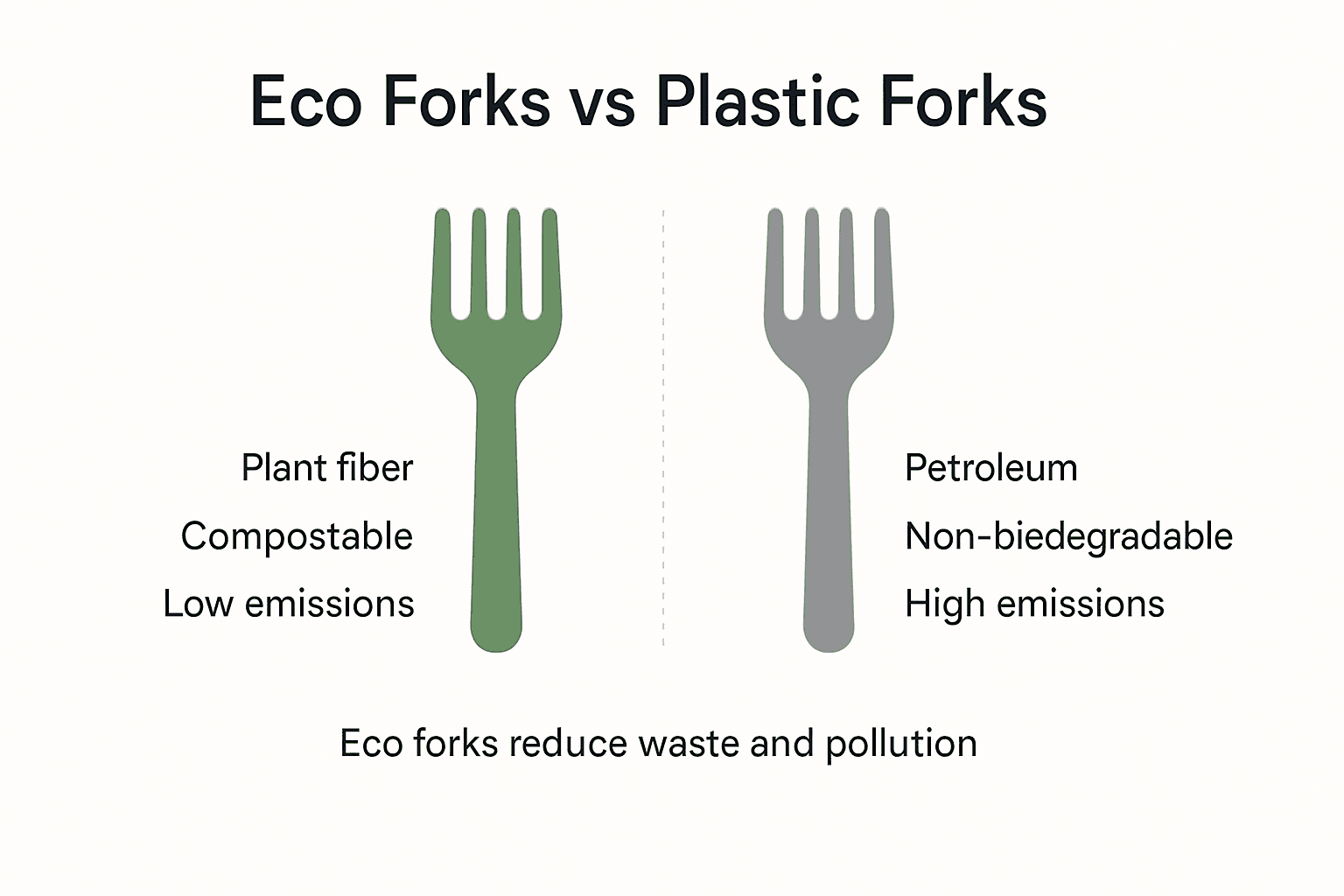
Comparative environmental assessments reveal significant performance differences between traditional and eco-friendly disposable forks. Key environmental benefits include:
- Reduced Fossil Fuel Consumption: Manufactured from renewable plant-based materials
- Lower Carbon Emissions: Significantly reduced greenhouse gas production
- Faster Decomposition: Breaking down within months instead of centuries
- Zero Microplastic Generation: Preventing long-term ecosystem contamination
Life cycle assessments demonstrate that eco-friendly forks generate markedly lower environmental impacts compared to conventional plastic alternatives. These comprehensive studies highlight how biodegradable forks contribute to circular economy principles by minimizing waste accumulation and supporting sustainable resource management. The long-term environmental benefits extend beyond immediate waste reduction, creating a more holistic approach to resource consumption.
See how eco-friendly disposable forks compare with traditional options regarding long-term impact:
| Factor | Eco-Friendly Forks | Traditional Plastic Forks |
|---|---|---|
| Fossil Fuel Usage | Minimal | High |
| Greenhouse Gas Output | Low | Significant |
| Decomposition Speed | Few months | Hundreds of years |
| Microplastic Pollution | None | Extensive |
The transition to eco-friendly disposable forks represents more than a trend—it is a critical strategy for businesses committed to environmental stewardship. By selecting biodegradable alternatives, food service operations can dramatically reduce their ecological footprint while demonstrating corporate responsibility to environmentally conscious consumers.
Pro Tip: Calculate your restaurant’s potential carbon reduction by transitioning to biodegradable forks and use these metrics in your sustainability marketing efforts.
Cost, Compliance, and Common Mistakes
Eco-friendly disposable forks represent a strategic investment that extends beyond initial purchase price, balancing higher upfront costs with long-term environmental and regulatory advantages. Food service businesses must understand the comprehensive financial implications of transitioning to sustainable utensil options.
Key compliance considerations for eco-friendly disposable forks include:
- Regulatory Standards: Meeting global plastic reduction mandates
- Certification Requirements: Obtaining ASTM D6400 compostability approval
- Food Safety Regulations: Securing FDA food contact material authorization
- Sourcing Transparency: Demonstrating responsible material procurement
The economic calculus of biodegradable forks involves multiple factors beyond direct product cost, including potential savings from reduced environmental cleanup expenses and enhanced brand reputation. Common mistakes that undermine sustainability efforts include:
- Assuming all biodegradable forks are compostable in any environment
- Neglecting proper consumer education on disposal methods
- Mislabeling products without appropriate certifications
- Failing to verify complete composting capabilities
Restaurants and food service operations must approach eco-friendly disposable forks as a comprehensive sustainability strategy. The additional expense is offset by regulatory compliance, potential marketing advantages, and alignment with growing consumer environmental consciousness.
Pro Tip: Develop a comprehensive staff training program that details proper handling, disposal, and communication strategies for eco-friendly disposable forks.
Elevate Your Sustainable Dining Experience with The Ocean Straw
The article highlights the challenge of reducing environmental impact through eco friendly disposable forks made from renewable, biodegradable materials. We understand your goal to minimize fossil fuel use, lower greenhouse gas emissions, and support circular economy principles while maintaining food service performance and compliance. Why stop at disposable forks when you can enhance your sustainability efforts with resilient, reusable eco-friendly straws that complement biodegradable utensils perfectly
Explore The Ocean Straw Growth Pack for a carefully curated selection designed to align with your sustainability goals.
Take action now by integrating durable, plant-based straws into your offerings and distinguish your business as an environmental steward. Visit TheOceanStraw.com to discover how our certified products support your commitment to eco-friendly dining solutions, reduce waste, and impress eco-conscious customers.
Frequently Asked Questions
What are eco-friendly disposable forks made from?
Eco-friendly disposable forks are typically made from renewable, biodegradable materials such as polylactic acid (PLA), wood, bamboo, and starch-based blends, as opposed to traditional petroleum-based plastics.
How do eco-friendly forks compare to traditional plastic forks in terms of environmental impact?
Eco-friendly forks reduce fossil fuel consumption, lower greenhouse gas emissions, decompose much faster, and prevent microplastic pollution, making them significantly more sustainable than traditional plastic forks, which can take hundreds of years to decompose.
How do I ensure the safety and sustainability of eco-friendly disposable forks?
To confirm the safety and sustainability of eco-friendly disposable forks, look for certifications such as BPI, ASTM D6400, and FDA food contact material authorization, which indicate compliance with rigorous industry testing and environmental standards.
What are the common mistakes to avoid when using eco-friendly disposable forks?
Common mistakes include assuming all biodegradable forks are compostable in any environment, neglecting to educate consumers on proper disposal methods, and failing to verify that the products have appropriate certifications.
Recommended
- Eco Friendly Disposable Spoons: Reducing Single-Use Plastic – The Ocean Straw
- Eco-Friendly Plates And Cutlery: Why It Matters for Foodservice – The Ocean Straw
- Eco‑Friendly Party Plates & Cutlery: Benefits for Foodservice – The Ocean Straw
- Eco Friendly Plastic: Impact on Foodservice Sustainability – The Ocean Straw