
Eco-Friendly Food Packaging: What Works in 2026

Choosing eco-friendly food packaging in a busy hotel or restaurant goes far beyond picking the box with a green logo. Sustainable managers must balance food safety, product protection, and reducing waste, all while keeping up with changing customer expectations and global regulations across regions like Europe, North America, and Asia. This guide breaks down the features and tradeoffs of each main packaging type, helping you select eco-friendly packaging that supports both operational efficiency and long-term brand trust.
Table of Contents
- Defining Eco-Friendly Food Packaging
- Types of Sustainable Packaging Materials
- How Reusable Packaging Transforms Foodservice
- Regulations Shaping Global Packaging Choices
- Comparing Impact: Reusable Vs. Single-Use Solutions
Key Takeaways
| Point | Details |
|---|---|
| Eco-Friendly Packaging Types | Understand the differences between recyclable, reusable, biodegradable, and compostable packaging to select options that suit your operation’s needs. |
| Consumer and Regulatory Trends | Monitor evolving consumer expectations and regulatory frameworks, as compliance will shape your packaging strategies in the coming years. |
| Reusable Systems | Implementing reusable packaging can significantly reduce waste and operational costs, but requires careful logistics and customer participation. |
| Evaluate Material Performance | Choose sustainable materials based on real-world performance and operational requirements, rather than trends or superficial characteristics. |
Defining Eco-Friendly Food Packaging
Eco-friendly food packaging sounds straightforward until you start working in a busy restaurant or hotel kitchen. What exactly makes packaging eco-friendly? The answer involves more than slapping a green label on a box. True eco-friendly packaging balances three core functions: protecting your food, maintaining product quality, and minimizing environmental harm across the entire supply chain. This means looking beyond just what the package is made from to how it performs, where it comes from, and what happens to it after use.
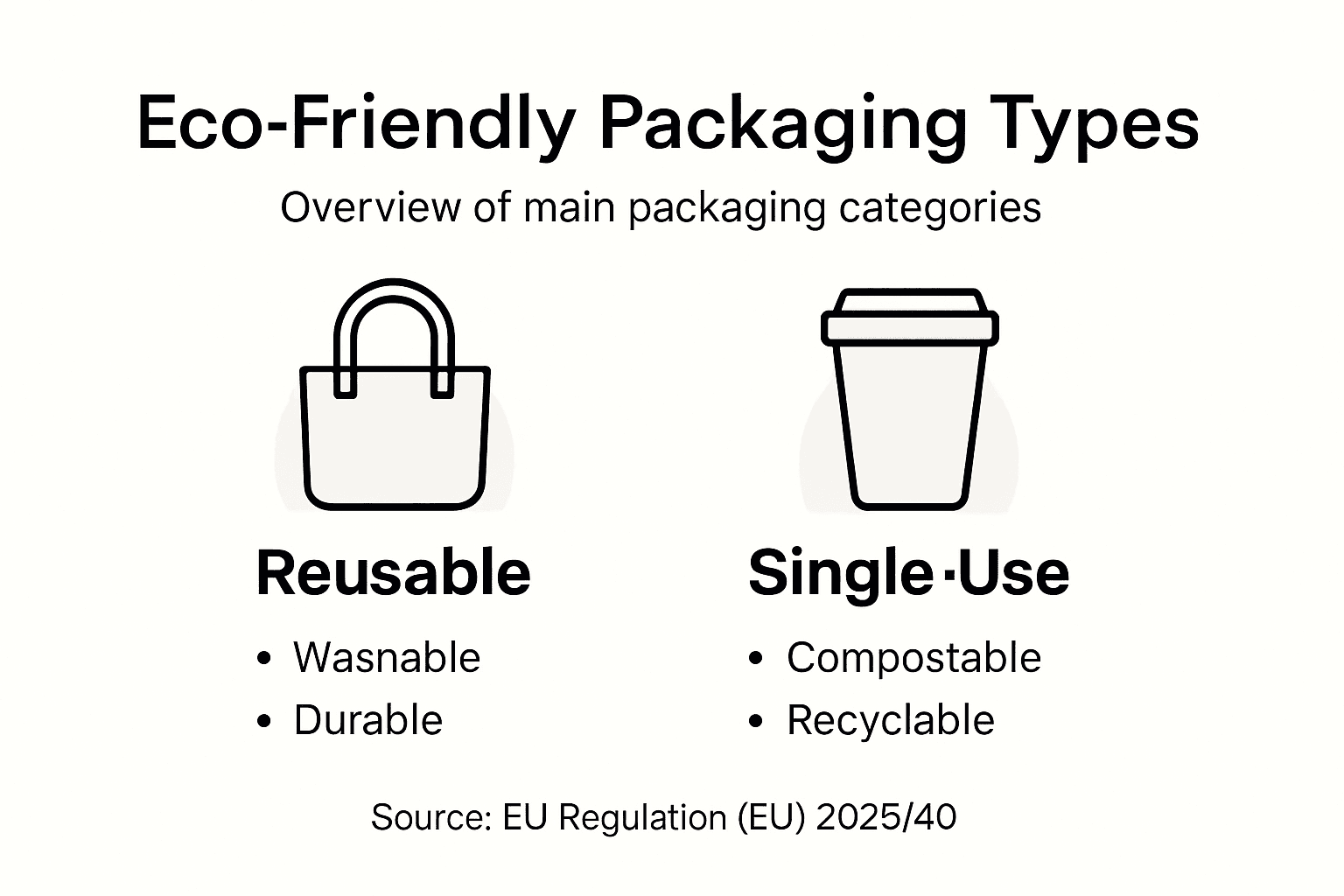
The definition of eco-friendly food packaging centers on four main categories. Recyclable packaging can be processed into new products through existing recycling infrastructure. Reusable packaging gets washed and used multiple times, dramatically reducing waste per meal served. Biodegradable packaging breaks down naturally without leaving toxic residue. Compostable packaging goes further by becoming part of soil amendments in composting facilities. However, sustainable food packaging involves balancing multiple factors simultaneously. No single solution works perfectly for every situation. A compostable container might be ideal for a fine dining establishment with access to commercial composting, but a hotel chain across multiple regions may need reusable solutions or recyclable options aligned with local waste management systems. The challenge intensifies when you consider that packaging must also prevent food spoilage, maintain temperature control, and meet food safety regulations while being cost-effective enough for your operation.
Here’s how the four eco-friendly packaging types compare in terms of features and suitability:
| Type | Key Feature | Best For | End-of-Life Outcome |
|---|---|---|---|
| Recyclable | Reprocessed into new items | Regions with recycling | Becomes raw material again |
| Reusable | Washed and used repeatedly | Operations with return logistics | Extended lifespan, minimal waste |
| Biodegradable | Breaks down naturally | Single-use needs | Disintegrates without toxins |
| Compostable | Converts to soil amendment | Facilities with composting | Enhances soil quality |
Modern innovations like biopolymers and nanomaterials are changing what’s possible in sustainable packaging. These materials can extend shelf life significantly, which means less food waste, less frequent deliveries, and ultimately less environmental impact overall. Yet challenges persist. Economic feasibility remains critical for many hospitality operations, especially smaller establishments. Regulatory standards vary wildly across regions, making it difficult to standardize procurement. Consumer expectations continue evolving, which affects your brand positioning and customer retention. Your goal in 2026 is not achieving perfection but selecting packaging that aligns with your operation’s specific constraints, your customer base’s expectations, and your genuine sustainability commitments.
Pro tip: Audit your current packaging waste stream by category and region before making changes, then prioritize solutions that address your largest waste volume first rather than trying to overhaul everything simultaneously.
Types of Sustainable Packaging Materials
When you’re standing in a supplier’s showroom or scrolling through catalogs, the material options for sustainable packaging can feel overwhelming. Each material type offers different advantages, tradeoffs, and real-world performance characteristics. Understanding what’s actually available helps you make decisions that work for your specific operation. The materials breaking through in 2026 fall into several distinct categories, each designed to address particular pain points in foodservice operations.
Plant-based and fiber materials have gained serious traction with restaurants and hotels. Paper and cardboard remain the workhorses, offering recyclability and compostability in many regions. Hemp fibers, sugarcane bagasse, and other agricultural byproducts create sturdy, functional packaging without depleting forests. Polylactic acid (PLA) derived from corn or sugarcane provides a bioplastic option that looks and feels like conventional plastic but breaks down in commercial composting facilities. Then there are bioinspired and biodegradable materials that mimic natural processes to reduce environmental impact while maintaining the durability your kitchen needs. Glass and metal containers, when part of a reusable system, eliminate single-use concerns entirely but require investment in logistics and cleaning infrastructure.

What matters most is matching materials to your operation’s reality. A fine dining hotel with sophisticated waste management systems can leverage PLA containers and compostable cutlery. A casual restaurant chain across multiple states might find recyclable polymers more practical given regional recycling capabilities. Your delivery frequency, temperature requirements, and local waste infrastructure all influence which material actually works best. Sustainable material selection isn’t about picking the most trendy option but rather the one that genuinely reduces your footprint given your constraints. Consider durability and reusability too. A reusable container system might cost more upfront but delivers far better environmental outcomes over time when you’re serving hundreds of meals weekly.
Emerging innovations continue expanding your options. Advanced coatings improve barrier properties so packaging protects food longer without relying on chemical additives. Hybrid materials combine the best attributes of multiple substances. Biodegradable polymers now perform in cold storage and hot conditions that previously required conventional plastics. The key is staying informed about what’s proven versus what’s still experimental, especially when your reputation and customer experience depend on reliable packaging.
Pro tip: Request samples of your top three material choices and test them with your actual menu items under real kitchen conditions for at least one week before committing to any large orders.
How Reusable Packaging Transforms Foodservice
Reusable packaging represents one of the most tangible shifts happening in foodservice sustainability right now. Unlike single-use materials that disappear after one meal, reusable systems get washed, returned, and used hundreds of times before retirement. This fundamental difference in lifespan completely changes the environmental math. A reusable container used 200 times has a vastly lower environmental footprint per serving than 200 disposable containers, even accounting for water and energy required for washing and transport. For your operation, this means moving from a linear “use and dispose” model to something closer to how fine dining and upscale hotels have operated for decades.
The shift toward reusable packaging solves multiple problems simultaneously. Your waste disposal costs drop significantly since you’re no longer paying to haul away hundreds of containers daily. Regulatory pressure is mounting in many jurisdictions, with cities and countries implementing bans on certain single-use plastics, making reusable systems not just environmentally smart but often legally necessary. Reusable packaging systems reduce plastic waste while supporting circular economy goals that appeal to your environmentally conscious customers. Your brand gets a powerful story to tell. Guests appreciate eating from quality containers they know will be properly cleaned and reused rather than contributing to landfills. Some restaurants report customers explicitly choosing them over competitors once they understand the reusable commitment.
Implementing reusable systems does require upfront investment and operational changes. You need collection logistics, cleaning protocols, and tracking systems to manage container flow. Digital tools for tracking inventory and supply chain transparency make this manageable at scale. Starting with one or two menu items using reusable containers lets you test the model before rolling out system wide. Partner restaurants report that reusable packaging drives sustainable transformation by balancing environmental responsibility with practical business needs. The key is choosing durable materials like glass, stainless steel, or high-quality ceramics that survive hundreds of wash cycles without degradation.
One practical advantage many operators overlook is brand differentiation. Hotels offering reusable containers for in-room dining or takeout stand out in guest reviews and loyalty programs. Restaurants using reusable serving ware create a memorable experience that encourages repeat visits. Your staff handles better-quality containers, which feels better and reflects positively on your brand standards. The environmental benefit becomes inseparable from customer experience improvement.
Pro tip: Start your reusable transition with delivery or takeout orders where you control the return logistics, rather than trying to manage returns from off-site customers who may not bring containers back consistently.
Regulations Shaping Global Packaging Choices
Regulations are no longer something to tolerate. They’re becoming your strategic roadmap. Starting in 2026, new legislation across Europe, North America, Asia, and Australia is fundamentally reshaping what packaging options you can actually use. If you operate hotels or restaurants with international locations or supply chains, understanding these shifts isn’t optional. The regulatory landscape now actively drives material selection, waste management practices, and innovation incentives worldwide. What works in one region may violate requirements in another, making compliance a critical operational consideration.
The European Union is leading with aggressive new standards. The EU Regulation (EU) 2025/40, effective from 2026, establishes mandatory sustainability requirements across the entire packaging lifecycle. Producers now face extended producer responsibility schemes that hold them financially accountable for collection, sorting, and recycling costs. This fundamentally changes the economics of packaging choices. The regulation requires packaging to minimize unnecessary weight and volume while maintaining food safety and product protection. Extended producer responsibility policies shift costs upstream, incentivizing manufacturers to design packaging that costs less to recycle. For your operation, this means suppliers will increasingly push sustainable options because they’re managing the end-of-life costs themselves.
Across global markets, the regulatory pattern is consistent even if specific requirements vary. Compostable and biodegradable material regulations, recycled content mandates, and extended producer responsibility policies shape material selection everywhere. Australia, Canada, and various Asian markets are implementing similar frameworks with their own timelines and specifications. What this means practically is that your packaging supplier choices are narrowing in ways that actually favor sustainable options. Single-use plastics face bans or taxes in most developed markets. Recycled content minimums are becoming standard requirements. Compostable materials that meet specific standards gain regulatory approval in more jurisdictions annually.
This table summarizes how regulatory pressure shapes global packaging strategies:
| Region/Market | Key Regulation Focus | Impact on Packaging Choices |
|---|---|---|
| European Union | Extended producer responsibility | Incentivizes sustainable design |
| North America | Single-use bans, recycling laws | Drives shift to recycled content |
| Asia | Waste management reforms | Encourages local material solutions |
| Australia | Compostable mandates, plastic bans | Promotes compostable and paper packaging |
For your business, staying ahead means building supplier relationships with companies who understand these regulations deeply. You need packaging partners who can adapt as rules change region by region. Don’t wait until regulations force your hand. Hotels and restaurants that proactively align with 2026 standards gain competitive advantage through brand positioning while avoiding rushed transitions that damage customer experience. Start documenting your current packaging compliance status by region today. Identify where you fall short of emerging requirements and prioritize changes that provide the greatest regulatory buffer.
Pro tip: Schedule quarterly reviews of packaging regulations in your operating regions with your suppliers, and request written confirmation they meet current standards in each jurisdiction rather than assuming compliance carries across borders.
Comparing Impact: Reusable vs. Single-Use Solutions
The environmental case for reusable packaging sounds obvious until you dig into the numbers. The truth is more nuanced than most sustainability marketing suggests. A reusable container only becomes environmentally superior after it’s been used enough times to offset the manufacturing energy and transportation impacts required to create it and keep it in circulation. The breakeven point varies dramatically based on product type, distance traveled, washing methods, and how many times the container actually gets reused before it wears out. Understanding these tradeoffs helps you make decisions grounded in actual environmental benefit rather than good intentions.
Life cycle assessments comparing reusable and single-use packaging reveal compelling patterns. Reusable packaging generally offers lower environmental footprints when sufficient reuse cycles occur. Most studies show reusable systems outperforming single-use options across greenhouse gas emissions, toxicity, and resource use categories. The key variables that determine success include transportation logistics, washing processes, and how your customers actually behave with the containers. A glass container used 50 times dramatically beats 50 disposable cups. But if that glass container sits in a landfill after three uses, the environmental math shifts completely. This is why deposit-return schemes and accessible collection systems matter so much. They transform reusable packaging from an environmental hope into an environmental reality.
The European Commission’s Joint Research Centre conducted rigorous assessments in real foodservice contexts. Results show reusable packaging outperformed single-use options in most scenarios when collection and return logistics are efficiently managed. This matters for your operation because it means reusable systems deliver documented environmental benefits, not just theoretical ones. However, urban infrastructure and consumer participation remain critical. A reusable program works brilliantly in a compact city neighborhood with regular collection routes. The same system struggles in dispersed suburban areas where containers travel excessive distances to washing facilities.
For your business, this means matching the system to your geography and customer base. Hotels with in-room dining or room service can control reusables through housekeeping logistics. Restaurants with delivery operations need reliable customers who return containers. Fine dining with seated service naturally manages reusable dishware. Fast casual takeout creates logistical challenges. The environmental winner isn’t always the reusable option. Sometimes, a truly compostable single-use container in a region with composting infrastructure beats a reusable system that requires wasteful transportation. The honest answer is context dependent. Your job is understanding which solution actually delivers environmental benefit in your specific situation rather than defaulting to either option based on assumptions.
Pro tip: Calculate the actual reuse rate in your operation by tracking how many times containers get returned before disposal, then compare that number to published breakeven cycles for your chosen material to verify you’re actually achieving environmental benefits.
Elevate Your Eco-Friendly Food Packaging with Sustainable Straw Solutions
The challenge of balancing food safety, environmental impact, and regulatory compliance calls for smart, sustainable choices across all your packaging components. Straws are a critical touchpoint often overlooked in sustainability efforts. Switching to reusable, plant-based straws made from innovative wood and plant materials complements your efforts to reduce single-use plastics while supporting durable, biodegradable alternatives that perform under real kitchen conditions. At TheOceanStraw.com, our premium products help your business meet evolving environmental standards and customer expectations without compromising quality.
Discover how our The Ocean Straw Growth Pack can streamline your transition to eco-friendly dining while reinforcing your brand’s commitment to sustainability. Act now to align your foodservice operation with 2026’s sustainable packaging trends and regulatory requirements by integrating high-quality reusable straws. Visit TheOceanStraw.com today to request samples, explore wholesale options, and start transforming your packaging solutions.
Frequently Asked Questions
What are the main types of eco-friendly food packaging?
Eco-friendly food packaging primarily falls into four categories: recyclable, reusable, biodegradable, and compostable. Each type serves different purposes and has distinct end-of-life outcomes that minimize environmental harm while protecting food.
How does reusable packaging impact environmental sustainability?
Reusable packaging significantly reduces waste by being washed and used multiple times. This model lowers the environmental footprint per serving compared to single-use containers, especially when efficient logistics and cleaning protocols are in place.
What factors should I consider when selecting sustainable packaging materials?
When choosing sustainable packaging materials, consider durability, reusability, local waste infrastructure, and how the materials perform with your specific food items. It’s essential to match the materials to your operational needs while ensuring they offer genuine environmental benefits.
How can regulations affect my choice of food packaging?
Regulations can impose requirements on packaging materials and practices, influencing what options are available. Changes such as extended producer responsibility schemes and compostable mandates can drive manufacturers towards developing more sustainable solutions that align with compliance standards.
Recommended
- Complete Guide to Eco Friendly Takeout Containers – The Ocean Straw
- Eco‑Friendly Takeaway Containers: Sustainable Packaging You Can Trust – The Ocean Straw
- Eco Friendly Alternatives to Plastic Wrap: Smart Switching – The Ocean Straw
- Eco Friendly Plastic: Impact on Foodservice Sustainability – The Ocean Straw