
Eco Friendly Forks and Spoons: Reducing Restaurant Waste

Over 40 billion pieces of plastic cutlery are discarded each year in the United States, putting massive pressure on American waste systems and the environment. For restaurant owners committed to sustainability, every utensil choice sends a clear message about environmental responsibility. Discover how switching to eco-friendly forks and spoons can support your green goals while aligning with American values of innovation, quality, and community leadership.
Table of Contents
- Eco Friendly Forks And Spoons Defined
- Material Options And Certification Standards
- Sustainable Sourcing And Manufacturing Practices
- Performance, Durability, And Customer Experience
- Cost Factors And Waste Management Challenges
Key Takeaways
| Point | Details |
|---|---|
| Sustainable Alternatives | Eco-friendly forks and spoons reduce single-use plastic waste by utilizing biodegradable materials like plant-based flours and agricultural byproducts. |
| Performance Standards | Modern eco-friendly utensils offer durability and heat resistance, ensuring they can match the functionality of traditional plastic cutlery. |
| Cost Considerations | While initial investment costs are higher, a cost-benefit analysis including long-term sustainability benefits is essential for making informed purchasing decisions. |
| Certification Importance | Prioritize utensils with clear biodegradability certifications to verify their environmental impact before bulk purchases. |
Eco Friendly Forks and Spoons Defined
Eco friendly forks and spoons represent innovative sustainable alternatives designed to reduce single-use plastic waste in restaurant and food service environments. These utensils go beyond traditional disposable cutlery by incorporating materials and manufacturing processes that minimize environmental impact. Biodegradable utensils are crafted from renewable resources like plant-based flours, agricultural byproducts, and sustainable biomaterials that can decompose naturally without causing long-term pollution.
One compelling example of this innovation is edible cutlery developed from multiple grains, which offers a revolutionary approach to reducing plastic waste. These utensils are typically manufactured using combinations of wheat, ragi, and rice flour, creating products that are not just environmentally friendly but also functional and potentially consumable. The key characteristics include durability, quick biodegradation, and minimal environmental footprint compared to traditional plastic utensils.
Restaurant owners and food service professionals are increasingly recognizing the importance of transitioning to eco friendly forks and spoons. These alternatives address several critical environmental challenges, including reducing petroleum-based plastic production, minimizing landfill waste, and decreasing marine pollution caused by single-use plastics. The materials used in these sustainable utensils can range from compostable plant starches to innovative edible formulations that break down quickly in natural environments.
Pro tip: When selecting eco friendly forks and spoons, prioritize utensils with clear biodegradability certifications and third-party environmental testing to ensure genuine sustainability.
Material Options and Certification Standards
Restaurant owners seeking sustainable utensil solutions have an expanding array of material options that meet rigorous environmental standards. Biodegradable materials now include innovative alternatives like plant-based starches, agricultural waste products, and regenerative biomaterials that offer significant improvements over traditional plastic cutlery. These materials are carefully engineered to provide durability while ensuring minimal environmental impact throughout their lifecycle.
The landscape of sustainability certifications has evolved to provide clear guidance for eco-conscious businesses. Sustainability standards and certifications play a crucial role in verifying the environmental credentials of cutlery materials. Organizations like the Cradle to Cradle Certified program offer comprehensive assessments that evaluate material safety, environmental performance, and social responsibility. These certifications help restaurant owners make informed choices by providing transparent benchmarks for product sustainability.
Key material options for eco friendly forks and spoons include wheat-based composites, rice flour derivatives, agricultural byproducts, and advanced plant-based polymers. Each material undergoes stringent testing to ensure it meets performance requirements while maintaining a minimal carbon footprint. The most advanced options not only decompose quickly but can also potentially be repurposed or consumed, representing a significant breakthrough in sustainable food service solutions.
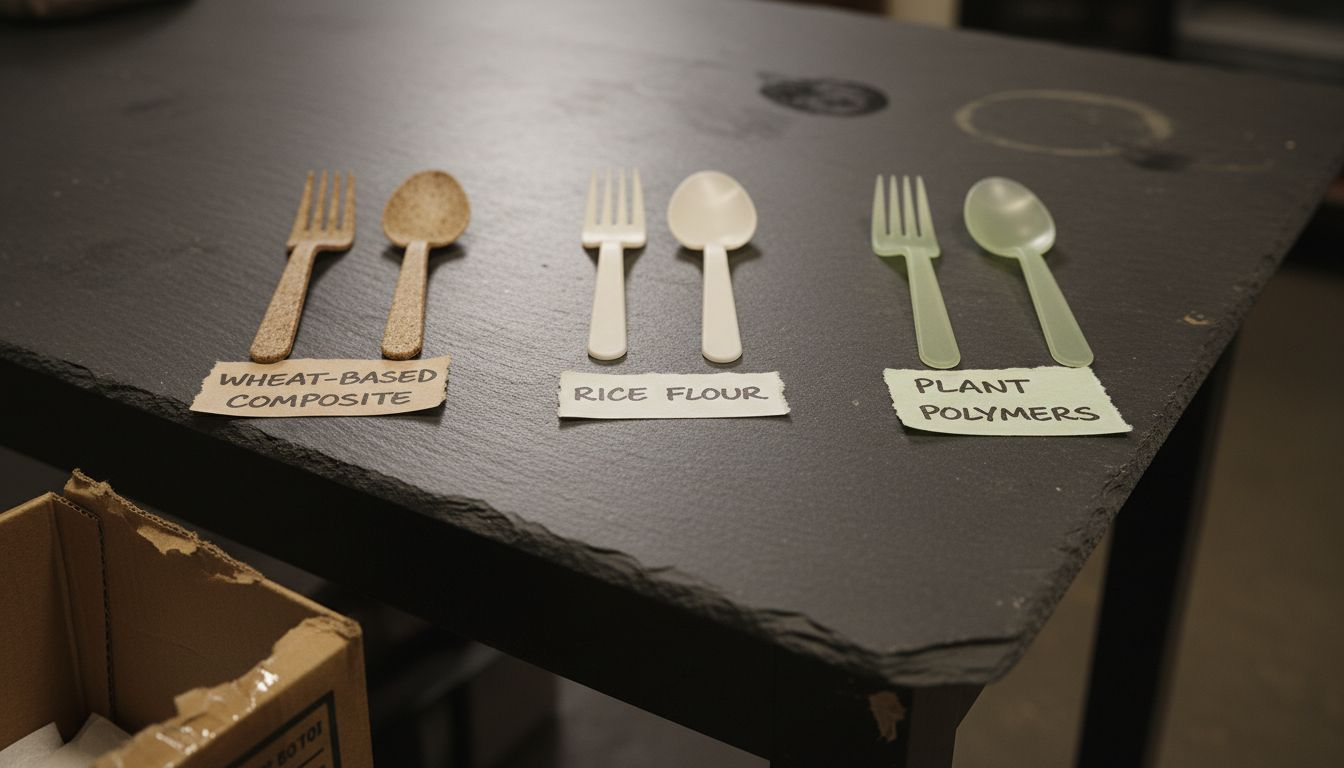
Here is a comparison of common eco-friendly utensil materials and their unique advantages:
| Material Type | Durability | Environmental Benefit | Additional Feature |
|---|---|---|---|
| Wheat-Based Composite | High | Rapid biodegradation | Safe for moderate heat |
| Rice Flour Derivative | Moderate | Compostable in natural conditions | Neutral taste profile |
| Agricultural Byproduct | Medium-High | Reduces farming waste | Supports rural economies |
| Edible Grain Blend | Moderate | Completely consumable after use | Zero-waste option |
| Plant-Based Polymer | High | Lower carbon footprint vs. plastics | Withstands high temperatures |
Pro tip: Request detailed certification documentation from suppliers to verify the true environmental impact and biodegradability of eco friendly utensils before making bulk purchasing decisions.
Sustainable Sourcing and Manufacturing Practices
Sustainable manufacturing of eco-friendly forks and spoons requires a comprehensive approach that goes far beyond simple material selection. Ethical sourcing has become a critical consideration for restaurant owners committed to reducing their environmental footprint, encompassing complex supply chain management that addresses environmental, social, and economic sustainability. Manufacturers must carefully evaluate each stage of production, from raw material extraction to final product creation, ensuring minimal ecological disruption and maximum social responsibility.
Ethical sourcing in manufacturing represents a holistic approach to production that prioritizes worker rights, environmental protection, and regulatory compliance. This approach involves rigorous screening of suppliers, implementing transparent production processes, and maintaining strict standards for environmental and social impact. Advanced manufacturers now utilize advanced tracking technologies to monitor every stage of utensil production, ensuring that each component meets stringent sustainability criteria.
The most progressive eco-friendly utensil manufacturers are implementing innovative practices that transform traditional production models. These include utilizing agricultural waste as raw materials, developing closed-loop manufacturing systems that minimize waste, and investing in renewable energy technologies for production facilities. By integrating circular economy principles, these manufacturers create utensils that not only reduce environmental impact but also support broader sustainability goals within the food service industry.
Pro tip: Request comprehensive sustainability reports from potential utensil suppliers to gain transparent insights into their manufacturing practices and environmental commitments.
Performance, Durability, and Customer Experience
Eco-friendly utensils must meet rigorous performance standards to successfully replace traditional plastic cutlery in restaurant settings. Performance metrics extend beyond environmental considerations, encompassing critical factors like structural integrity, heat resistance, and overall user experience. Restaurant owners need sustainable solutions that deliver consistent functionality while maintaining the same level of reliability customers expect from conventional utensils.
Consumer perceptions of product durability play a crucial role in driving sustainable purchasing decisions. Modern eco-friendly forks and spoons are engineered to withstand multiple uses, featuring advanced material compositions that provide strength comparable to traditional plastic alternatives. Manufacturers have invested significant research into developing biodegradable materials that do not compromise on performance, ensuring that sustainability does not come at the expense of quality or customer satisfaction.
The most successful eco-friendly utensil designs incorporate innovative technologies that address potential user concerns about durability and functionality. Advanced manufacturing techniques now enable the production of utensils that maintain structural integrity across various temperature ranges, resist breaking or deforming during use, and provide a comfortable dining experience. These improvements help bridge the gap between sustainability aspirations and practical restaurant needs, demonstrating that environmentally responsible choices can also deliver superior performance.
Pro tip: Request sample testing of eco-friendly utensils across different food temperatures and usage scenarios to validate their real-world performance before making a bulk purchasing commitment.
Cost Factors and Waste Management Challenges
The economic landscape of sustainable utensils presents complex challenges for restaurant owners seeking to transition from traditional plastic cutlery. Initial investment costs for eco-friendly alternatives often represent a significant barrier, with pricing typically 20-40% higher than conventional single-use plastics. These increased upfront expenses require strategic financial planning and a comprehensive understanding of long-term sustainability benefits beyond immediate monetary considerations.
Plastic cutlery waste challenges represent a massive environmental and economic problem, with approximately 40 billion pieces consumed annually in the United States alone. The enormous scale of waste generation creates intricate waste management challenges that extend far beyond simple disposal. Restaurants must navigate complex infrastructure limitations, inconsistent recycling capabilities, and evolving regulatory environments while attempting to implement more sustainable utensil solutions.
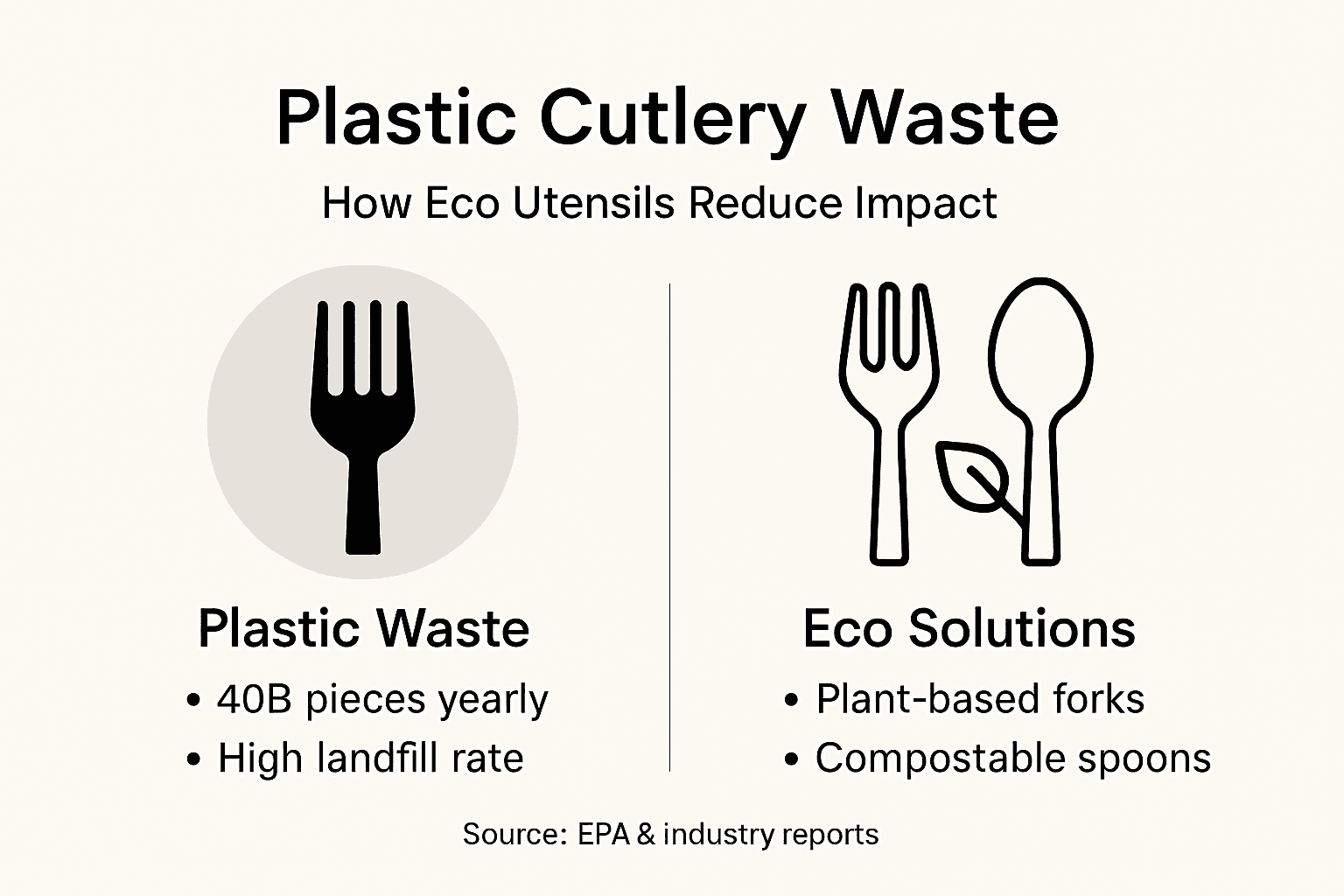
Successful waste reduction strategies demand a multifaceted approach that integrates economic considerations with environmental consciousness. Advanced restaurants are developing innovative solutions like implementing deposit systems for reusable utensils, partnering with specialized recycling services, and creating closed-loop waste management programs. These approaches help mitigate the financial burdens associated with sustainable cutlery while demonstrating a commitment to reducing environmental impact.
The table below summarizes key factors influencing the total cost and waste management outcomes of switching to sustainable cutlery:
| Factor | Impact on Cost | Impact on Waste Management |
|---|---|---|
| Upfront Product Price | Higher than plastic | May require budget adjustment |
| Disposal/Recycling Fees | Potentially lower | Reduced landfill burden |
| Supplier Certification | Adds transparency | Ensures genuine biodegradability |
| Reusability/Incentive Use | Lowers long-term cost | Supports closed-loop or reusable systems |
| Stakeholder Training | Minor cost | Ensures proper utensil sorting and disposal |
Pro tip: Conduct a comprehensive cost-benefit analysis that includes disposal expenses, potential waste reduction incentives, and long-term environmental impact when evaluating eco-friendly utensil investments.
Elevate Your Restaurant’s Sustainability with Innovative Eco Solutions
Restaurants face the critical challenge of reducing plastic waste from single-use utensils while maintaining durability and customer satisfaction. This article highlights key pain points such as the need for biodegradable materials, ethical sourcing, and balancing cost with environmental impact. Just as eco friendly forks and spoons revolutionize sustainable dining, adopting high-quality reusable straws can further minimize your establishment’s footprint and enhance your green initiatives.
Discover how The Ocean Straw Growth Pack offers plant-based, durable straws designed for the food service industry. These straws complement biodegradable utensils by providing a reusable alternative that meets performance and environmental goals. With certifications and a commitment to ethical manufacturing, our solutions support your efforts to reduce petroleum-based plastic use and marine pollution.
Take the next step in creating a zero-waste dining experience today. Visit TheOceanStraw.com to explore sustainable straw options and join other industry leaders investing in a cleaner future. Act now to align your restaurant with innovative eco-friendly practices that customers trust and value.
Frequently Asked Questions
What are eco-friendly forks and spoons?
Eco-friendly forks and spoons are sustainable alternatives to traditional plastic cutlery, made from biodegradable materials that minimize environmental impact and reduce plastic waste in food service environments.
How are biodegradable utensils made?
Biodegradable utensils are crafted from renewable resources like plant-based flours, agricultural byproducts, and compostable biomaterials, which decompose naturally without causing long-term pollution.
What materials are commonly used in eco-friendly forks and spoons?
Common materials include wheat-based composites, rice flour derivatives, agricultural byproducts, and plant-based polymers, each offering unique benefits in terms of durability and environmental impact.
How can restaurant owners ensure the sustainability of their utensils?
Restaurant owners should look for utensils with clear biodegradability certifications and third-party environmental testing, and request detailed sustainability reports from suppliers to verify eco-friendly claims.
Recommended
- Eco Friendly Disposable Forks: Impact on Food Service – The Ocean Straw
- Eco Friendly Disposable Spoons: Reducing Single-Use Plastic – The Ocean Straw
- How to Reduce Solid Waste in Restaurants Step by Step – The Ocean Straw
- Eco-Friendly Plates And Cutlery: Why It Matters for Foodservice – The Ocean Straw
- Our Bags – House Coffee