
Eco‑Friendly Takeaway Containers: Sustainable Packaging You Can Trust

More than 40 percent of American consumers say they are willing to pay extra for eco-friendly takeaway containers, yet confusion still surrounds which options truly benefit the environment. As American businesses race to meet both customer demand and tightening regulations, understanding what actually defines an eco-friendly container matters more than ever. Discover what sets these containers apart, how materials and certifications play a role, and why smart choices support both the planet and business goals.
Table of Contents
- What Defines Eco‑Friendly Containers
- Materials Used And Compostability
- Certifications And Compliance Standards
- Regulations And Legal Landscape
- Performance, Costs, And Operational Impact
Key Takeaways
| Point | Details |
|---|---|
| Sustainable Materials are Essential | Eco-friendly containers utilize biodegradable and recyclable materials, minimizing waste and environmental impact throughout their lifecycle. |
| Consumer Preferences Matter | Material composition, manufacturing technology, and visual appeal significantly influence consumer acceptance of eco-friendly packaging solutions. |
| Regulatory Environment is Evolving | Increasing regulations are pushing for sustainable packaging, with bans on single-use plastics and incentives for green alternatives becoming more common. |
| Economic Viability is Complex | Implementing eco-friendly containers involves various costs and operational impacts, necessitating strategic planning for sustainability and efficiency. |
What Defines Eco‑Friendly Containers
Eco‑friendly takeaway containers represent a sophisticated approach to sustainable packaging that goes far beyond simple waste reduction. These containers are carefully engineered solutions designed to minimize environmental impact while maintaining the functional requirements of food packaging. According to research examining sustainable food packaging, these solutions prioritize utilizing renewable resources and reducing energy consumption throughout their entire lifecycle.
Sustainable Materials stand at the core of eco‑friendly containers. These innovative packaging solutions are typically manufactured using biodegradable or recyclable materials that can naturally decompose or be reprocessed without generating significant waste. Key characteristics include:
- Renewable source origins (plant-based materials)
- Minimal carbon footprint during production
- Ability to break down naturally without toxic residues
- Low environmental impact throughout manufacturing process
Consumer perceptions play a critical role in defining eco‑friendly packaging effectiveness. A comprehensive study revealed that consumers prioritize three primary dimensions: material composition, manufacturing technology, and visual appeal. Research conducted in Vietnam highlighted that biodegradability, recyclability, and packaging aesthetics significantly influence consumer acceptance of sustainable packaging solutions.
Beyond material selection, truly eco‑friendly containers must demonstrate comprehensive environmental responsibility. This means considering the entire product lifecycle - from raw material sourcing and production processes to end-of-life disposal or recycling potential. Advanced eco‑friendly containers are designed with circular economy principles, ensuring that each packaging element can be either safely composted or efficiently recycled, thus minimizing waste and reducing long-term environmental burden.
Materials Used and Compostability
Eco‑friendly takeaway containers represent an innovative intersection of material science and environmental sustainability, with manufacturers increasingly exploring advanced materials that minimize ecological impact. Bioplastics derived from renewable resources offer a promising alternative to conventional plastics, though they currently face significant production and performance challenges.
Sustainable Materials in takeaway container production typically include:
- Plant-based polymers
- Agricultural waste derivatives
- Recycled paper and cardboard
- Biodegradable composites
- Natural fiber blends
However, the environmental credentials of these materials are not straightforward. Research indicates that compostable containers often have a higher environmental footprint than traditional paper or plastic alternatives, particularly when industrial composting infrastructure is limited. The effectiveness of these containers depends critically on access to specialized composting facilities, which remain scarce in many regions.

Advanced eco‑friendly containers must balance multiple performance criteria: biodegradability, production efficiency, food safety, and minimal environmental impact. While bioplastics and plant-based materials show tremendous potential, their current limitations include higher production costs, inconsistent barrier properties, and dependency on specific composting conditions. Manufacturers are continuously refining these materials to enhance their performance, seeking solutions that can be effectively processed in existing waste management systems while maintaining the functional requirements of food packaging.
Certifications And Compliance Standards
Navigating the complex landscape of eco‑friendly takeaway container certifications requires understanding multiple rigorous standards that ensure environmental accountability and performance. Certified paper-based containers demonstrate remarkable potential, offering up to a 90% reduction in lifecycle carbon emissions compared to traditional foam packaging, setting a new benchmark for sustainable packaging solutions.
Compliance Standards in eco‑friendly packaging typically encompass several critical dimensions:
- Biodegradability testing
- Carbon footprint measurement
- Toxicity and chemical safety assessments
- Material sourcing transparency
- Performance under various environmental conditions
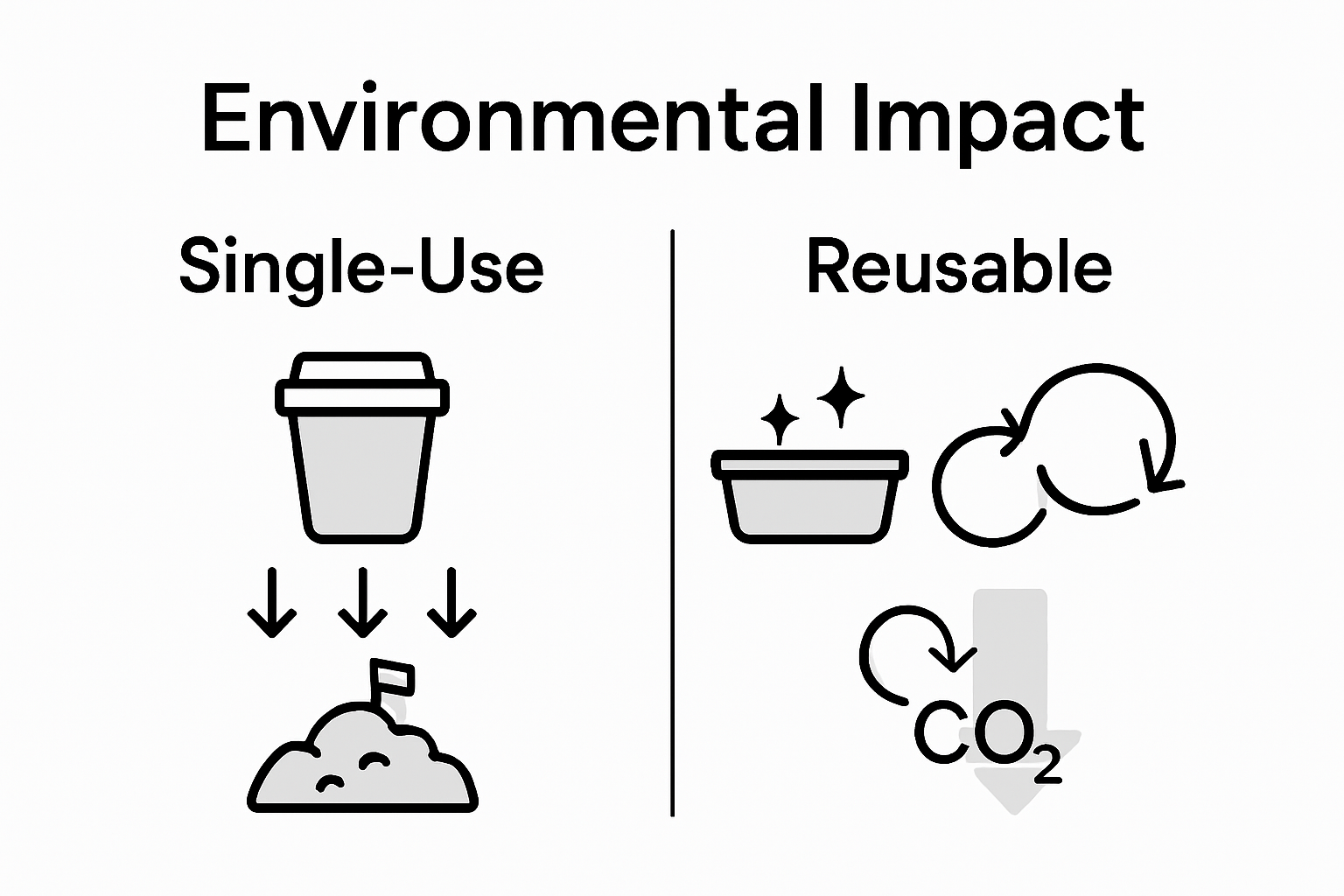
Reusable containers present a nuanced sustainability challenge, requiring careful evaluation of their environmental impact based on usage frequency. Research indicates that these containers must be reused between 16 and 208 times to effectively match the environmental profile of single-use alternatives, underscoring the importance of durability and repeated use in achieving meaningful sustainability goals.
Certification processes for eco‑friendly takeaway containers involve comprehensive assessments from multiple regulatory bodies and independent environmental organizations. These evaluations go beyond simple material composition, examining the entire lifecycle of packaging solutions - from raw material extraction and manufacturing processes to end-of-life disposal and potential for recycling or composting. By establishing stringent compliance standards, these certifications help businesses and consumers make informed choices that support genuine environmental sustainability, rather than merely embracing superficial green marketing claims.
Regulations And Legal Landscape
The global regulatory environment for food packaging is undergoing a dramatic transformation, driven by urgent environmental concerns and increasing public awareness. Cities like New York and Paris are implementing strict regulations that ban single-use plastics, compelling foodservice operators to rapidly adopt sustainable packaging alternatives, marking a significant shift in legal frameworks governing packaging materials.
Regulatory Trends in eco‑friendly packaging include:
- Comprehensive plastic usage restrictions
- Mandatory recycling and composting requirements
- Taxation on non-sustainable packaging materials
- Incentives for businesses adopting green packaging
- Extended producer responsibility programs
The escalating issue of food packaging waste has prompted governments worldwide to enact increasingly stringent policies aimed at reducing environmental impact, fundamentally reshaping the legal landscape for food packaging. These regulatory approaches go beyond simple restrictions, creating comprehensive frameworks that encourage innovation and sustainable design in packaging solutions.
The legal implications for businesses are profound, requiring proactive adaptation to emerging environmental regulations. Companies must now navigate complex compliance requirements that extend far beyond traditional waste management considerations. This includes detailed documentation of material sourcing, comprehensive lifecycle assessments, and demonstrable efforts to minimize environmental footprint. The regulatory trend suggests a future where sustainable packaging is not just an option, but a fundamental legal requirement for businesses operating in the food service and packaging industries.
Performance, Costs, And Operational Impact
Eco‑friendly takeaway containers represent a complex economic ecosystem where sustainability intersects with operational efficiency. A comprehensive cost-benefit analysis revealed significant economic challenges in implementing reusable container systems, with different stakeholders experiencing dramatically varied financial outcomes, highlighting the nuanced economic landscape of sustainable packaging solutions.
Economic Considerations in sustainable packaging typically involve:
- Initial investment costs
- Material procurement expenses
- Cleaning and maintenance requirements
- Logistics and transportation impacts
- Long-term environmental cost savings
The environmental benefits of reusable containers are fundamentally tied to their frequency of use, with multiple reuse cycles necessary to offset the impact of single-use alternatives. Businesses must strategically approach container management, recognizing that sustainability is not just an environmental imperative but a complex operational calculation.
Operational performance of eco‑friendly containers extends beyond simple cost metrics. Successful implementation requires comprehensive systems thinking that considers material durability, sanitation protocols, consumer behavior, and supply chain integration. Organizations must develop robust tracking mechanisms, invest in employee training, and create incentive structures that encourage proper container handling and repeated use. The most successful sustainable packaging strategies will be those that seamlessly blend environmental responsibility with operational pragmatism, transforming potential challenges into competitive advantages.
Elevate Your Eco-Friendly Packaging with Sustainable Straw Solutions
The article highlights the critical need for comprehensive sustainable packaging that not only reduces waste but also meets rigorous environmental standards. Businesses face challenges like balancing biodegradability, minimizing their carbon footprint, and complying with evolving regulations. One frequent pain point is finding packaging components that align seamlessly with circular economy principles and consumer expectations for durability and safety.
Addressing these concerns starts with choosing the right sustainable accessories. At TheOceanStraw.com, we offer an innovative range of eco-friendly, reusable drinking straws made from wood and plant-based materials designed to complement your green packaging efforts. Our products meet strict biodegradability and safety standards while enhancing customer appeal with their natural aesthetics.
Discover the benefits of integrating our premium sustainable straws into your operation by exploring The Ocean Straws collection for durable, environmentally conscious options. For businesses ready to make a significant impact, consider our comprehensive Ocean Straw Growth Pack, providing you with everything needed to kickstart your sustainability initiatives effectively. Visit TheOceanStraw.com today and take the next step toward packaging solutions you and your customers can trust.
Start transforming your foodservice sustainability strategy now by choosing high-quality reusable straws that align with eco-friendly takeaway container standards. Join a community of forward-thinking businesses that prioritize planet-first packaging. Act today to lead the change toward a cleaner future.
Frequently Asked Questions
What are eco-friendly takeaway containers made from?
Eco-friendly takeaway containers are typically made from sustainable materials such as plant-based polymers, recycled paper and cardboard, natural fiber blends, and biodegradable composites. These materials are designed to minimize environmental impact by being renewable and compostable.
How do eco-friendly takeaway containers compare to traditional plastic containers?
Eco-friendly takeaway containers have a lower carbon footprint and are often made from biodegradable or recyclable materials, which can decompose without toxic residues. In contrast, traditional plastic containers can contribute to long-term environmental waste as they do not break down easily and can release harmful chemicals.
Are eco-friendly containers compostable?
Yes, many eco-friendly takeaway containers are compostable, but their effectiveness depends on having access to industrial composting facilities. Without proper composting infrastructure, some containers may not decompose effectively, which is an important consideration when choosing packaging solutions.
What certifications should I look for in eco-friendly packaging?
When considering eco-friendly packaging, look for certifications that test for biodegradability, carbon footprint measurement, and toxicity safety assessments. These certifications help ensure the containers meet high environmental standards and support sustainable practices.
Recommended
- Complete Guide to Eco Friendly Takeout Containers – The Ocean Straw
- Complete Guide to Eco-Friendly Material Options – The Ocean Straw
- Eco Friendly Restaurant Supplies: Complete Guide – The Ocean Straw
- Batterien nachhaltig nutzen: Ein umfassendes Verständnis - accu.blog
- Freshness Indicators for Food: Complete Guide - Probe IT