
Environmental Impact of Bioplastics – The Truth for Foodservice

Switching to more sustainable beverage service can feel challenging when confusing terms like bioplastics enter the mix. Restaurant owners across the United States, Canada, and Europe face growing pressure to cut single-use plastic waste while ensuring their cups and straws actually break down after use. By clearly differentiating between bio-based, biodegradable, and compostable plastics, eco-conscious businesses gain crucial knowledge to make responsible choices that genuinely support the environment.
Table of Contents
- Bioplastics Defined and Common Misconceptions
- Key Types and Applications in Foodservice
- How Bioplastics Are Produced and Processed
- Life Cycle Impacts From Production to Disposal
- Risks, Limitations, and Competing Alternatives
Key Takeaways
| Point | Details |
|---|---|
| Understanding Bioplastics | Bioplastics vary in type and environmental impact, with distinctions between bio-based, biodegradable, and compostable plastics. It’s crucial to assess their properties before use. |
| Material Selection for Foodservice | Different bioplastics serve specific functions; evaluate properties like temperature tolerance and moisture resistance for optimal performance in foodservice applications. |
| Lifecycle Impact Considerations | Evaluate the environmental impact of bioplastics across their entire lifecycle, from production to disposal, to make informed sustainable decisions. |
| Technological Challenges | Be aware of the limitations of bioplastics, such as mechanical performance and cost efficiency, while exploring alternative sustainable packaging solutions. |
Bioplastics Defined and Common Misconceptions
Bioplastics represent a revolutionary approach to sustainable material design, offering an alternative to traditional petroleum-based plastics. Bioplastic materials are polymers derived from renewable biological sources such as corn starch, sugarcane, or agricultural waste, which can potentially reduce environmental impact compared to conventional plastics.
Understanding bioplastics requires distinguishing between key characteristics that are often misunderstood. Not all bioplastics are created equal - they can be categorized into several important types:
- Bio-based plastics: Manufactured from renewable biological resources
- Biodegradable plastics: Capable of breaking down through biological processes
- Compostable plastics: Can decompose under specific industrial composting conditions
- Partially bio-based plastics: Containing both biological and petroleum-derived components
Contrary to popular belief, being bio-based does not automatically mean a plastic is biodegradable. Bioplastics include various materials with properties similar to conventional plastics but with different environmental profiles. Some bio-based plastics are chemically identical to traditional plastics and do not biodegrade more quickly.
Pro Tip: When evaluating bioplastics for your foodservice business, always request specific certification details about biodegradability and composting requirements.
Key Types and Applications in Foodservice
Bioplastics in foodservice encompass a diverse range of materials designed to address environmental concerns while maintaining functional performance. Innovative food packaging solutions now include multiple bioplastic types that cater to different operational needs and sustainability goals.
The primary bioplastic materials used in foodservice can be categorized into several key types:
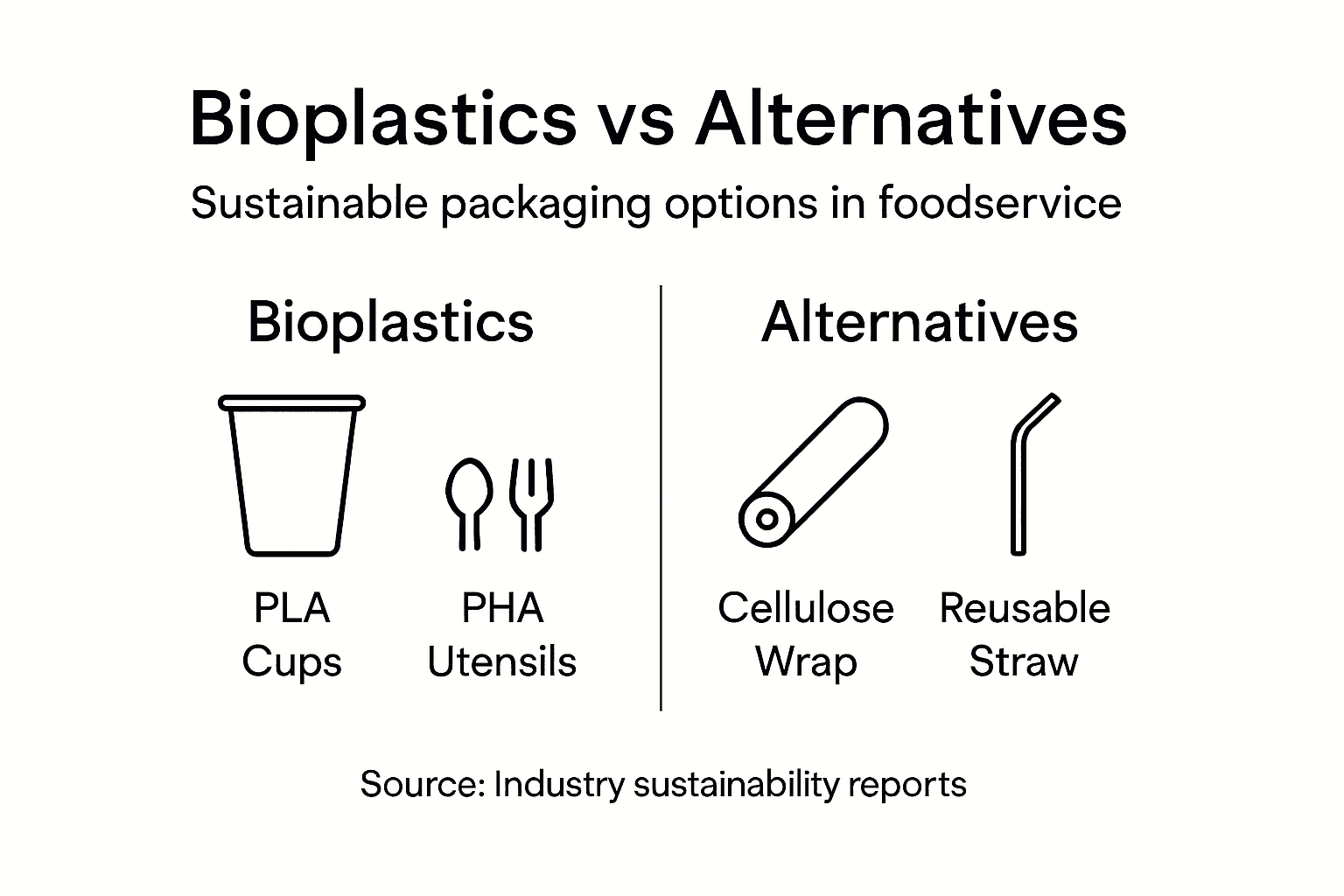
- Polylactic Acid (PLA): Derived from corn or sugarcane, ideal for cold drink cups and food containers
- Polyhydroxyalkanoates (PHA): Produced through bacterial fermentation, suitable for disposable utensils
- Starch-based Blends: Excellent for food packaging with high moisture resistance
- Cellulose-based Plastics: Derived from plant fibers, used in compostable food wraps
- Polybutylene Adipate Terephthalate (PBAT): Flexible material for food packaging films
Food packaging technologies have evolved to incorporate bioplastics with varying performance characteristics, allowing restaurants and catering businesses to select materials that match specific operational requirements. These materials offer different levels of biodegradability, heat resistance, and environmental impact.
Restaurants and foodservice providers must carefully evaluate each bioplastic type’s specific properties, considering factors like temperature tolerance, moisture resistance, and composting requirements. Understanding these nuanced differences helps businesses make informed sustainable purchasing decisions.

Here’s a quick comparison of major bioplastics used in foodservice:
| Material Type | Typical Foodservice Use | Heat Resistance | End-of-Life Option |
|---|---|---|---|
| PLA | Cold drink cups, containers | Low | Industrial composting only |
| PHA | Disposable utensils | Moderate | Home/industrial compostable |
| Starch Blends | Wet food packaging | Low | May be biodegradable |
| Cellulose Plastics | Compostable wraps | Moderate | Compostable in some systems |
| PBAT | Food packaging films | Low | Waste-to-energy, sometimes recycled |
Pro Tip: Request material specification sheets from bioplastic suppliers to precisely match packaging requirements with appropriate material performance.
How Bioplastics Are Produced and Processed
Bioplastic production involves complex transformations of renewable biomass into functional materials that can replace traditional petroleum-based plastics. The process begins with selecting appropriate biological feedstocks like corn, sugarcane, or agricultural waste that serve as raw material sources for polymer development.
The primary production methods for bioplastics include:
- Biomass Extraction: Isolating organic compounds from plant sources
- Chemical Conversion: Transforming raw materials into polymer precursors
- Fermentation: Using microorganisms to synthesize specific polymers
- Polymerization: Creating long-chain molecular structures
- Blending: Combining bio-based and fossil-based polymers for enhanced performance
Advanced processing techniques determine the final characteristics of bioplastic materials, including their biodegradability, heat resistance, and mechanical properties. Manufacturers must carefully control each stage of production to ensure the resulting material meets specific performance requirements for foodservice applications.
The environmental impact of bioplastic production varies significantly depending on the feedstock, processing method, and energy sources used. Some production routes demonstrate lower carbon emissions compared to traditional plastic manufacturing, while others may require careful evaluation to ensure genuine sustainability.
Pro Tip: Conduct a comprehensive lifecycle assessment of bioplastic production processes to accurately understand their true environmental footprint.
Life Cycle Impacts from Production to Disposal
Comprehensive life cycle assessments reveal critical environmental considerations in bioplastic development, tracking the material’s impact from initial raw material extraction through final disposal. Understanding these complex interactions helps foodservice businesses make more informed sustainable choices.
The key environmental impact stages include:
- Raw Material Cultivation: Land use, water consumption, and agricultural practices
- Manufacturing Process: Energy requirements, carbon emissions, and industrial waste
- Transportation: Fuel consumption and distribution carbon footprint
- Usage Phase: Performance characteristics and potential waste generation
- End-of-Life Disposal: Decomposition rates, recycling potential, and waste management challenges
Bioplastics present nuanced environmental trade-offs that require careful evaluation. While they offer potential improvements over traditional plastics, their sustainability depends on specific production methods, feedstock selection, and waste management infrastructure. Some bioplastic variants demonstrate significantly reduced carbon emissions, while others may create unexpected environmental challenges.
Foodservice businesses must consider multiple factors beyond simple material composition, including regional composting capabilities, waste stream compatibility, and the overall ecological footprint of their chosen materials. Transparent lifecycle analysis provides the most accurate understanding of a bioplastic’s true environmental performance.
This table summarizes key factors that affect bioplastics’ environmental impact:
| Stage | Major Consideration | Business Implication |
|---|---|---|
| Raw Material Sourcing | Land and water use | Potential supply chain constraints |
| Manufacturing | Carbon emissions, energy source | Affects total sustainability rating |
| Transportation | Distance and fuel consumption | Impacts carbon footprint of product delivery |
| Disposal | Composting or recycling access | Regional waste management must be evaluated |
Pro Tip: Request detailed lifecycle assessment documentation from bioplastic suppliers to accurately compare environmental impacts across different material options.
Risks, Limitations, and Competing Alternatives
Bioplastics present significant technological and environmental challenges that require careful consideration by foodservice businesses seeking sustainable packaging solutions. Despite their promising environmental potential, these materials are not without substantial limitations.
Key risks and limitations include:
- Mechanical Performance: Inferior strength and durability compared to traditional plastics
- Moisture Sensitivity: High hydrophilicity leading to rapid degradation
- Cost Inefficiency: Significantly higher production expenses
- Scalability Challenges: Difficult industrial-scale manufacturing
- Limited Temperature Resistance: Poor performance under high-heat conditions
Emerging research highlights persistent microplastic pollution concerns, revealing that even biodegradable bioplastics can generate microscopic plastic fragments during environmental breakdown. These tiny particles potentially pose unknown health and ecological risks, undermining the materials’ sustainability claims.
Alternative sustainable packaging solutions such as cellulose-based materials, edible packaging, and advanced recyclable composites are increasingly being developed to address bioplastics’ inherent limitations. Foodservice businesses must continuously evaluate emerging technologies and material innovations to identify the most responsible and effective packaging strategies.
Pro Tip: Conduct regular technological assessments to stay informed about emerging sustainable packaging alternatives that might outperform current bioplastic solutions.
Choose Truly Sustainable Solutions Beyond Bioplastics
The article highlights the environmental uncertainties surrounding bioplastics, including challenges with biodegradability, contamination risks from microplastics, and the need for specific industrial composting infrastructure. For foodservice businesses, these pain points create a pressing challenge: how to adopt sustainable packaging without compromising performance or contributing unknowingly to pollution. Concepts like “industrial composting only” and “lifecycle assessment” underscore the importance of selecting materials that deliver real environmental benefits without hidden trade-offs.
At TheOceanStraw.com, we understand these complexities and offer a proven alternative with our reusable straws made from innovative wood and plant-based materials. Our products combine durability, safety, and true biodegradability, helping restaurants and hospitality providers reduce single-use plastic waste immediately. When you choose our eco-friendly straw solutions, you align with sustainability initiatives that go beyond the limits of many bioplastics.
Explore how you can enhance your foodservice operations with high-quality reusable straws that satisfy your sustainability goals. Act now to equip your business with products endorsed for environmental responsibility and operational excellence by visiting TheOceanStraw.com. Discover detailed specifications, request samples, and join our network of industry partners committed to a cleaner future.
Frequently Asked Questions
What are bioplastics and how do they differ from traditional plastics?
Bioplastics are polymers derived from renewable biological sources, like corn starch or sugarcane, offering an alternative to petroleum-based plastics. Key differences include varying biodegradability, feedstock sources, and environmental impacts.
Are all bioplastics biodegradable?
No, not all bioplastics are biodegradable. Some bioplastics are chemically identical to conventional plastics and do not break down quickly in the environment, while others, like PLA and PHA, have specific composting requirements.
What types of bioplastics are commonly used in foodservice?
Common bioplastics in foodservice include Polylactic Acid (PLA) for cold drink cups, Polyhydroxyalkanoates (PHA) for disposable utensils, starch-based blends for food packaging, cellulose-based plastics for wraps, and Polybutylene Adipate Terephthalate (PBAT) for flexible films.
What environmental impacts should foodservice businesses consider when choosing bioplastics?
Foodservice businesses should consider factors like raw material sourcing, production energy requirements, carbon emissions, transportation impacts, and the end-of-life disposal options available for different bioplastics.
Recommended
- What is Bioplastic? Understanding Its Role in Sustainability – The Ocean Straw
- Harmful Effects of Plastic on Environment – Why Foodservice Matters – The Ocean Straw
- Bioplastic Environmental Impact – What Businesses Need to Know – The Ocean Straw
- Biodegradable Plastic – Impact on Eco-Friendly Dining – The Ocean Straw