
EU Sustainable Development Strategy and Hospitality Impact

Finding eco-friendly straw alternatives can feel challenging when regulations are changing and consumers expect genuine sustainability. Hospitality managers across Europe face increased pressure to align their operations with the European Union’s ambitious Sustainable Development Strategy, which is anchored in the United Nations’ 2030 Agenda and the seventeen Sustainable Development Goals. This article offers actionable insights that help you meet these standards, reduce environmental impact, and strengthen your reputation through informed product choices.
Table of Contents
- Defining The EU Sustainable Development Strategy
- Key Goals And Pillars For 2026 And Beyond
- How Strategy Shapes Hospitality Industry Practices
- Legal Obligations And Sustainability Reporting Rules
- Evaluating Costs, Risks, And Competitive Advantages
- Choosing Credible Eco-Friendly Product Alternatives
Key Takeaways
| Point | Details |
|---|---|
| Comprehensive Framework | The EU Sustainable Development Strategy integrates the 2030 Agenda’s seventeen Sustainable Development Goals to promote resilience and equity globally. |
| Strategic Pillars | Key focus areas like Climate Neutrality and Circular Economy aim to drive sustainable transformation across economic and social sectors through ambitious targets. |
| Legal Obligations | New regulations mandate hospitality businesses to enhance transparency in sustainability reporting, integrating environmental, social, and governance data into their operations. |
| Eco-Friendly Choices | Selecting sustainable products is crucial in meeting EU standards, requiring a thorough assessment of alternatives for resource conservation and waste reduction. |
Defining the EU Sustainable Development Strategy
The European Union’s Sustainable Development Strategy represents a comprehensive framework designed to drive transformative change across social, economic, and environmental domains. Developed through UN collaboration, this strategic approach integrates multiple critical objectives aimed at creating a more resilient and equitable global ecosystem.
At its core, the EU Sustainable Development Strategy is anchored in the United Nations’ 2030 Agenda, which encompasses seventeen Sustainable Development Goals (SDGs). These goals represent an ambitious blueprint for addressing global challenges through coordinated international efforts. The strategy’s key focus areas include:
- Climate action and environmental protection
- Socioeconomic progress and equity
- Health and wellness initiatives
- Education and skill development
- Economic growth and innovation
Monitoring and Implementation are central to the EU’s approach. The strategy employs approximately 100 indicators to track progress across various domains, ensuring accountability and continuous improvement. This data-driven methodology allows policymakers to make informed decisions and adjust strategies in real-time.
The EU’s commitment extends beyond internal policy, emphasizing global partnerships and collaborative solutions. By mainstreaming sustainable development principles into all policy areas, the European Union demonstrates leadership in addressing complex, interconnected global challenges.
Pro tip: Hospitality managers can align their operational strategies with EU sustainable development goals by conducting regular sustainability audits and implementing progressive environmental practices.
Key Goals and Pillars for 2026 and Beyond
The European Union is advancing a bold and comprehensive sustainability agenda that sets ambitious targets for transforming societal and economic paradigms. EU institutions are strategically defining priorities that go far beyond traditional environmental approaches, embedding sustainability into every sector of economic and social development.
The strategic pillars for 2026 and beyond encompass five critical dimensions of sustainable transformation:
- Climate Neutrality: Accelerating decarbonization efforts
- Circular Economy: Reimagining resource utilization and waste management
- Biodiversity Preservation: Protecting and restoring ecological systems
- Social Fairness: Ensuring equitable economic opportunities
- Economic Competitiveness: Driving innovation through sustainable practices
Legislative agendas are focusing on creating integrated approaches that simultaneously address environmental challenges and economic resilience. The European Green Deal serves as a cornerstone framework, providing a comprehensive roadmap for achieving these interconnected objectives.
Cross-sector collaboration and robust monitoring mechanisms will be crucial in translating these strategic goals into measurable outcomes. By establishing clear indicators and accountability structures, the EU aims to transform its sustainability vision into tangible societal progress across multiple domains.
Here’s how different EU strategic pillars connect to business impacts in the hospitality sector:
| Strategic Pillar | Main Focus | Hospitality Business Impact |
|---|---|---|
| Climate Neutrality | Lower carbon emissions | Energy savings, greener operations |
| Circular Economy | Waste reduction, reuse | Efficient resource management |
| Biodiversity Preservation | Ecosystem protection | Enhanced local brand reputation |
| Social Fairness | Equal opportunities | Diverse, inclusive workforce |
| Economic Competitiveness | Innovation for growth | Improved market positioning |
Pro tip: Business leaders should proactively align their organizational strategies with these EU sustainability pillars to remain competitive and contribute to broader societal transformation.
How Strategy Shapes Hospitality Industry Practices
The European Union’s sustainability strategy is fundamentally transforming hospitality industry practices, pushing businesses beyond traditional operational models. Green and digital transitions are reshaping how hospitality organizations approach environmental responsibility, efficiency, and strategic planning.
Key transformative practices emerging from EU sustainability strategy include:
- Workforce Development: Upskilling employees in sustainable practices
- Operational Sustainability: Reducing environmental footprints
- Digital Innovation: Implementing technology for efficiency
- Regulatory Compliance: Meeting evolving sustainability standards
- Supply Chain Resilience: Creating transparent, sustainable procurement networks
Sustainability has become a competitive imperative that goes far beyond traditional risk management. Hospitality businesses are now required to holistically integrate environmental considerations into their core business strategies, addressing everything from energy consumption to waste management and stakeholder engagement.

The strategy’s comprehensive approach demands that hospitality leaders reimagine their entire operational ecosystem. This means developing robust sustainability frameworks that not only comply with regulations but also create genuine value for customers, employees, and the broader community.
Pro tip: Conduct a comprehensive sustainability audit to identify gaps and opportunities for aligning your hospitality operations with EU strategic goals.
Legal Obligations and Sustainability Reporting Rules
The European Union has implemented stringent legal frameworks that fundamentally reshape sustainability reporting requirements for hospitality businesses. Corporate Sustainability Reporting Directive (CSRD) establishes comprehensive disclosure mandates, compelling organizations to provide unprecedented transparency about their environmental, social, and governance practices.
Key reporting obligations under the new regulatory landscape include:
- Environmental Impact Disclosure: Comprehensive carbon footprint reporting
- Social Responsibility Metrics: Workforce diversity and labor practices
- Governance Transparency: Ethical management and decision-making processes
- Double Materiality Assessment: Reporting business impacts and sustainability risks
- Stakeholder Engagement Reporting: Detailing interactions and community contributions
Commission Delegated Regulation defines specific sustainability reporting standards that apply to large undertakings and listed companies. The phased implementation begins in 2024, with larger enterprises required to comply first, followed by smaller organizations and non-EU companies in subsequent years.
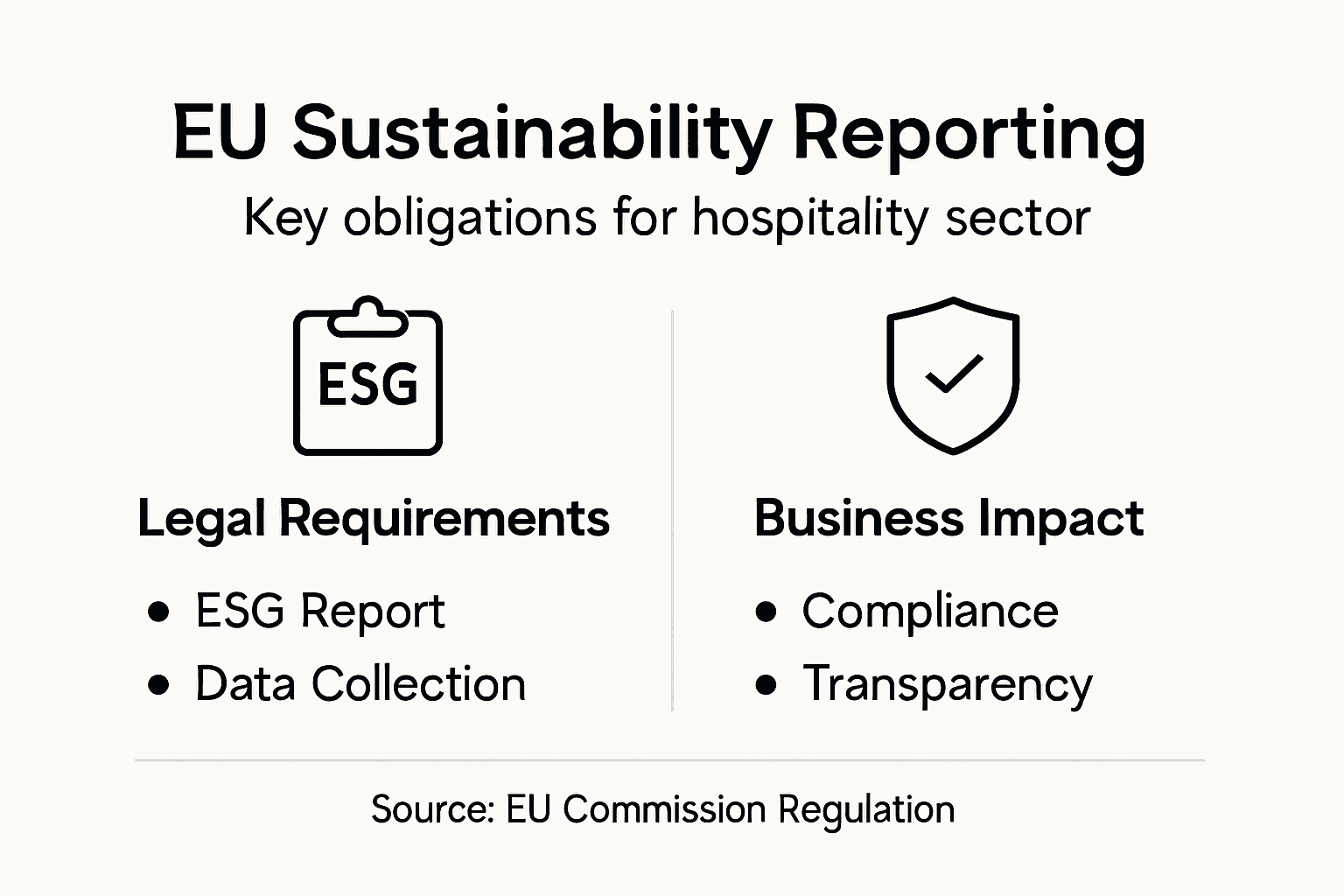
The regulatory framework demands a holistic approach to sustainability reporting, moving beyond traditional financial disclosures. Hospitality businesses must now integrate comprehensive environmental, social, and governance data into their management reports, creating a new standard of organizational accountability and transparency.
Compare key sustainability reporting requirements under new EU legal frameworks:
| Requirement | What It Entails | Importance for Hospitality |
|---|---|---|
| Environmental Disclosure | Detailed carbon and resource data | Proves eco-commitment to guests |
| Social Metrics | Workforce and diversity transparency | Builds trust with stakeholders |
| Governance Transparency | Disclose decision processes | Ensures ethical business image |
| Double Materiality Assessment | Assess risks and external impacts | Identifies wider risks and value |
Pro tip: Invest in robust data collection and reporting systems now to streamline compliance with evolving EU sustainability reporting requirements.
Evaluating Costs, Risks, and Competitive Advantages
Hospitality businesses face a complex landscape of financial considerations when implementing sustainability strategies. Strategic sustainability investments offer nuanced financial implications that extend far beyond traditional cost-benefit analyses, presenting both challenges and unprecedented opportunities for organizational transformation.
Key financial and strategic dimensions include:
- Initial Investment Costs: Energy-efficient equipment and infrastructure upgrades
- Training and Development Expenses: Workforce sustainability skill development
- Compliance Management: Regulatory adherence and reporting systems
- Risk Mitigation: Reducing potential penalties and reputational damages
- Competitive Differentiation: Market positioning for sustainability-conscious consumers
The hospitality sector confronts complex economic trade-offs that require sophisticated strategic planning. While upfront costs can be significant, the long-term benefits include operational efficiency, enhanced brand reputation, and alignment with evolving market expectations.
Competitive advantages emerge through proactive sustainability adoption, enabling businesses to differentiate themselves, attract environmentally conscious travelers, and position themselves as industry leaders in the emerging green economy. Organizations that view sustainability as a strategic opportunity rather than a compliance burden will likely experience the most significant strategic and financial benefits.
Pro tip: Develop a comprehensive financial model that tracks both direct sustainability investment costs and potential long-term value generation to make informed strategic decisions.
Choosing Credible Eco-Friendly Product Alternatives
Hospitality businesses must strategically navigate the complex landscape of sustainable product selection to meet evolving EU environmental regulations. Eco-friendly approaches are transforming hospitality operations, requiring comprehensive evaluation of product alternatives that align with sustainability goals.
Critical considerations for selecting credible eco-friendly alternatives include:
- Resource Conservation: Minimizing water and energy consumption
- Waste Reduction: Implementing circular economy principles
- Material Sustainability: Prioritizing renewable and recyclable materials
- Lifecycle Assessment: Evaluating environmental impact from production to disposal
- Regulatory Compliance: Meeting EU sustainability standards
New EU legislation is driving significant changes in product selection, particularly targeting single-use plastics and wasteful packaging. Hospitality businesses must proactively transition to solutions that demonstrate genuine environmental commitment, moving beyond superficial green marketing to substantive sustainable practices.
Successful eco-friendly product selection requires a holistic approach that balances environmental performance, operational efficiency, and cost-effectiveness. Organizations must develop robust evaluation frameworks that assess products not just on immediate sustainability metrics, but on their potential to drive long-term organizational transformation and environmental stewardship.
Pro tip: Develop a comprehensive sustainability scorecard that objectively evaluates potential product alternatives across multiple environmental and operational criteria.
Enhance Hospitality Sustainability with Eco-Friendly Straw Solutions
The increasing legal obligations and strategic sustainability goals outlined in the EU Sustainable Development Strategy present unique challenges to hospitality businesses aiming to reduce their environmental impact and comply with rigorous sustainability reporting rules. Key pain points such as reducing single-use plastics, demonstrating environmental commitment through transparent disclosure, and aligning with the EU’s circular economy and climate neutrality pillars demand effective, credible action. By integrating durable and biodegradable reusable straws made from innovative wood and plant-based materials, hospitality businesses can significantly advance their sustainability initiatives while boosting brand reputation and operational efficiency.
Discover how TheOceanStraw.com offers premium eco-friendly straw alternatives designed specifically for the hospitality industry. Our products support your compliance with evolving EU regulations and help you contribute to climate action, waste reduction, and social responsibility goals. Act now to differentiate your business in a competitive market and join other forward-thinking companies committed to sustainable hospitality. Explore our detailed product information and start your transformative journey today at TheOceanStraw.com. Learn more about how aligning with hospitality sustainability goals can create lasting value through sustainability audits and impactful, responsible purchasing.
Frequently Asked Questions
What is the EU Sustainable Development Strategy?
The EU Sustainable Development Strategy is a comprehensive framework aimed at driving transformative change across social, economic, and environmental domains, aligned with the United Nations’ 2030 Agenda and its seventeen Sustainable Development Goals (SDGs).
How does the EU sustainability strategy impact the hospitality industry?
The EU sustainability strategy prompts hospitality businesses to adopt practices such as operational sustainability, workforce development, and transparency in reporting, thereby aligning with environmental responsibility and market expectations.
What are some key pillars of the EU sustainability agenda for 2026 and beyond?
Key pillars include Climate Neutrality, Circular Economy, Biodiversity Preservation, Social Fairness, and Economic Competitiveness, all aimed at creating sustainable transformations across various sectors, including hospitality.
How should hospitality businesses comply with new EU sustainability reporting requirements?
Hospitality businesses must integrate comprehensive environmental, social, and governance data into their management reports, focusing on areas such as environmental impact, workforce diversity, and governance transparency to meet the new reporting standards.
Recommended
- Understanding Sustainability Strategy Development for Hotels and Resta – The Ocean Straw
- Strategies for Achieving Sustainable Development in Hospitality – The Ocean Straw
- Sustainable Development Strategies for Hotel Success – The Ocean Straw
- Top Hotel Sustainability Initiatives for 2025 Success – The Ocean Straw
- Hospitality Sustainability Trends: Why Canadian Restaurants and Daycares Should Care - Probe IT