
How Can We Reduce the Use of Plastic Bags Effectively

Plastic bags have long been a challenge for restaurants trying to operate more sustainably, often piling up in food delivery, takeout, and back-of-house storage. For North American restaurant owners committed to reducing their environmental impact, understanding where and how these bags are used is the foundation for meaningful change. By focusing on systematic assessment and strategic replacement, you can begin the journey toward eliminating single-use plastics while maintaining efficient operations.
Table of Contents
- Step 1: Assess Current Plastic Bag Usage in Your Restaurant
- Step 2: Research and Select Sustainable Bag Alternatives
- Step 3: Implement Reusable Bag Policies and Staff Training
- Step 4: Educate Customers and Encourage Behavior Change
- Step 5: Monitor Progress and Adjust Practices Regularly
Quick Summary
| Main Insight | Explanation |
|---|---|
| 1. Assess Plastic Bag Usage | Conduct an internal audit to track all plastic bag usage and identify areas for reduction. |
| 2. Research Sustainable Alternatives | Explore eco-friendly packaging options like bioplastics, plant-based fibers, and reusable bags. |
| 3. Train Staff on Reusable Policies | Implement clear guidelines and training to ensure staff effectively manage reusable bags. |
| 4. Educate Customers | Develop a communication strategy to inform customers about the importance of reducing plastic waste. |
| 5. Monitor and Adjust Practices | Regularly collect data on plastic reduction and adapt strategies based on monitored outcomes. |
Step 1: Assess Current Plastic Bag Usage in Your Restaurant
Understanding your restaurant’s plastic bag consumption is a critical first step toward implementing meaningful waste reduction strategies. A comprehensive assessment requires a systematic approach that combines quantitative measurement and qualitative analysis of your current packaging practices.
To accurately evaluate your plastic bag usage, start by conducting an internal audit that tracks the number and types of plastic bags used across different operational areas. This involves analyzing packaging consumption patterns to identify specific touchpoints where plastic bags are most frequently utilized. Document the quantity of bags used for takeout orders, delivery services, kitchen storage, and customer packaging. Create a detailed log that records bag types, sizes, and total monthly consumption. Consider using digital tracking tools or spreadsheets to maintain precise records and help visualize consumption trends over time.
Engaging your staff in this assessment is crucial for gathering comprehensive insights. Train employees to track bag usage systematically and encourage them to provide feedback on current packaging practices. Their frontline observations can reveal opportunities for reduction and alternative packaging solutions that might otherwise go unnoticed.
Pro tip: Implement a weekly plastic bag inventory check to maintain ongoing awareness and create a culture of sustainability within your restaurant team.
Step 2: Research and Select Sustainable Bag Alternatives
Reducing plastic bag usage requires strategic research and careful selection of sustainable packaging alternatives that align with your restaurant’s operational needs and environmental goals. Understanding the environmental impact and practical considerations of different bag materials is crucial for making informed decisions.
Begin by exploring sustainable material alternatives such as bioplastics, plant-based fibers, and biodegradable materials. These innovative solutions offer promising replacements for traditional single-use plastic bags. Life cycle assessments reveal that reusable options like cotton bags demonstrate the lowest long-term environmental impact. Consider factors like material durability, manufacturing process, local sourcing, and potential for repeated use when evaluating alternatives. Look for materials that balance environmental sustainability with practical functionality for your specific restaurant operations.
Consult with packaging suppliers specializing in eco-friendly solutions and request samples to test alternative bag materials. Evaluate each option’s performance in real restaurant scenarios, considering factors like strength, moisture resistance, cost effectiveness, and customer perception. Engage your staff in testing these alternatives and gather their feedback to ensure the selected bags meet both sustainability and operational requirements.
Pro tip: Pilot test 2-3 sustainable bag alternatives simultaneously to compare performance and gather comprehensive data before making a final selection.
Here’s a comparison of common sustainable bag alternatives and their key business impacts:
| Material Type | Environmental Benefit | Durability | Customer Perception |
|---|---|---|---|
| Bioplastics | Lower carbon footprint | Moderate | Modern, eco-friendly |
| Plant-based fiber | Compostable, renewable source | High | Natural, premium feel |
| Cotton (reusable) | Reduces single-use waste | Very High | Responsible, long-lasting |
| Paper | Easily recyclable, biodegradable | Low to moderate | Traditional, familiar |
Step 3: Implement Reusable Bag Policies and Staff Training
Transitioning to reusable bags requires a comprehensive approach that combines strategic policy development and thorough staff training. Your restaurant can successfully reduce plastic waste by creating clear guidelines and empowering employees to embrace sustainable practices.
Develop a structured implementation plan that outlines operational protocols for integrating reusable bags into your restaurant workflow. This includes establishing specific procedures for cleaning, storing, and tracking reusable bags, ensuring consistent hygiene standards and efficient operations. Create a comprehensive training program that educates staff about the environmental impact of single-use plastics and provides hands-on instruction for handling and maintaining reusable alternatives. Focus on practical skills such as proper bag sanitization, correct storage techniques, and communicating the sustainability initiative to customers.
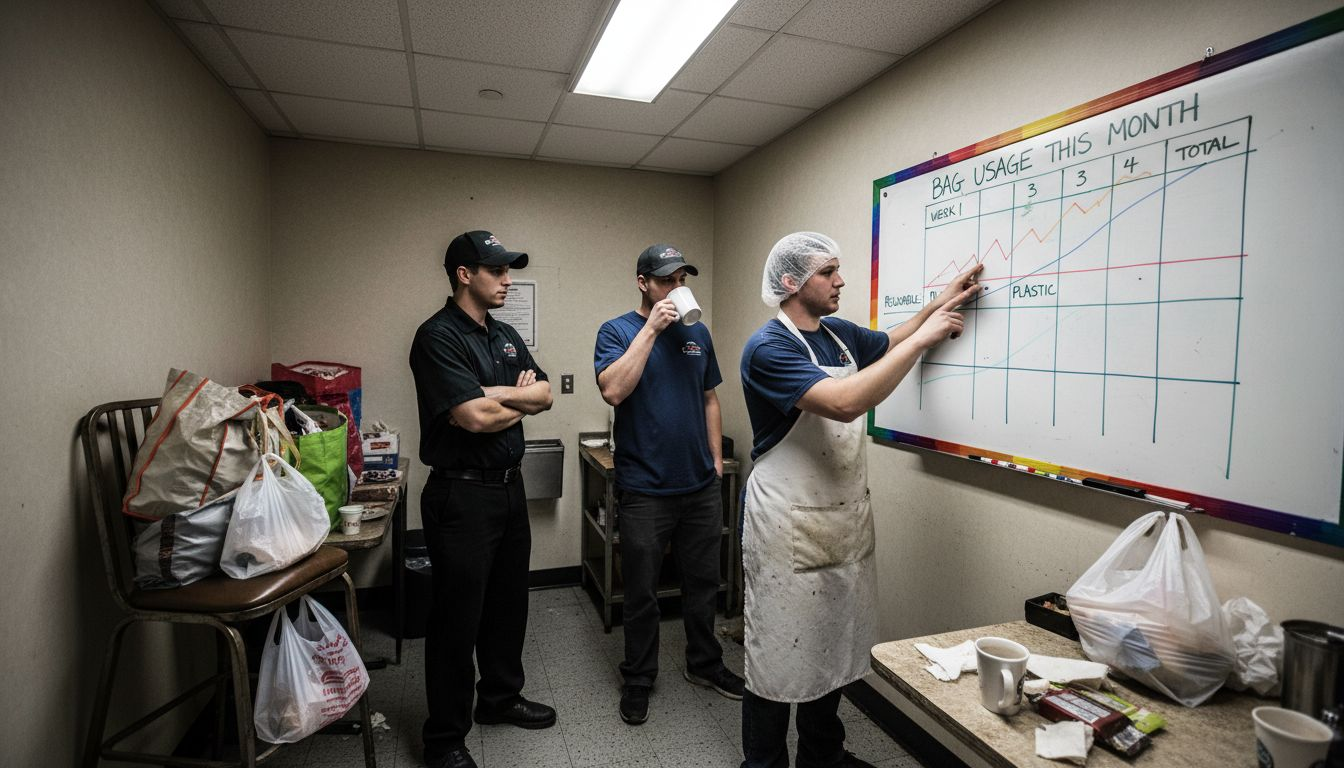
Encourage staff engagement by making them active participants in your sustainability journey. Develop incentive programs that recognize and reward employees who demonstrate exceptional commitment to reducing plastic waste. Conduct regular training sessions and create open channels for staff feedback to continuously improve your reusable bag implementation strategy. Communicate the broader environmental and economic benefits to help staff understand the significance of their role in driving meaningful change.
Pro tip: Create a visual tracking board that displays your restaurant’s plastic bag reduction progress to motivate staff and maintain collective momentum.
Step 4: Educate Customers and Encourage Behavior Change
Customer education represents a powerful strategy for transforming restaurant practices and driving sustainable bag usage. By creating meaningful engagement and awareness, you can inspire voluntary participation in reducing plastic waste and promoting environmental responsibility.
Implement a comprehensive communication strategy that leverages behavioral change techniques to shift customer perceptions about single-use plastic bags. Design visual materials that clearly communicate the environmental impact of plastic waste and highlight the tangible benefits of using reusable bags. Consider creating engaging infographics, table displays, menu inserts, and digital content that demonstrate how each customer’s choice contributes to broader sustainability efforts. Train your staff to communicate these messages authentically and provide brief, compelling explanations about why your restaurant has chosen to reduce plastic bag consumption.
Create incentive programs that make sustainability attractive and rewarding for customers. Offer small discounts for customers who bring reusable bags, implement a loyalty program that tracks and rewards sustainable choices, or create fun challenges that gamify the experience of reducing plastic waste. Share your restaurant’s progress and environmental milestones to build community engagement and demonstrate your genuine commitment to sustainable practices. By making sustainability both informative and enjoyable, you can transform customer behavior and create a positive ripple effect in environmental consciousness.
Pro tip: Design a simple tracking display showing total plastic bags saved to create a sense of collective achievement and motivate continued customer participation.
Step 5: Monitor Progress and Adjust Practices Regularly
Successfully reducing plastic bag usage requires ongoing commitment and strategic performance tracking. A systematic approach to monitoring will help your restaurant continuously improve and maintain momentum in your sustainability efforts.
Implement a comprehensive monitoring framework that tracks plastic waste reduction indicators across multiple dimensions of your restaurant operations. Create a standardized data collection system that captures precise metrics such as monthly plastic bag consumption, customer participation rates in reusable bag programs, and waste stream composition. Use digital tracking tools or spreadsheet templates to record quantitative data and generate visual reports that demonstrate your progress. Consider establishing baseline measurements during the initial implementation phase to provide context for future improvements.
Regularly review and analyze your collected data to identify trends, challenges, and opportunities for optimization. Schedule quarterly review meetings with your management team to discuss performance metrics and brainstorm innovative strategies for reducing plastic bag usage. Be prepared to adjust your approach based on empirical evidence and emerging best practices. This adaptive management strategy ensures your restaurant remains flexible and responsive to changing environmental goals and customer preferences.
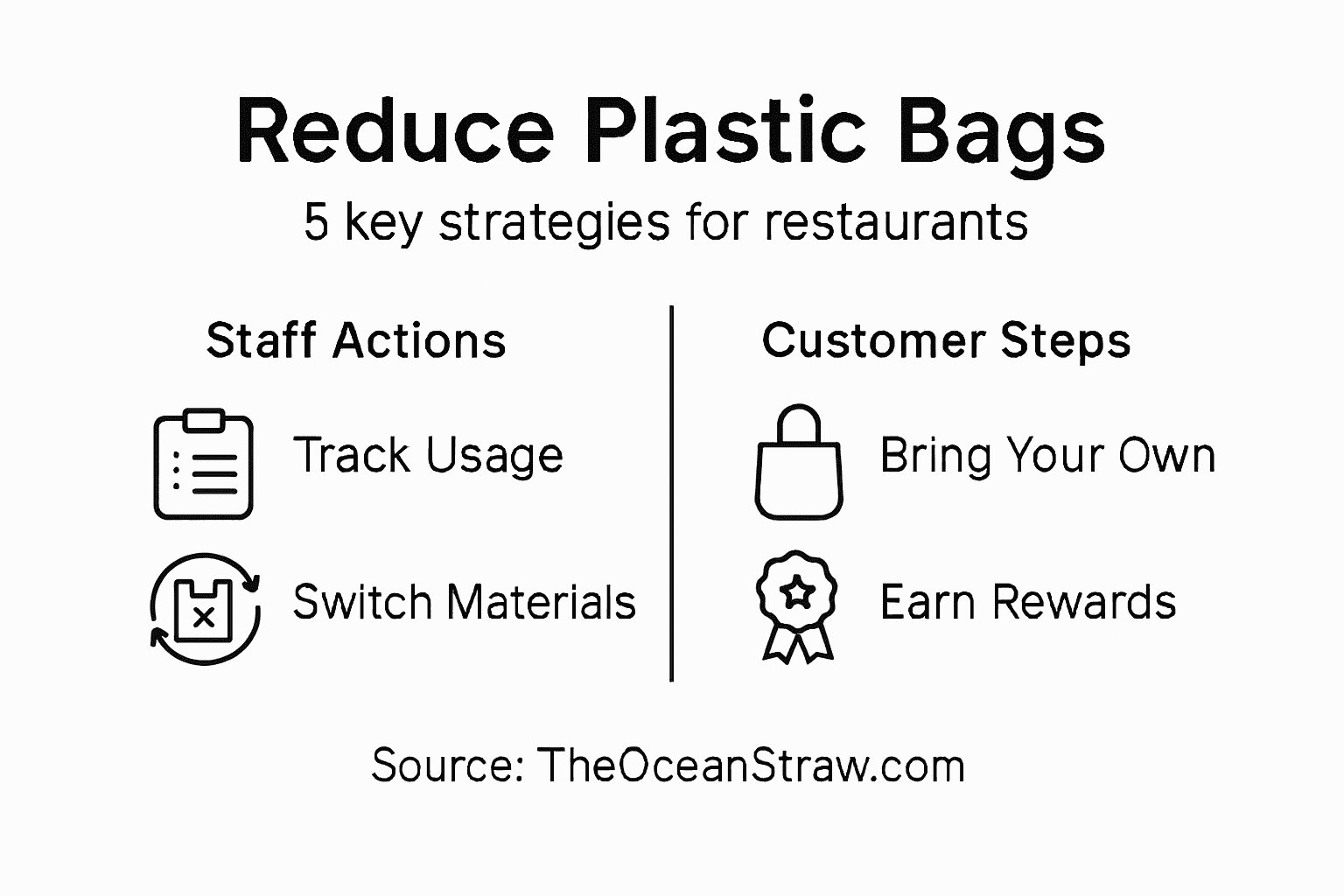
Pro tip: Develop a simple monthly dashboard that visualizes your plastic reduction progress to keep your team motivated and engaged.
This table summarizes key metrics to track for effective plastic reduction in restaurants:
| Metric Tracked | Why It Matters | Example Tracking Tool |
|---|---|---|
| Monthly bag consumption | Measures progress over time | Digital spreadsheet |
| Customer participation in programs | Checks adoption of new policies | Loyalty program data |
| Waste stream composition | Identifies where bags are being used | Waste audits |
| Staff engagement level | Sustains operational compliance | Staff feedback forms |
Drive Your Restaurant’s Sustainability by Cutting Plastic Waste
The challenge of reducing plastic bag use is about more than just cutting costs. It is about embracing durable, eco-friendly alternatives that align with your restaurant’s environmental goals and customer expectations. As the article highlights, shifting to reusable packaging and educating staff and customers are key steps in this journey. But to truly succeed, you also need to consider every aspect of your single-use plastic footprint — including the straws you serve.
At TheOceanStraw.com, we understand the struggle to balance sustainability and operational efficiency. Our innovative reusable straws made from wood and plant-based materials provide a safe and biodegradable solution that complements your plastic bag reduction efforts. By integrating premium, eco-conscious straws into your service, you reinforce your commitment to reducing single-use plastics and elevate your customers’ perception of your brand. Ready to strengthen your sustainable practices and make an impactful change today? Discover our full range of products and join the movement to replace single-use plastics by visiting TheOceanStraw.com now.
Frequently Asked Questions
How can I assess my restaurant’s current plastic bag usage?
To assess your restaurant’s plastic bag usage, conduct an internal audit to track the number and types of bags utilized in various areas, such as takeout orders and kitchen storage. Create a detailed log that captures monthly consumption patterns to identify where you can reduce usage effectively.
What sustainable bag alternatives should I consider for my restaurant?
Consider exploring options like bioplastics, plant-based fibers, and reusable materials such as cotton bags. Evaluate their durability and environmental impact, and pilot test 2–3 alternatives to compare performance before making a final decision.
How do I implement reusable bag policies in my restaurant?
To implement reusable bag policies, develop clear operational guidelines for staff regarding the cleaning and tracking of these bags. Train your team on proper practices and encourage staff engagement through incentives as they embrace the transition to reusable options.
What strategies can I use to educate customers about using reusable bags?
Engage customers by creating informative materials that highlight the environmental benefits of using reusable bags. Offer incentives like discounts for bringing reusable bags to encourage participation in your sustainability efforts.
How can I monitor and improve my restaurant’s plastic bag reduction efforts?
To monitor your plastic bag reduction efforts, establish a framework that tracks key metrics such as monthly bag consumption and customer participation rates. Review this data regularly and adjust your strategies based on trends and insights to continuously improve your sustainability practices.