
How to Reduce Landfill Waste in Restaurants Easily

Sorting through piles of used straws, cups, and containers at closing time can leave any American restaurant owner questioning how much waste really hits the landfill. With the UNEP Food Waste Index Report highlighting that 19 percent of food available to consumers goes to waste globally, it is more urgent than ever to address single-use waste in food service operations. By exploring sustainable, reusable straw solutions, your business can reduce environmental harm and create a cleaner, greener dining experience for your community.
Table of Contents
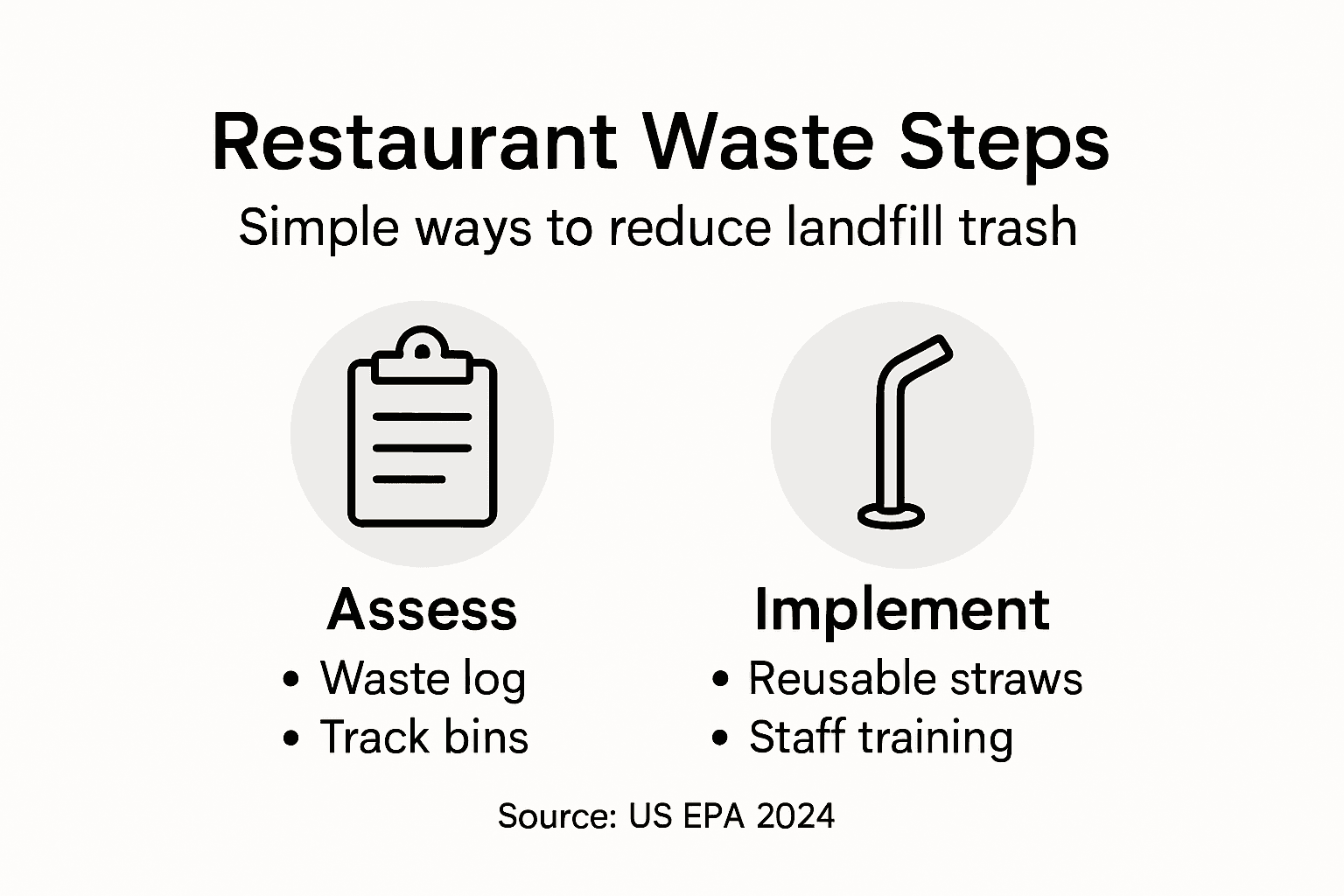
- Step 1: Assess Current Single-Use Waste Streams
- Step 2: Identify Sustainable Straw Alternatives
- Step 3: Implement Reusable Straw Policies
- Step 4: Train Staff on Eco-Friendly Practices
- Step 5: Monitor and Optimize Waste Reduction Efforts
Quick Summary
| Key Point | Explanation |
|---|---|
| 1. Conduct a Comprehensive Waste Audit | Analyze and document all disposable items used in your restaurant to understand waste generation patterns and identify reduction opportunities. |
| 2. Select Sustainable Straw Alternatives | Choose from options like bamboo, stainless steel, and glass straws to reduce single-use waste while meeting customer expectations for quality. |
| 3. Implement Reusable Straw Policies | Establish clear guidelines and training for staff to integrate reusable straws effectively into restaurant operations. |
| 4. Train Staff on Sustainable Practices | Develop training programs that empower employees with the knowledge and skills needed to reduce waste effectively in everyday operations. |
| 5. Monitor and Optimize Waste Reduction Efforts | Continuously track and evaluate waste to identify areas for improvement and ensure sustainable waste reduction strategies are maintained. |
Step 1: Assess current single-use waste streams
Reducing landfill waste in restaurants requires a strategic approach that starts with understanding your current waste generation patterns. By carefully analyzing your single-use waste streams, you can identify opportunities for meaningful reduction and environmental improvement.
Begin by conducting a comprehensive waste audit that tracks all disposable items used in your restaurant. This involves carefully documenting and categorizing waste from multiple areas - including dining areas, kitchen, bar, and takeout services. The UNEP Food Waste Index Report indicates that 19% of food available to consumers goes to waste globally, highlighting the critical importance of this assessment.
Your waste tracking should include detailed documentation of the following single-use items:
- Disposable plates and cutlery
- Beverage cups and lids
- Straws and stirrers
- Takeout containers
- Napkins and paper products
- Plastic wrap and aluminum foil
- Food packaging materials
To effectively track these items, create a systematic waste recording process that involves:
- Weighing waste from different categories
- Tracking daily disposal volumes
- Identifying peak waste generation periods
- Calculating total waste by material type
Accurate waste tracking is the foundation of effective waste reduction strategies.
Consider using digital tools or spreadsheets to log and analyze your waste data, which will help you visualize consumption patterns and identify immediate reduction opportunities.
Here is a quick overview of single-use item waste sources and their potential environmental impacts:
| Waste Source | Common Material | Environmental Impact |
|---|---|---|
| Dining area | Paper, plastic | Increased landfill, pollution |
| Kitchen | Plastic wrap, foil | Resource depletion, waste |
| Bar | Single-use cups, straws | Marine litter, carbon footprint |
| Takeout service | Takeout containers | Extended landfill life, microplastics |
Pro tip: Assign a dedicated staff member to manage waste tracking and generate weekly reports to maintain consistent and accurate documentation.
Step 2: Identify sustainable straw alternatives
Reducing single-use waste in your restaurant requires thoughtful selection of sustainable straw alternatives that balance environmental impact and practical functionality. The goal is to find straw solutions that minimize waste while meeting your customers’ expectations for quality and convenience.

Sustainable straw alternatives range from reusable to biodegradable options, each with unique environmental considerations. Understanding the pros and cons of different materials is crucial for making an informed decision.
Consider evaluating the following sustainable straw alternatives:
- Bamboo straws: Natural, biodegradable, and renewable
- Stainless steel straws: Durable and reusable
- Glass straws: Transparent and easy to clean
- Wheat straws: Biodegradable and compostable
- PLA (plant-based) straws: Made from renewable resources
When selecting sustainable alternatives, assess these key factors:
- Environmental impact
- Durability and reusability
- Customer experience
- Cost effectiveness
- Cleaning and maintenance requirements
Not all sustainable alternatives are created equal. Choose wisely based on your specific restaurant needs.
Research shows that reusable straw materials require multiple uses to offset their initial environmental costs, so consider your long-term sustainability strategy.
Compare the features of sustainable straw alternatives for restaurant use:
| Straw Material | Longevity | Ease of Cleaning | End-of-Life Scenario |
|---|---|---|---|
| Bamboo | Moderate | Hand wash recommended | Biodegrades under composting |
| Stainless Steel | High | Dishwasher safe | Recyclable as metal scrap |
| Glass | High | Dishwasher safe | Recyclable with glass waste |
| Wheat | Low | Single-use, compost | Compostable, decomposes quickly |
| PLA (Plant-based) | Moderate | Single-use, compost | Industrial composting required |
Pro tip: Request sample packs from sustainable straw manufacturers to test different materials and get staff and customer feedback before making a final selection.
Step 3: Implement reusable straw policies
Transitioning to reusable straws requires a comprehensive strategy that goes beyond simply switching out materials. Your restaurant needs a structured approach to successfully integrate sustainable straw practices that benefit both the environment and your business operations.
Government policies are increasingly supporting this shift, with reusable straw initiatives providing precedent for institutional change. Developing a clear, actionable policy framework is crucial for successful implementation.
Key components of an effective reusable straw policy include:
- Define straw usage guidelines
- Establish cleaning protocols
- Train staff on proper handling
- Create customer education materials
- Set up tracking and replacement systems
Implement your policy through these strategic steps:
- Select appropriate reusable straw materials
- Create staff training documentation
- Develop cleaning and sanitization procedures
- Design customer communication strategy
- Monitor and adjust policy implementation
Successful policy implementation requires consistent execution and ongoing staff engagement.
Research indicates that reusable straw options become environmentally advantageous after multiple uses, so design your policy with long-term sustainability in mind.
Pro tip: Create a comprehensive staff training manual that includes detailed instructions on straw handling, cleaning techniques, and the environmental rationale behind your new policy.
Step 4: Train staff on eco-friendly practices
Effective sustainability training transforms your restaurant’s environmental impact by empowering employees with knowledge and practical skills. Creating a culture of waste reduction requires more than just instruction - it demands ongoing engagement and genuine commitment from every team member.
Staff training strategies play a crucial role in developing sustainable practices across restaurant operations. By implementing comprehensive training programs, you can create meaningful behavioral changes that significantly reduce landfill waste.
Design your training program with these key components:
- Develop clear sustainability objectives
- Create interactive learning modules
- Use real-world waste reduction scenarios
- Implement performance tracking systems
- Provide ongoing educational opportunities
Essential training modules should cover:
- Understanding waste generation impacts
- Proper waste sorting techniques
- Sustainable straw and utensil management
- Efficient inventory control
- Composting and recycling protocols
Meaningful change happens when employees understand the purpose behind sustainable practices.
The National Restaurant Association’s waste prevention guidelines emphasize creating awareness and setting clear, measurable goals for waste reduction.
Pro tip: Gamify your sustainability training by creating friendly competitions and recognition programs that reward staff members who demonstrate exceptional waste reduction practices.
Step 5: Monitor and optimize waste reduction efforts
Constant evaluation and refinement are essential for transforming waste reduction from a one-time initiative into a sustainable, long-term strategy. By systematically tracking and analyzing your restaurant’s waste streams, you can identify opportunities for continuous improvement and meaningful environmental impact.
Restaurant waste tracking tools provide critical insights into waste generation patterns and potential reduction strategies. Implementing a robust monitoring system allows you to make data-driven decisions that simultaneously reduce environmental impact and improve operational efficiency.
Key components of an effective waste monitoring program include:
- Establish baseline waste measurements
- Create detailed waste tracking logs
- Implement digital tracking technologies
- Set specific waste reduction targets
- Conduct regular performance reviews
Develop a comprehensive waste monitoring process through these steps:
- Collect granular waste data
- Categorize waste by type and source
- Analyze waste generation trends
- Identify root causes of waste
- Develop targeted reduction strategies
Continuous monitoring transforms waste reduction from a goal into a measurable, achievable strategy.
The US EPA’s waste prevention tools offer comprehensive guidance for systematic waste assessment and optimization.
Pro tip: Integrate waste tracking software that provides real-time analytics and generates automated reports, enabling quick identification of waste reduction opportunities.
Transform Your Restaurant’s Waste Reduction Strategy with Sustainable Straw Solutions
Reducing landfill waste in restaurants means tackling the challenge of single-use items head-on. This article highlights critical pain points like tracking disposable straw waste, choosing sustainable alternatives, and implementing reusable straw policies. If your restaurant seeks durable, environmentally friendly options that enhance your eco-initiatives and delight customers, TheOceanStraw.com offers a breakthrough solution. Our innovative wood and plant-based reusable straws combine practicality with outstanding biodegradability, perfectly aligning with your sustainability goals and waste reduction efforts.
Take control of your waste management today by exploring TheOceanStraw.com. Discover detailed product information, request samples, and join other industry leaders reducing single-use plastics with durable, safe, and eco-friendly straws. Visit The Ocean Straw now and start making a measurable environmental impact with sustainable straw alternatives designed specifically for the foodservice and hospitality industry.
Frequently Asked Questions
How can I conduct a waste audit in my restaurant?
To conduct a waste audit, begin by systematically tracking all disposable items used across your restaurant, including dining areas, kitchens, and takeout services. Document everything for a specified period, and categorize waste by type to identify key areas for reduction.
What are some sustainable alternatives to single-use straws?
Consider using bamboo, stainless steel, glass, wheat, or plant-based straws as sustainable alternatives to single-use straws. Evaluate their environmental impact and customer experience before implementing your choice to ensure it aligns with your restaurant’s values.
How should I train my staff on eco-friendly practices?
Develop a comprehensive training program that includes clear sustainability objectives and real-world scenarios related to waste reduction. Encourage ongoing participation and interaction by creating engaging learning modules and providing regular educational updates.
What tracking system should I implement for waste monitoring?
Establish a detailed waste tracking log that captures baseline measurements and categorizes waste sources in your restaurant. Regularly analyze this data to identify trends and set specific reduction targets, aiming to improve your waste management practices continuously.
How often should I review and optimize my waste reduction efforts?
Regularly review your waste reduction efforts every month to assess performance and identify further improvement opportunities. Adjust your strategies based on collected data to ensure continuous progress toward reducing landfill waste by a significant percentage over time.
What should I include in my reusable straw policy?
Your reusable straw policy should define usage guidelines, cleaning procedures, and staff training requirements. Clearly communicate these practices to both staff and customers to foster understanding and support for the sustainable transition.
Recommended
- How to Reduce Solid Waste in Restaurants Step by Step – The Ocean Straw
- Understanding Waste Minimization Strategies for Hospitality – The Ocean Straw
- How to Reduce Waste at Home Naturally Step by Step – The Ocean Straw
- How to Start Composting for Hotels and Restaurants – The Ocean Straw
- Nutrition Beyond March: Sustaining Healthy Eating Habits at Work