
How to Reduce Plastic Use in Hospitality for Sustainability

Over 11 million tons of plastic enter the world’s oceans each year, and many american hospitality businesses play a role in this cycle without realizing it. Reducing plastic waste is not just about protecting the environment, it is about meeting guest expectations and future-proofing operations. By understanding and updating daily practices, your team can drive real change and set a new standard for sustainability in the hospitality industry.
Table of Contents
- Step 1: Assess Current Plastic Consumption In Operations
- Step 2: Identify And Source Sustainable Alternatives
- Step 3: Implement Reusable Straw Solutions Across Outlets
- Step 4: Train Staff To Support Plastic Reduction Initiatives
- Step 5: Monitor Progress And Verify Plastic Reduction Metrics
Quick Summary
| Important Insight | Explanation |
|---|---|
| 1. Assess Plastic Consumption Thoroughly | Conduct a detailed audit of plastic use across all departments to create a solid baseline for reduction efforts. |
| 2. Explore Sustainable Material Alternatives | Identify eco-friendly substitutes for single-use plastics, such as bamboo, glass, or bioplastics, to reduce environmental impact. |
| 3. Train Staff on Sustainability Practices | Establish an interactive training program that empowers employees to actively engage in plastic reduction initiatives. |
| 4. Monitor and Track Reduction Metrics | Implement a robust tracking system to assess progress in plastic reduction and identify areas for further improvement. |
Step 1: Assess Current Plastic Consumption in Operations
Understanding your hospitality operation’s plastic consumption is the crucial first step toward meaningful sustainability. According to research from SpringerLink, comprehensive plastic waste assessments are becoming increasingly critical for urban waste management systems, particularly in tourist-heavy regions.
To effectively evaluate your plastic usage, start by conducting a comprehensive audit across all operational departments. Track plastic consumption in areas like food service, housekeeping, bathroom amenities, packaging, and administrative spaces. Create detailed spreadsheets documenting the types and quantities of single-use plastics currently in circulation. Pay special attention to high-volume items such as disposable cutlery, straws, packaging materials, room amenities, and beverage containers.
The Journal of Tourism and Hospitality Management highlights that post-COVID-19 hospitality environments have seen significant plastic usage shifts. When performing your assessment, categorize plastics by their origin department, frequency of use, and potential for replacement. Look beyond obvious sources and examine every touchpoint where plastic might be introduced. Consider involving staff members from different departments to ensure a thorough and accurate evaluation.
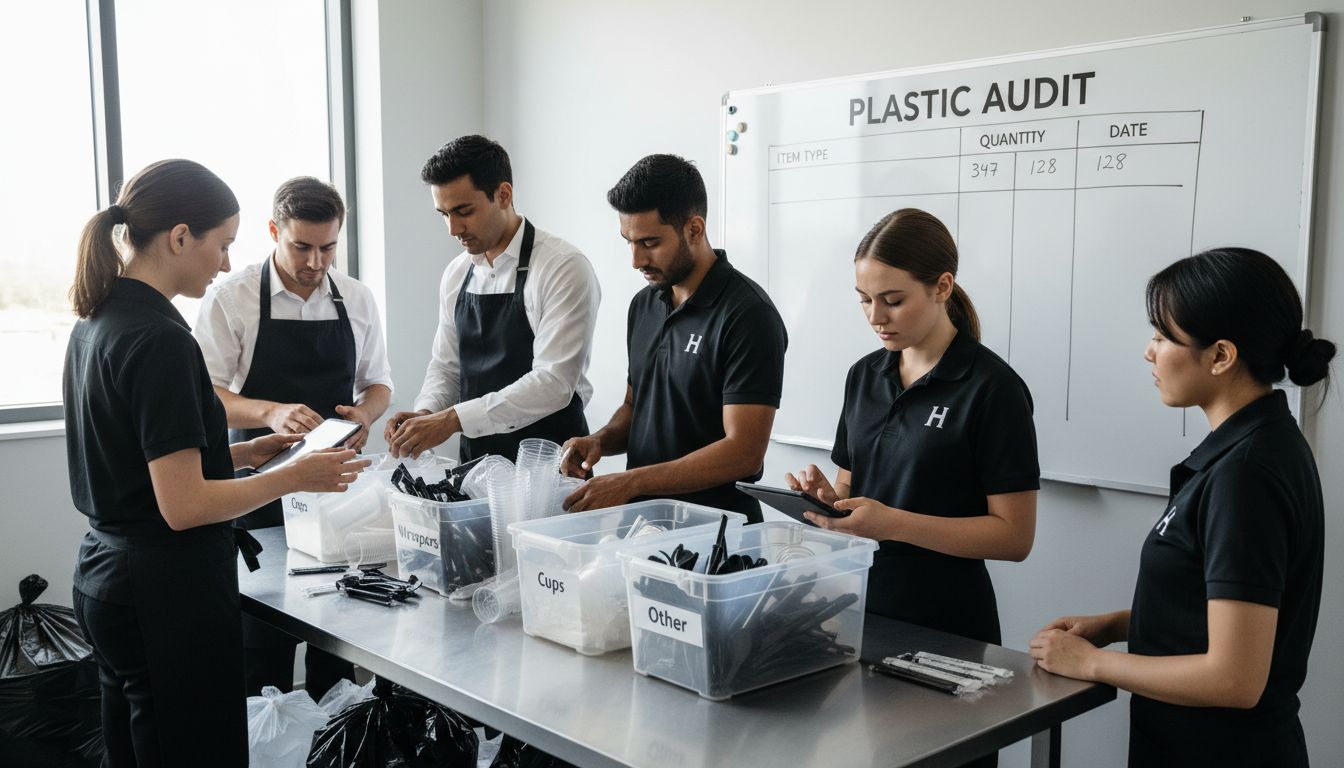
Warning: Many businesses underestimate their plastic consumption. Be rigorous and honest during this assessment to create a meaningful baseline for future reduction strategies.
Step 2: Identify and Source Sustainable Alternatives
Transitioning from traditional plastics to sustainable alternatives requires strategic planning and comprehensive research. According to Hotelierindia, hotels are successfully replacing plastic toiletries and single-use items with innovative eco-friendly solutions like bamboo toothbrushes and biodegradable packaging.
Begin by mapping out potential sustainable material replacements for each plastic item identified in your initial assessment. AIU highlights promising bioplastic options like PLA and PHA, which are derived from renewable sources and offer significant environmental advantages. Focus on materials that are biodegradable, recyclable, or compostable. Prioritize alternatives such as bamboo, glass, stainless steel, recycled paper products, and plant-based compostable materials.
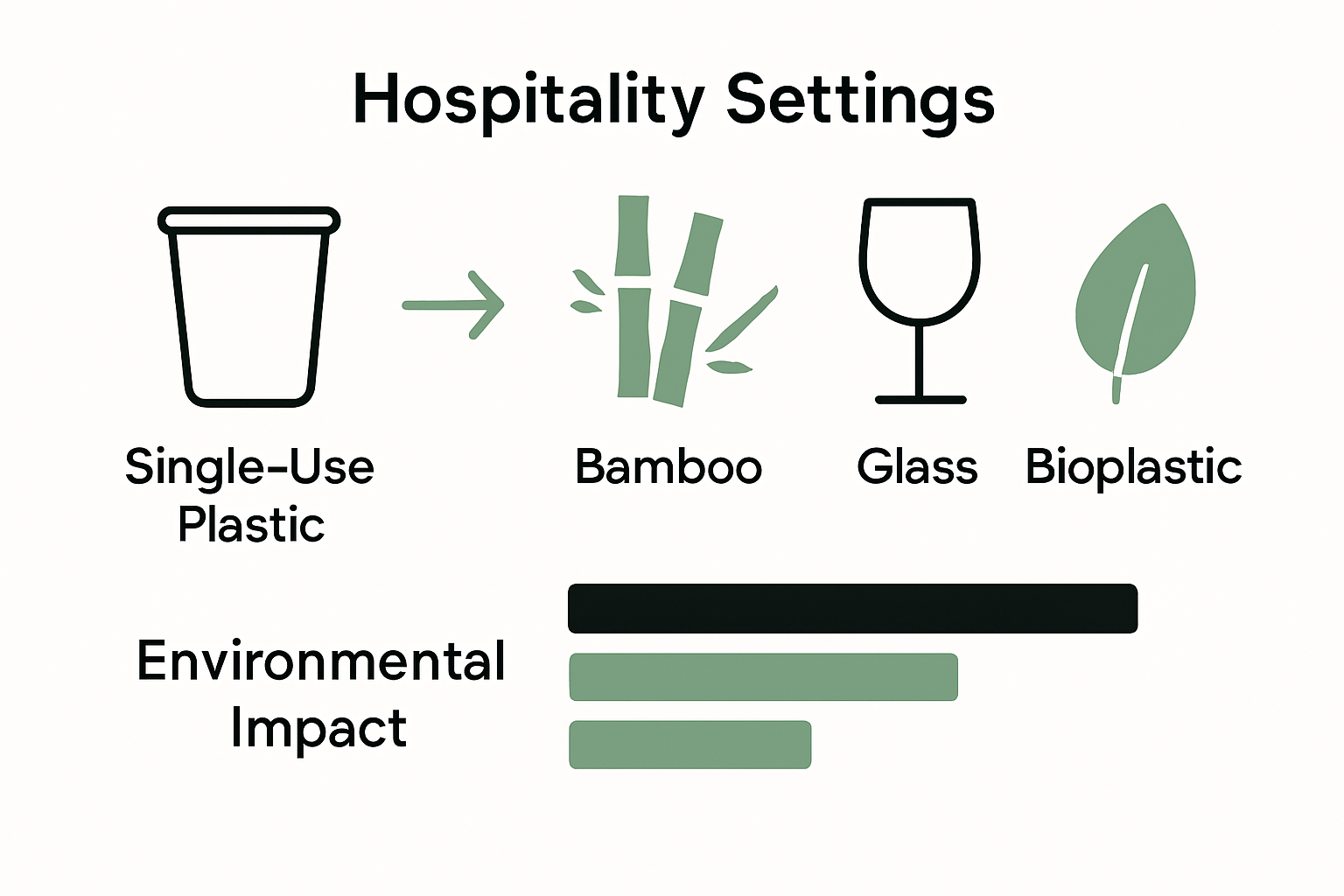
Research potential suppliers who specialize in sustainable hospitality products. Request product samples, evaluate their durability, cost effectiveness, and environmental credentials. Compare multiple options and consider factors like lifecycle analysis, production methods, and carbon footprint.
Warning: Not all sustainable alternatives are created equal. Conduct thorough due diligence to ensure the materials you choose genuinely reduce environmental impact and align with your sustainability goals.
Step 3: Implement Reusable Straw Solutions Across Outlets
Transitioning to reusable straw solutions requires a strategic and comprehensive approach across all hospitality outlets. According to Wastemanaged, successful implementation involves not just selecting alternative materials but also focusing on staff training and customer engagement.
Begin by selecting high-quality reusable straw materials like stainless steel, bamboo, or plant-based alternatives that can withstand repeated cleaning and usage. Hotelierindia highlights how eco-friendly hotels are eliminating single-use plastics by adopting metal and bamboo straws across their dining establishments. Develop a standardized cleaning protocol that ensures thorough sanitization between uses, and invest in specialized cleaning tools designed for reusable straws.
Create a comprehensive staff training program that explains the environmental benefits of reusable straws and provides clear instructions on handling, cleaning, and presenting these alternatives to guests. Implement a tracking system to monitor straw inventory, replacement rates, and hygiene standards. Consider offering customers the option to purchase branded reusable straws as a sustainable memento of their experience.
Warning: Proper cleaning and maintenance are critical. Without rigorous sanitization protocols, reusable straws can become a health liability rather than an eco-friendly solution.
Step 4: Train Staff to Support Plastic Reduction Initiatives
Transforming your hospitality operation into a sustainable environment requires comprehensive staff education and engagement. According to Wastemanaged, successful plastic reduction depends not just on policy changes but on strategic staff training that empowers employees to become active sustainability ambassadors.
Hotelierindia highlights how leading hotels integrate sustainability directly into staff training programs. Design an interactive training curriculum that goes beyond theoretical knowledge by providing practical skills. Create scenario based learning modules that demonstrate how staff can actively reduce plastic consumption in their specific departments. Include hands on workshops where employees practice identifying plastic waste opportunities, learn about alternative materials, and understand the environmental impact of their daily choices.
Develop a recognition and incentive program that rewards staff members who consistently demonstrate innovative plastic reduction strategies. Establish clear communication channels where employees can share sustainability ideas and track the collective impact of their efforts. Implement regular feedback sessions and progress reports that help staff understand their contributions to the broader environmental goals.
Warning: Sustainability training is not a one time event. Regularly update your programs to reflect new technologies, materials, and environmental best practices to keep staff motivated and informed.
Step 5: Monitor Progress and Verify Plastic Reduction Metrics
SpringerLink research emphasizes the critical importance of comprehensive monitoring in developing effective plastic waste management strategies. Establishing a robust tracking system is essential for understanding your hospitality operation’s plastic reduction progress and identifying areas for continued improvement.
Begin by creating detailed tracking spreadsheets that document plastic consumption across different departments. According to Journal of Tourism and Hospitality Management, successful plastic reduction requires systematic assessment of current consumption patterns. Implement quarterly measurement protocols that capture metrics such as total plastic volume purchased, number of single-use items eliminated, percentage of sustainable alternatives adopted, and cost savings associated with plastic reduction initiatives.
Develop a visualization dashboard that makes progress transparent and engaging for staff and management. Include graphical representations of plastic reduction achievements, compare current consumption against baseline measurements, and highlight departmental contributions. Create incentive structures that reward teams or individuals who demonstrate significant plastic reduction performance. Conduct monthly review meetings to discuss progress, challenges, and innovative strategies for continuous improvement.
Warning: Metrics alone are not enough. Ensure your tracking system captures both quantitative data and qualitative insights about behavioral changes and sustainability culture within your organization.
Take Your Hospitality Plastic Reduction to the Next Level with Sustainable Straws
The article clearly shows that reducing plastic use in hospitality requires careful assessment and replacement of single-use items like straws. Many businesses struggle with finding durable, eco-friendly alternatives that fit seamlessly into their sustainability plans while meeting operational needs. If you want to empower your staff and wow your guests with a truly sustainable solution, switching to reusable, plant-based straws is a vital step.
Explore The Ocean Straw Growth Pack for a carefully curated bundle designed specifically for hospitality businesses ready to make a measurable impact on plastic reduction.
Join the growing network of hotels and restaurants that trust TheOceanStraw.com for biodegradable and durable straw products made from innovative wood and plant materials. Visit https://theoceanstraw.com now to request free samples, learn about wholesale options, and start your journey to plastic-free hospitality today. Act now to align your business with modern sustainability expectations and create lasting environmental change.
Frequently Asked Questions
How can I assess current plastic consumption in my hospitality operations?
To assess your current plastic consumption, conduct a comprehensive audit across all departments, tracking types and quantities of single-use plastics used. Create detailed documentation to identify high-volume items, setting a baseline for your sustainability efforts.
What sustainable alternatives can I use to replace common plastic items in my hotel?
Explore eco-friendly replacements for plastic items such as bamboo toothbrushes or biodegradable packaging. Prioritize materials that are biodegradable, recyclable, or compostable, and aim to replace at least 50% of your plastic items within the next year.
How should I implement reusable straw solutions in my outlets?
Start by selecting high-quality reusable straws made from materials like stainless steel or bamboo. Standardize cleaning protocols and train staff on how to properly handle and promote these straws, aiming for full implementation within a month.
What training methods can effectively engage staff in reducing plastic use?
Design interactive training programs that empower staff to become sustainability ambassadors. Focus on practical skills and scenario-based learning, and establish an incentive program to reward innovative ideas related to plastic reduction.
How do I monitor progress in reducing plastic use in my hospitality operations?
Create a detailed tracking system to monitor plastic consumption, eliminating single-use items, and adopting sustainable alternatives. Set quarterly review meetings to assess progress and adjust strategies as needed, aiming for a reduction of at least 20% over the next year.
What metrics should I track to ensure effective plastic reduction?
Monitor both quantitative metrics, like the total volume of plastic used, and qualitative insights, such as staff engagement in sustainability practices. Use this information to adapt your strategies and continue improving over time.