
How to Reduce Plastic Waste in Hotels and Restaurants

Did you know that global plastic production has more than doubled since 2000? Every hotel and restaurant adds to this growing issue, often without realizing the full extent. Understanding your own plastic use is the first stride toward meaningful change. By taking a closer look at what you use daily, you gain the insight needed for smarter decisions, cost savings, and a smaller environmental footprint.
Table of Contents
- Step 1: Assess Current Plastic Usage
- Step 2: Educate Staff On Sustainable Alternatives
- Step 3: Switch To Plant-Based And Compostable Products
- Step 4: Implement Waste Segregation Measures
- Step 5: Monitor And Refine Waste Reduction Efforts
Quick Summary
| Key Point | Explanation |
|---|---|
| 1. Conduct a plastic inventory | Assess current plastic usage by tracking all items to understand consumption patterns. |
| 2. Educate staff on sustainability | Develop training programs to empower employees with knowledge about reducing plastic waste effectively. |
| 3. Use plant-based alternatives | Shift to compostable products made from renewable materials to minimize plastic impact in operations. |
| 4. Implement effective waste segregation | Set up intuitive waste bins to separate recyclables, compostables, and trash, ensuring proper disposal methods. |
| 5. Monitor and refine efforts regularly | Establish tracking systems for waste reduction metrics to facilitate continuous improvement in sustainability practices. |
Step 1: Assess current plastic usage
Reducing plastic waste starts with understanding exactly how much plastic your hotel or restaurant currently uses. This critical first step will help you create a targeted waste reduction strategy.
Begin by conducting a comprehensive plastic inventory across all operational areas. According to the guide on understanding single use plastic impact, tracking your plastic consumption is essential for meaningful change.
Start with a systematic approach. Walk through each department and document every single plastic item used daily. Focus on key areas like kitchen supplies, guest rooms, dining areas, bathrooms, and service zones. Make detailed notes about:
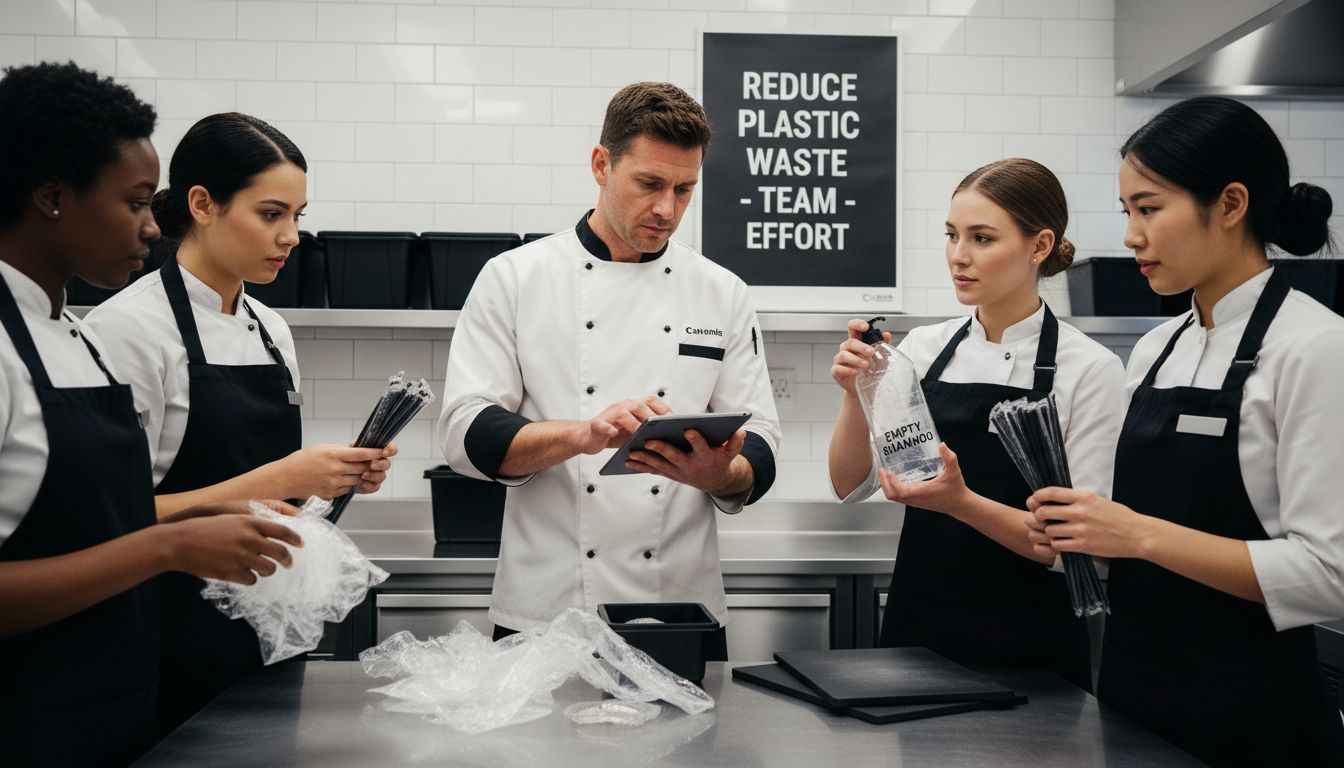
Here’s a summary of key assessment criteria for your plastic usage inventory:
| Criterion | What to Track | Example Data Points |
|---|---|---|
| Item Type | Description of plastic items | Straws Cutlery Bottles |
| Quantity | Number used per day/week | 250/day 50/week |
| Replacement Frequency | How often items are replenished | Daily Weekly |
| Disposal Method | Current end-of-life process | Landfill Recycling Compost |
| Potential Alternatives | Eco-friendly options considered | Bamboo Compostable plastics |
- Types of plastic items
- Quantity of items used per day or week
- Frequency of replacement
- Current disposal methods
The World Wildlife Fund suggests using a standardized measurement methodology to ensure accuracy. Create a spreadsheet or use a digital tracking tool to record your findings. Include columns for item description, material type, quantity, and potential alternatives.
Pro Tip: Involve staff members from different departments in this assessment. Their on the ground insights can reveal plastic usage patterns you might otherwise miss.
Dont forget to examine less obvious sources of plastic such as packaging materials, cleaning supplies, amenity containers, and administrative items. According to the OECD Global Plastics Outlook, global plastic production has more than doubled between 2000 and 2019, highlighting the urgent need for precise tracking.
Once youve completed your inventory, analyze the data to identify the highest volume and most unnecessary plastic items. This assessment will form the foundation for your waste reduction strategy in subsequent steps.
Ready to transform your plastic consumption? The next step involves evaluating potential sustainable alternatives that can replace your current plastic items.
Step 2: Educate staff on sustainable alternatives
Transforming your hotels plastic usage requires more than just inventory tracking. You need a committed team that understands and embraces sustainable practices. Educating your staff becomes the critical next step in creating meaningful environmental change.
Start by developing a comprehensive training program that highlights the environmental impact of single use plastics. Explore our guide on understanding eco friendly amenities to provide context for your teams learning journey.
According to the Green Skills in Tourism and Hospitality workshop, a well informed workforce is crucial for implementing eco friendly initiatives. Design interactive training sessions that go beyond traditional lecture formats. Consider using:
- Engaging video presentations
- Hands on demonstrations
- Real world case studies
- Interactive workshops
Focus on practical knowledge that staff can immediately apply in their daily work. Break down complex sustainability concepts into simple actionable steps. Explain how each team member can contribute to reducing plastic waste in their specific role.
Pro Tip: Create visual aids and infographics that staff can reference quickly during their shifts.
The Eco Guide for Hospitality Businesses recommends providing clear alternatives to current plastic dependent practices. Develop specific guidelines for:
- Replacing single use items
- Proper waste sorting
- Identifying sustainable product alternatives
- Communicating environmental choices to guests
Consider implementing a recognition program that rewards staff for innovative sustainability ideas. This approach transforms education into active engagement and empowers employees to become environmental champions.
Remember that education is an ongoing process. Schedule regular refresher training and stay updated on the latest sustainable hospitality practices.
Ready for the next phase? Youll soon be implementing those sustainable alternatives across your entire operation.
Step 3: Switch to plant-based and compostable products
Reducing plastic waste means making strategic shifts in your procurement practices. Transitioning to plant-based and compostable products represents a powerful step toward sustainable hospitality operations.
Learn more about plant-based material alternatives to understand the science behind these innovative solutions.
According to the Plastic Pollution Coalitions Plastic Free Eateries guide, replacing single use plastics with plant-based alternatives dramatically reduces environmental impact. Start by conducting a comprehensive product audit across all operational areas including:
- Food service items
- Packaging materials
- Amenity containers
- Cleaning supplies
- Administrative accessories
Focus on sourcing products made from renewable materials like plant fibers wheat straw or agricultural waste. These materials offer comparable functionality to traditional plastics while significantly reducing environmental footprint.
Pro Tip: Request samples from sustainable suppliers before making bulk purchases to ensure product quality and performance.
The United Nations Environment Programme recommends prioritizing products that can be industrially composted. Understand how industrial composting works to make informed purchasing decisions.
When evaluating alternatives consider:
- Durability
- Cost effectiveness
- Disposal requirements
- Environmental certifications
Implement a phased transition approach. Begin with high volume or easily replaceable items to build momentum and demonstrate immediate environmental benefits. Train staff on proper handling and disposal of new compostable products.
Remember that switching to plant based alternatives is not just about replacing materials. Its about reimagining your entire approach to sustainability and showing leadership in environmental responsibility.
Ready to make a tangible difference? Your next step involves establishing responsible disposal systems for these new sustainable products.
Step 4: Implement waste segregation measures
Effective waste management starts with smart segregation. By implementing strategic waste separation processes, your hotel or restaurant can dramatically reduce environmental impact and improve overall sustainability efforts.
Explore essential food waste management tips to complement your waste segregation strategy.
According to the World Wildlife Fund and Greenview Hotel Waste Measurement Methodology, creating a comprehensive waste segregation system requires careful planning and execution. Begin by establishing clear waste categories:
- Compostable materials
- Recyclable plastics
- Non recyclable waste
- Organic food waste
- Paper and cardboard
Design a color coded bin system that makes sorting intuitive for staff and guests. Use distinct colors and clear labels for each waste category to minimize confusion and increase compliance.
Pro Tip: Place visual instructional posters near waste stations to guide proper disposal techniques.
The Eco Guide for Hospitality Businesses recommends training staff thoroughly on waste segregation protocols. Conduct regular workshops that demonstrate:
- Proper waste identification
- Sorting techniques
- Contamination prevention
- Environmental impact of correct waste management
Install dedicated waste stations in key areas like kitchens dining rooms staff rooms and guest areas. Ensure these stations are easily accessible and strategically located to encourage consistent use.
Implement a monitoring system to track waste segregation performance. Regularly audit waste streams and provide feedback to staff. Recognize and reward departments that demonstrate excellent waste management practices.
Remember that waste segregation is an ongoing process. Continuously review and refine your approach based on staff feedback and emerging sustainability best practices.
Ready to take your sustainability efforts to the next level? Your next step involves establishing partnerships with responsible waste management providers.
Step 5: Monitor and refine waste reduction efforts
Sustainability is a journey of continuous improvement. Tracking and analyzing your waste reduction progress ensures your hotel or restaurant stays committed to meaningful environmental change.
According to the World Wildlife Fund Hotel Waste Measurement Methodology, establishing robust monitoring systems is crucial for long term success. Learn strategies for tracking waste reduction efforts to optimize your approach.
Begin by developing a comprehensive tracking framework that captures key metrics:
- Total waste generated
- Percentage of waste diverted from landfills
- Plastic consumption volumes
- Recycling and composting rates
- Cost savings from waste reduction initiatives
Implement digital tracking tools that allow real time data collection and analysis. Create monthly and quarterly reports that provide clear visibility into your waste management performance.
Pro Tip: Use visual dashboards that make data interpretation quick and intuitive for management teams.
The Ellen MacArthur Foundations Global Commitment report emphasizes the importance of setting progressive waste reduction targets. Establish specific milestones such as:
- Reducing plastic consumption by 25% annually
- Increasing composting rates
- Minimizing single use item dependencies
- Improving overall waste diversion percentages
Conduct regular waste audits to identify improvement opportunities. Analyze data to understand:
- Which departments generate most waste
- Most common waste types
- Potential process inefficiencies
- Opportunities for alternative product selections
Encourage staff participation by sharing progress reports and celebrating waste reduction achievements. Create incentive programs that motivate teams to contribute innovative waste minimization strategies.
Remember that monitoring is not about perfection but consistent progress. Be transparent about challenges and celebrate incremental improvements.
Ready to become a sustainability leader? Your commitment to continuous improvement will set new industry standards.
Take Control of Plastic Waste with Sustainable Solutions
The challenge of reducing single use plastics in hotels and restaurants is real and urgent. This article highlights the need to assess plastic consumption, educate staff, and make the switch to truly sustainable alternatives that align with your eco goals. If you want to cut down plastic waste while maintaining quality and guest satisfaction, it requires more than intention—it requires partnering with a supplier who understands your unique needs for plant based, compostable products.
Discover how The Ocean Straw Growth Pack supports your sustainability journey by providing wood and plant based compostable straws designed specifically for the HoreCa market. Every step from procurement to disposal can be optimized with our eco friendly solutions. Visit The Ocean Straw today and take decisive action toward reducing plastic waste effectively and responsibly.
Frequently Asked Questions
How can I assess my hotel or restaurant’s plastic usage?
Start by conducting a comprehensive plastic inventory across all operational areas. Document every plastic item used daily, noting down quantities and disposal methods, to identify where plastic use is highest.
What steps should I take to educate my staff on reducing plastic waste?
Develop a training program focusing on the environmental impact of single-use plastics. Use engaging methods like interactive workshops and hands-on demonstrations to ensure staff understand practical alternatives they can implement in their roles.
How can I transition to plant-based and compostable products effectively?
Begin by auditing your current products and identifying high-volume items that can be replaced with sustainable alternatives. Make the switch by starting with easily replaceable products, aiming to introduce compostable items within 30–60 days for quick impact.
What is the best way to implement waste segregation in my hotel or restaurant?
Establish clear waste categories with a color-coded bin system to make sorting intuitive for staff and guests. Train your team on these segregation protocols and monitor compliance to improve waste management practices.
How do I monitor and refine my waste reduction efforts?
Create a tracking framework to capture key metrics like total waste generated and recycling rates. Conduct regular audits and be transparent about challenges and progress to foster a culture of continuous improvement among your staff.
How can I involve my team in sustainability initiatives?
Encourage staff participation by sharing progress reports and recognizing their contributions to waste reduction. Consider implementing incentive programs that reward innovative ideas related to minimizing plastic use and improving sustainability efforts.