
How to Reduce Rubbish Naturally for Food Service Success

Every American food service business faces the challenge of managing waste without sacrificing efficiency or profit. With studies showing that up to 30 percent of waste management expenses can be trimmed through strategic improvements, the opportunities for savings are substantial. Learning how to assess, reduce, and rethink waste in your kitchen not only lowers costs but also strengthens your commitment to sustainability and efficiency in an ever more eco-conscious marketplace.
Table of Contents
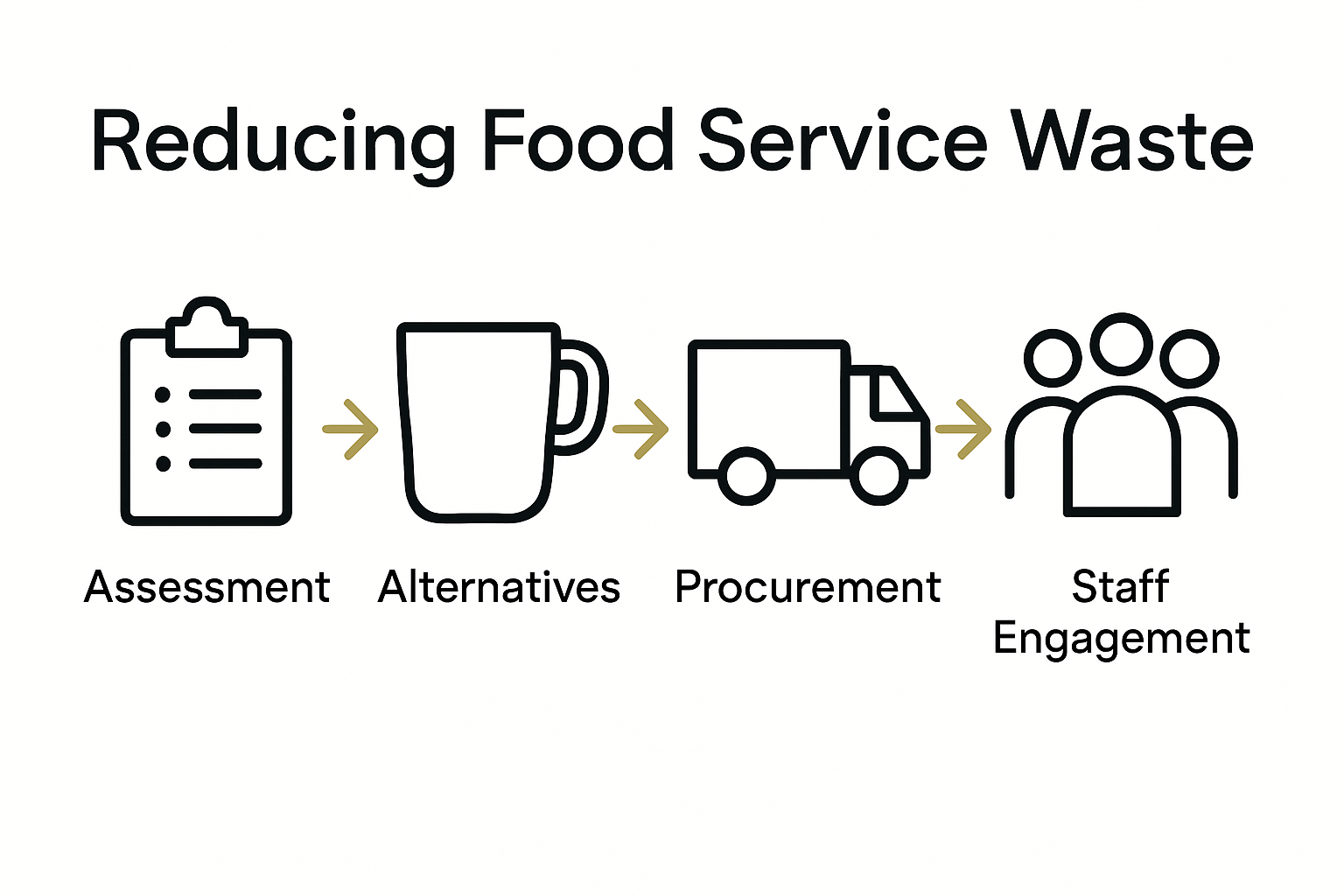
- Step 1: Assess Current Waste Practices
- Step 2: Implement Reusable Alternatives
- Step 3: Optimize Resource Procurement
- Step 4: Engage Staff In Sustainable Habits
- Step 5: Monitor And Adjust Waste Reduction Efforts
Quick Summary
| Key Insight | Explanation |
|---|---|
| 1. Assess Waste Practices | Track and document waste streams to identify inefficiencies and reduce costs by up to 30%. |
| 2. Implement Reusable Alternatives | Replace single-use items with durable options to save money and minimize environmental impact. |
| 3. Optimize Resource Procurement | Analyze supply chain practices to reduce waste and improve efficiency while maintaining sustainability. |
| 4. Engage Staff on Sustainability | Foster a culture of sustainability through training and recognition systems to motivate team involvement. |
| 5. Monitor and Adjust Efforts | Establish ongoing evaluation of waste strategies to ensure continuous improvement and sustained impact. |
Step 1: Assess Current Waste Practices
Understanding your food service establishment’s waste landscape is the critical first step toward sustainable operations. By conducting a comprehensive waste assessment, you can pinpoint inefficiencies, reduce environmental impact, and potentially save significant money through strategic improvements.
To systematically evaluate your current waste practices, start by tracking and documenting all waste streams over a typical week or month. This means meticulously recording everything from food scraps and packaging materials to disposable serviceware. Innovative waste management strategies can transform these insights into actionable sustainability plans. Use digital spreadsheets or specialized tracking apps to categorize waste by type volume and potential recyclability. Pay special attention to high waste areas like kitchen prep stations, dining areas, and storage spaces.
A crucial warning many businesses overlook is the hidden cost of untracked waste. Research indicates that food service establishments can reduce waste management expenses by up to 30% through careful assessment and targeted interventions. Your next step will involve analyzing these documented waste patterns to develop targeted reduction strategies that minimize environmental impact while optimizing operational efficiency.
Step 2: Implement Reusable Alternatives
Transitioning to reusable alternatives represents a powerful strategy for food service establishments seeking to dramatically reduce waste and operational costs. This step involves systematically replacing single-use items with durable, sustainable solutions that minimize environmental impact while potentially improving your bottom line.
Start by conducting a comprehensive inventory of current disposable items and identifying practical reusable container options that can effectively replace them. Focus on high-volume disposable areas like takeout packaging, serviceware, and storage containers. Consider investing in washable containers made from materials like stainless steel, glass, or high-grade recyclable plastics that can withstand multiple cleaning cycles. Implement a tracking system to monitor container usage, replacement rates, and cleaning protocols to ensure efficiency and hygiene standards are consistently maintained.
A critical warning for businesses is the upfront investment required for transitioning to reusable systems. While initial costs might seem higher, long-term savings and environmental benefits can be substantial. Your goal is to create a streamlined process that integrates seamlessly with existing workflows, minimizes waste, and demonstrates your commitment to sustainable practices. The next phase will involve training staff on proper handling, cleaning, and maintenance of these reusable alternatives to maximize their effectiveness and longevity.
Step 3: Optimize Resource Procurement
Optimizing resource procurement is a strategic approach to reducing waste and improving operational efficiency in food service establishments. By carefully analyzing and refining your supply chain and purchasing practices, you can significantly minimize unnecessary waste and create a more sustainable business model.

Advanced process mining techniques offer innovative strategies for balancing supply strategies with actual consumption patterns. Begin by conducting a detailed analysis of your current procurement processes, tracking inventory turnover, identifying recurring waste points, and mapping out precise purchasing needs. Focus on developing relationships with suppliers who prioritize sustainable practices and can provide flexible ordering options that match your actual consumption rates. Implement a just in time inventory system that allows you to purchase smaller quantities more frequently, reducing the risk of overordering and potential spoilage.
A critical warning for food service managers is the tendency to overstock as a precautionary measure. While it might seem safer to have excess inventory, this approach often leads to increased waste and higher operational costs. Your goal is to create a dynamic procurement strategy that responds quickly to actual demand, minimizes surplus, and supports both economic and environmental sustainability. The next phase will involve continuously monitoring and adjusting your procurement approach to ensure maximum efficiency and minimal waste.
Step 4: Engage Staff in Sustainable Habits
Successfully reducing waste requires more than just operational changes it demands active participation and commitment from your entire team. Creating a culture of sustainability means transforming individual behaviors and motivating staff to become environmental champions within your food service establishment.
Innovative data visualization and gamification strategies can dramatically improve staff engagement in sustainability efforts. Design interactive training programs that make waste reduction tangible and rewarding. Implement a point based recognition system where employees earn rewards for identifying waste reduction opportunities, proposing innovative solutions, and demonstrating consistent sustainable practices. Create visual tracking boards that showcase team progress, celebrate waste reduction milestones, and provide transparent feedback on environmental impact.
A critical warning for managers is underestimating the power of staff motivation and education. Simply instructing employees about sustainability will not create lasting change. Your goal is to build a collaborative environment where every team member understands their role in reducing waste and feels empowered to contribute meaningfully. The next phase involves developing comprehensive training modules that transform sustainability from a corporate mandate into a shared organizational value that employees genuinely embrace and champion.
Step 5: Monitor and Adjust Waste Reduction Efforts
Successful waste reduction is an ongoing process that requires continuous evaluation and strategic refinement. This step focuses on developing a systematic approach to tracking your sustainability initiatives and making data driven adjustments that continuously improve your food service establishment waste management strategies.
Comparative waste management strategies reveal the importance of implementing robust monitoring systems that capture detailed performance metrics. Develop a comprehensive tracking framework that includes quantitative measurements such as total waste volume, waste composition, recycling rates, and cost savings. Utilize digital dashboards and reporting tools that provide real time insights into your waste reduction performance. Schedule monthly review sessions where your team analyzes these metrics, identifies emerging patterns, and collaboratively develops targeted improvement strategies.
A critical warning for food service managers is becoming complacent after initial waste reduction successes. Sustainability is an evolving process that demands continuous attention and adaptation. Your goal is to create a dynamic feedback loop where data drives ongoing improvements, staff remain engaged, and waste reduction becomes an integral part of your organizational culture. The final phase involves translating these insights into actionable strategies that not only reduce waste but also generate potential cost savings and environmental benefits.
Transform Waste Challenges Into Sustainable Wins with Eco-Friendly Straw Solutions
If your food service business is serious about reducing waste naturally, you know that replacing single-use items with durable, reusable alternatives is essential. The article highlights the challenge of moving away from disposable products and the importance of adopting sustainable practices that save money and protect the environment. One key pain point is the upfront cost and complexity of transitioning to reusable materials while maintaining hygiene and operational flow. This is where TheOceanStraw.com can help you seamlessly integrate innovative, plant-based reusable straws as part of your waste reduction strategy.
Take the next step toward a greener future by choosing eco-friendly straws that align perfectly with your sustainability goals. Our straws are designed for durability, safety, and biodegradability—ideal for food service environments striving to implement the reusable alternatives mentioned in the article. Explore how our solutions support your waste reduction efforts and boost your green credentials at TheOceanStraw.com. Start transforming your waste management approach today and join the growing community of businesses making a real environmental impact.
Frequently Asked Questions
How can I assess my food service establishment’s current waste practices?
Conduct a waste assessment by tracking and documenting all waste streams over a typical week or month. Carefully record items like food scraps and packaging, and analyze the data to identify areas for improvement.
What reusable alternatives can I implement to reduce rubbish in my food service business?
Start by replacing high-volume disposable items, such as takeout packaging and serviceware, with durable options made from materials like stainless steel or glass. Conduct an inventory to identify which disposables can be switched to reusables to minimize waste.
How do I optimize my resource procurement to reduce waste?
Analyze your current purchasing practices to align supply with actual consumption patterns. Implement a just-in-time inventory system to reduce overordering and potential spoilage, ultimately cutting down on waste.
How can I engage my staff in sustainable waste reduction habits?
Transform sustainability into a shared value by involving staff in training programs that reward waste reduction initiatives. Create a collaborative environment where team members feel motivated to identify waste reduction opportunities and share innovative ideas.
What steps should I take to monitor and adjust my waste reduction efforts?
Develop a systematic tracking framework to measure total waste volume, recycling rates, and cost savings. Schedule monthly reviews with your team to analyze performance metrics and collaboratively adjust your strategies for continuous improvement.
Recommended
- How to Reduce Reuse and Recycle for Foodservice Success – The Ocean Straw
- Essential Food Waste Tips for Hospitality Success – The Ocean Straw
- 7 Essential Restaurant Cleanliness Tips for 2025 - Probe IT
- Food Safety at Home: Complete Preventive Guide - Dietium