
How to Reduce Single Use Plastic in Hotels Easily

Did you know that hotels worldwide generate over 150 million tons of plastic waste every year? This massive footprint not only affects the environment but also shapes how guests view your brand. Reducing single use plastics in daily operations requires smart planning and teamwork. By taking thoughtful steps, hotels can cut costs, attract eco conscious travelers, and make a real difference for the planet.
Table of Contents
- Step 1: Assess Current Plastic Consumption In Operations
- Step 2: Set Specific Plastic Reduction Targets
- Step 3: Switch To Wood And Plant-Based Alternatives
- Step 4: Engage Staff With Clear Sustainability Training
- Step 5: Monitor Progress And Adjust Purchasing Routines
Quick Summary
| Key Point | Explanation |
|---|---|
| 1. Assess current plastic usage thoroughly | Create an inventory of all single-use plastic items across departments to identify areas for reduction. |
| 2. Set measurable reduction targets | Establish specific, quantifiable goals like reducing plastic use by 50% within a year to ensure accountability. |
| 3. Transition to sustainable alternatives | Replace traditional plastic items with wood or plant-based options in high-usage areas to minimize environmental impact. |
| 4. Provide engaging sustainability training | Implement interactive training that emphasizes each staff member’s role in sustainable practices for better implementation. |
| 5. Monitor progress and adjust strategies | Regularly track plastic usage and evaluate supplier contracts to continuously improve sustainability practices. |
Step 1: Assess current plastic consumption in operations
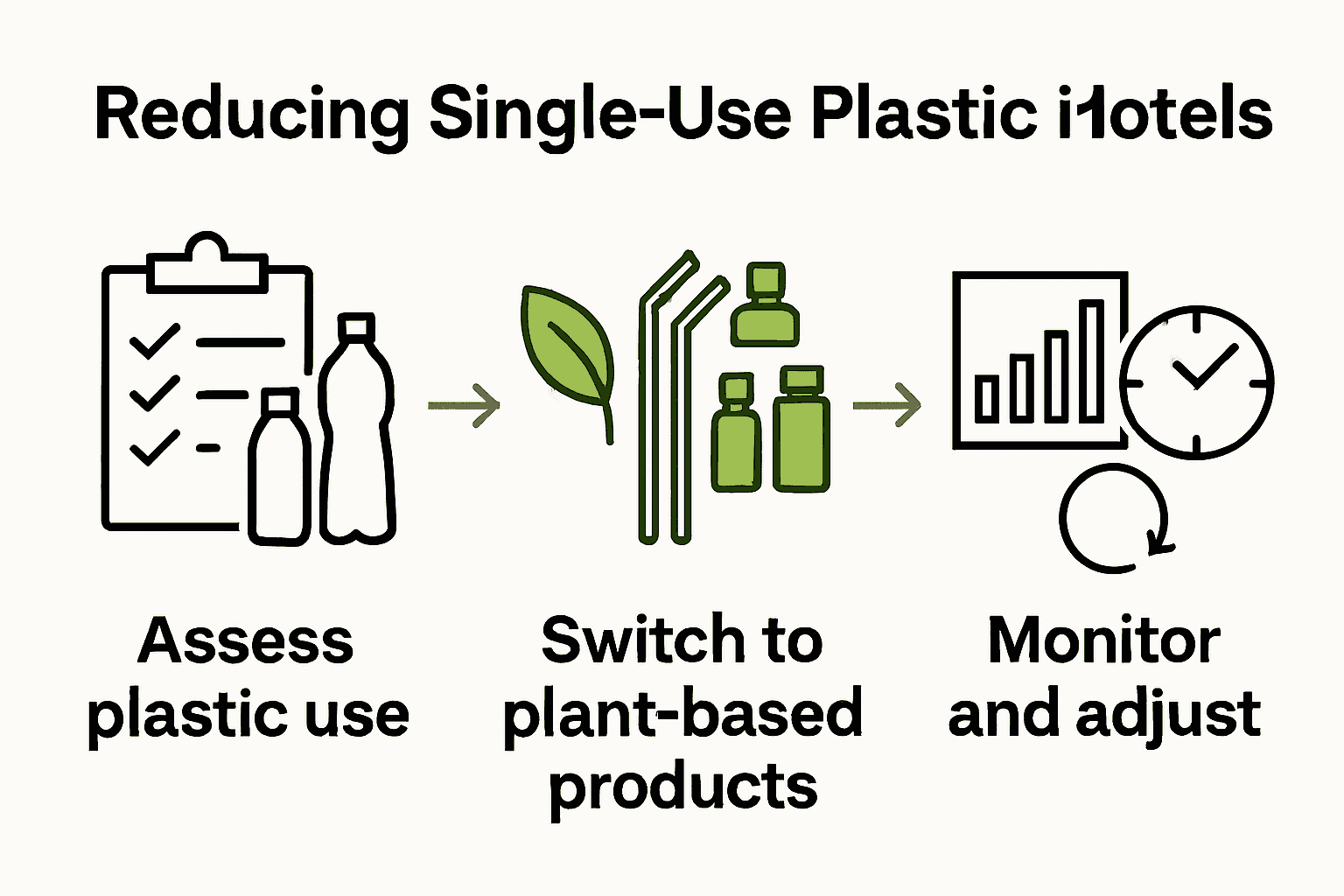
Understanding your hotel’s current plastic usage is the critical first step toward meaningful reduction. According to research from thebrpi.org, plastic consumption in hotel front offices involves multiple touchpoints including key cards, amenity packaging, and disposable cups.
To conduct a comprehensive assessment, start by creating a detailed inventory of all single use plastic items in your operations. Map out each department restaurant, housekeeping, front desk, conference areas and document every plastic item used. Track quantities, frequency of replacement, and total annual consumption. This systematic approach allows you to identify hidden plastic waste streams and prioritize reduction strategies. Pay special attention to high volume items like packaging, disposable utensils, water bottles, and bathroom amenities.
A practical tip is to involve staff from different departments in your assessment. Frontline employees often have unique insights into plastic consumption patterns and can suggest innovative reduction approaches. Understanding single use plastic impact becomes easier when you create a collaborative assessment process that transforms data collection into a team engagement opportunity. The next step will involve analyzing your inventory and developing targeted reduction strategies.
Step 2: Set specific plastic reduction targets
Setting precise and achievable plastic reduction targets transforms your sustainability efforts from vague intentions to concrete action. According to futouris.org, developing clear action plans with specific measurable goals is essential for meaningful plastic waste reduction.
To establish effective targets, start by setting quantifiable objectives. For example, aim to reduce single use plastic by 50% within 12 months or eliminate plastic water bottles completely by the end of the year. Break down these goals into department specific targets restaurant might eliminate plastic straws, housekeeping could switch to biodegradable amenity packaging, and front desk could transition to digital key systems. How to reduce plastic waste naturally becomes more achievable when you create specific milestones with clear timelines.
A practical tip is to make your targets both ambitious and realistic. Benchmark against industry leaders like TUI Group, who have developed comprehensive strategies for plastic reduction. Involve your team in target setting to ensure buy in and create accountability. Your next step will involve implementing specific strategies to meet these plastic reduction goals.
Step 3: Switch to wood and plant-based alternatives
Transitioning to sustainable alternatives is crucial for reducing single use plastic in hotel operations. According to iges.or.jp, small and medium hotels can significantly minimize environmental impact by adopting wood and plant-based materials as replacements for traditional plastic items.
Start by identifying key areas where you can make immediate substitutions. In dining areas, replace plastic straws with wood or plant-based alternatives. Kitchen and restaurant supplies can be switched to compostable utensils and packaging. For bathroom amenities, consider wood or plant-derived packaging for soaps, shampoos, and other products. Understanding what are plant based straws made of can help you make informed choices about sustainable replacements.
A practical tip is to phase in alternatives gradually to manage costs and allow staff adaptation. As recommended by TUI Group, implementing sustainable alternatives requires a strategic approach. Start with high visibility areas and most frequently used items, then expand your sustainable product range over time. Your next step will involve training staff and communicating these sustainable changes to your guests.
Step 4: Engage staff with clear sustainability training
Successful plastic reduction depends on getting your entire team aligned and motivated toward sustainable practices. Creating a comprehensive training program will transform your sustainability goals from theoretical concepts to actionable strategies that every staff member understands and implements.
Design an interactive training curriculum that covers three key areas understanding the environmental impact, learning specific plastic reduction techniques, and recognizing their individual role in sustainability. Break down complex concepts into practical workshops for different departments restaurant staff will learn about alternative serving materials, housekeeping about eco friendly amenities, and front desk about digital alternatives to plastic. What Is Greenwashing? 2025 Guide for Hotels & Restaurants can help your team understand authentic sustainability versus superficial marketing claims.
A practical tip is to make training engaging and participatory. Invite staff to share their own sustainability ideas, create friendly departmental challenges, and publicly recognize team members who contribute innovative reduction strategies. Gamify the learning process by offering rewards or recognition for departments that most effectively reduce plastic consumption. Your next step will involve monitoring progress and continuously refining your sustainability approach.
Step 5: Monitor progress and adjust purchasing routines
Tracking your plastic reduction efforts is critical to ensuring long term success and continuous improvement. According to wisdomlib.org, sustainable purchasing processes require ongoing evaluation and strategic adjustments to effectively reduce environmental impact.
Create a comprehensive tracking system that quantifies plastic consumption across different departments. Develop monthly reporting mechanisms that measure total plastic usage, track alternative material adoption rates, and document cost savings. Use digital spreadsheets or specialized sustainability management software to log precise data. Compare your current consumption against baseline measurements established during your initial plastic assessment. 7 Hospitality Marketing Ideas for Hotels and Restaurants can provide additional insights into communicating your sustainability achievements.
A practical tip is to conduct quarterly purchasing routine reviews. Analyze supplier contracts, evaluate new sustainable material options, and negotiate terms that prioritize environmentally friendly alternatives. Encourage department heads to provide feedback on alternative materials performance and total cost effectiveness. This collaborative approach transforms monitoring from a bureaucratic exercise into a dynamic strategy for continuous sustainability improvement.
 Your final step will involve celebrating successes and maintaining long term momentum.
Take the Next Step to Slash Single Use Plastic in Your Hotel
Reducing single use plastic in hotels starts with smart, sustainable choices that align with your eco goals. If switching to wood and plant-based alternatives is your priority, explore how The Ocean Straws offer a simple yet powerful solution designed specifically for the HoreCa market. These compostable straws help you meet ambitious plastic reduction targets while impressing guests with authentic sustainability.
Make meaningful changes today with the The Ocean Straw Growth Pack to quickly implement eco-friendly options in your operations. Visit https://theoceanstraw.com now to discover how your hotel can lead in sustainability and create lasting impact. Start reducing plastic waste effortlessly and inspire your staff and guests with real change.
Frequently Asked Questions
How can I assess plastic consumption in my hotel operations?
To assess plastic consumption, create a detailed inventory of all single-use plastic items used across departments like the restaurant, housekeeping, and front desk. Track quantities and frequency to identify high-volume items, aiming to document this inventory within a few weeks for effective reduction planning.
What specific plastic reduction targets should my hotel set?
Set specific, measurable targets such as reducing single-use plastic by 50% within 12 months or eliminating plastic straws by the end of the year. Break down these goals into department-specific objectives to ensure every team member is accountable for progress.
How can my hotel switch to wood and plant-based alternatives?
Transition to wood and plant-based alternatives by starting with high-visibility items like straws, utensils, and packaging. Replace these items within the first few months and gradually expand to other products as staff adjust to the changes.
What training should I provide to staff for plastic reduction?
Develop a comprehensive training program that covers the environmental impact of plastic and teaches staff about specific reduction techniques. Ensure training is interactive and encourage staff to share their ideas to foster engagement and alignment with sustainability goals.
How do I monitor the progress of plastic reduction efforts?
Monitor progress by creating a tracking system that quantifies plastic usage and alternative material adoption rates. Conduct monthly reports and quarterly reviews to evaluate your progress and adjust purchasing routines to prioritize sustainable options.
How can I involve my team in the plastic reduction process?
Engage your team by involving them in the plastic consumption assessment and setting reduction targets together. Encourage participation through departmental challenges and recognize innovative strategies that staff contribute to reduce plastic consumption.