
How to Reduce Your Environmental Impact Naturally

Running a city restaurant means juggling resource bills, supplier demands, and growing expectations for greener operations. Restaurants everywhere are facing mounting pressure as global resource extraction accelerates, according to United Nations Environment Programme data. Understanding your true consumption and making thoughtful swaps can set your business apart. This guide highlights practical steps and eco-friendly product alternatives that help you track progress, engage staff, and genuinely reduce your environmental impact.
Table of Contents
- Step 1: Evaluate Current Practices And Resource Use
- Step 2: Implement Eco-Friendly Product Alternatives
- Step 3: Engage Staff In Sustainability Initiatives
- Step 4: Measure Outcomes And Refine Strategies
Quick Summary
| Key Point | Explanation |
|---|---|
| 1. Track resource use for baseline. | Measure water, energy, waste, and supply chains to identify areas for improvement. Use this data to set clear sustainability targets. |
| 2. Replace high-impact items first. | Begin eco-friendly transitions with visible single-use products to enhance customer perception and demonstrate commitment to sustainability. |
| 3. Engage staff in sustainability. | Involve employees in sustainability initiatives by educating them about practices and celebrating their contributions to build commitment and enthusiasm. |
| 4. Measure and refine efforts continuously. | Regularly track performance metrics to assess progress, identify challenges, and make necessary adjustments for ongoing improvement. |
Step 1: Evaluate current practices and resource use
Before you can reduce environmental impact, you need to see the full picture of what your restaurant currently consumes and wastes. This evaluation becomes your baseline for measuring progress and identifying where real change matters most.
Start by tracking your major resource categories. Most restaurants operate within a few core consumption areas:
- Water usage (kitchen operations, cleaning, restrooms)
- Energy consumption (heating, cooling, cooking equipment)
- Waste streams (food scraps, packaging, single-use items)
- Supply chain practices (product sourcing, delivery frequency)
- Staff practices (operational habits, purchasing decisions)
Spend a week observing your actual operations without making changes. Write down what you notice. How often do you receive deliveries? Which suppliers dominate your purchases? Where do workers habitually waste resources?
Research shows that global resource extraction continues accelerating, making it critical for food businesses to understand their specific consumption patterns. You cannot manage what you do not measure.
Next, quantify your usage. Pull utility bills for the past 12 months to establish water and energy baselines. Count how many single-use items leave your kitchen daily. Weigh food waste if possible, or estimate based on portion sizes and customer volume.
Accurate data transforms environmental goals from vague intentions into concrete targets you can actually track and achieve.
Consider using frameworks designed for environmental evaluation. The OECD’s assessment methodologies help identify inefficiencies specific to hospitality operations. Many restaurants discover surprising waste patterns once they truly examine their practices.
Document everything systematically. Create a simple spreadsheet tracking water, energy, waste, and purchasing data month by month. This gives you a clear before-and-after comparison as you implement changes.

Pro tip: Ask your staff for observations during this evaluation phase. Line cooks and servers notice inefficiencies daily but rarely report them, so create a simple feedback form asking where they see waste or inefficiency in their daily work.
Step 2: Implement eco-friendly product alternatives
Now that you understand your current consumption patterns, start replacing high-impact items with sustainable alternatives. This is where your environmental commitment becomes tangible and your customers notice the change.
Begin with your most visible single-use items. Drinking straws, food containers, and food wrap represent some of the easiest swaps. These are the products customers interact with directly, making them powerful symbols of your sustainability commitment.
Prioritize replacements based on volume and environmental impact. Focus on items you use daily and in large quantities:
- Drinking straws (plastic to reusable or biodegradable options)
- Food service containers (styrofoam to compostable alternatives)
- Takeout packaging (single-use plastics to eco-friendly materials)
- Kitchen wrap and bags (conventional plastic to sustainable alternatives)
- Cleaning supplies (chemical-heavy to plant-based formulations)
Research shows that biodegradable packaging technologies now offer performance comparable to conventional plastics while reducing environmental harm. Your alternatives no longer mean compromising quality or functionality.
When evaluating new products, apply clear selection criteria. Check whether suppliers can demonstrate product safety and environmental benefits. The OECD’s guidance on safer alternatives helps you verify that replacements genuinely reduce environmental and health impacts, not just shift problems elsewhere.
Start with one product category, perfect the transition, then move to the next. Small wins build staff buy-in and operational stability.
Test alternatives before full commitment. Order samples of replacement straws, containers, or wrap. Let your team use them in real conditions. Gather feedback on durability, functionality, and customer perception before bulk ordering.
Communicate changes to your staff and customers. Train kitchen teams on proper handling and disposal of new materials. Update your menu boards and website to highlight your sustainability efforts. Transparency builds loyalty among environmentally conscious diners.
Track the adoption of each replacement. Note costs, supplier reliability, staff acceptance, and customer response. This data informs your next product transition decisions and demonstrates progress toward your environmental goals.
Here’s how various eco-friendly product alternatives impact operations and the environment:
| Product Alternative | Operational Benefit | Environmental Advantage | Customer Perception |
|---|---|---|---|
| Reusable straws | Lowers supply expenses | Reduces plastic waste | Seen as modern & responsible |
| Compostable containers | Simplifies disposal tasks | Minimizes landfill volume | Enhances brand reputation |
| Eco-friendly takeout bags | Streamlines stocking | Uses renewable materials | Valued by eco-conscious guests |
| Plant-based cleaning supplies | Improves staff safety | Limits harmful chemical runoff | Shows care for staff & planet |
Pro tip: Start with products that benefit your bottom line immediately, like reusable straws that customers purchase or premium eco-packaging that justifies menu price adjustments, building momentum before transitioning to purely cost-neutral swaps.
Step 3: Engage staff in sustainability initiatives
Your sustainability goals cannot succeed without your team. Staff adoption determines whether eco-friendly practices become permanent operational changes or fade away after initial enthusiasm.
Start by communicating your sustainability vision clearly. Your team needs to understand why you’re making changes, not just what those changes are. Connect sustainability directly to your restaurant’s values and to each employee’s specific role.
Break down how sustainability impacts different positions:
- Kitchen staff handle new product materials and waste sorting protocols
- Front-of-house teams explain changes to customers and model eco-conscious behavior
- Managers track metrics and maintain accountability
- Owners model commitment through consistent communication and resource allocation
Research demonstrates that employee engagement drives corporate sustainability success, leading to greater innovation and operational efficiency. When staff feel invested in environmental goals, they actively participate rather than passively comply.
Implement training programs tailored to your sustainability initiatives. Teach kitchen teams proper disposal of new compostable materials. Train servers on explaining eco-friendly practices to curious customers. Upskill managers on tracking and reporting progress. Knowledge builds confidence and reduces resistance.
Employees become advocates when they understand the impact of their actions and see measurable progress toward sustainability goals.
Celebrate wins publicly. When you successfully transition to reusable straws or reduce food waste by 15 percent, share that victory with your team. Feature staff contributions in staff meetings. Recognize individuals who champion sustainability practices.
Use sustainability engagement strategies designed specifically for hospitality to overcome common resistance. Address concerns directly. Some staff worry about extra work or perceived customer dissatisfaction. Show them how new systems actually streamline operations once established.
Create feedback channels for staff input. Your team sees operational inefficiencies daily. Monthly sustainability meetings allow workers to suggest improvements and feel heard. This generates buy-in and uncovers practical solutions you might miss from management alone.
Link sustainability efforts to employee benefits when possible. Consider profit-sharing if eco-initiatives reduce costs. Offer sustainability bonuses or recognition programs. Financial incentives accelerate adoption.
Pro tip: Start with one team member per department who is naturally enthusiastic about sustainability and empower them as internal champions who mentor colleagues and troubleshoot implementation challenges.
Step 4: Measure outcomes and refine strategies
Without measurement, you cannot prove your sustainability efforts are working or identify what needs adjustment. Data transforms good intentions into demonstrable environmental progress.
Return to the baseline metrics you established in Step 1. Compare current numbers against your starting point to quantify real change.
Track these key performance indicators monthly:
- Water consumption (gallons per service day or per customer)
- Energy usage (kilowatt hours or utility costs)
- Waste volume (pounds diverted from landfills)
- Single-use item reduction (straws, containers, packaging used)
- Supply chain metrics (percentage of eco-friendly product purchases)
Use simple spreadsheets or sustainability software to monitor trends. Visualize data with charts showing progress over time. This clarity reveals which initiatives work and where you’re falling short.
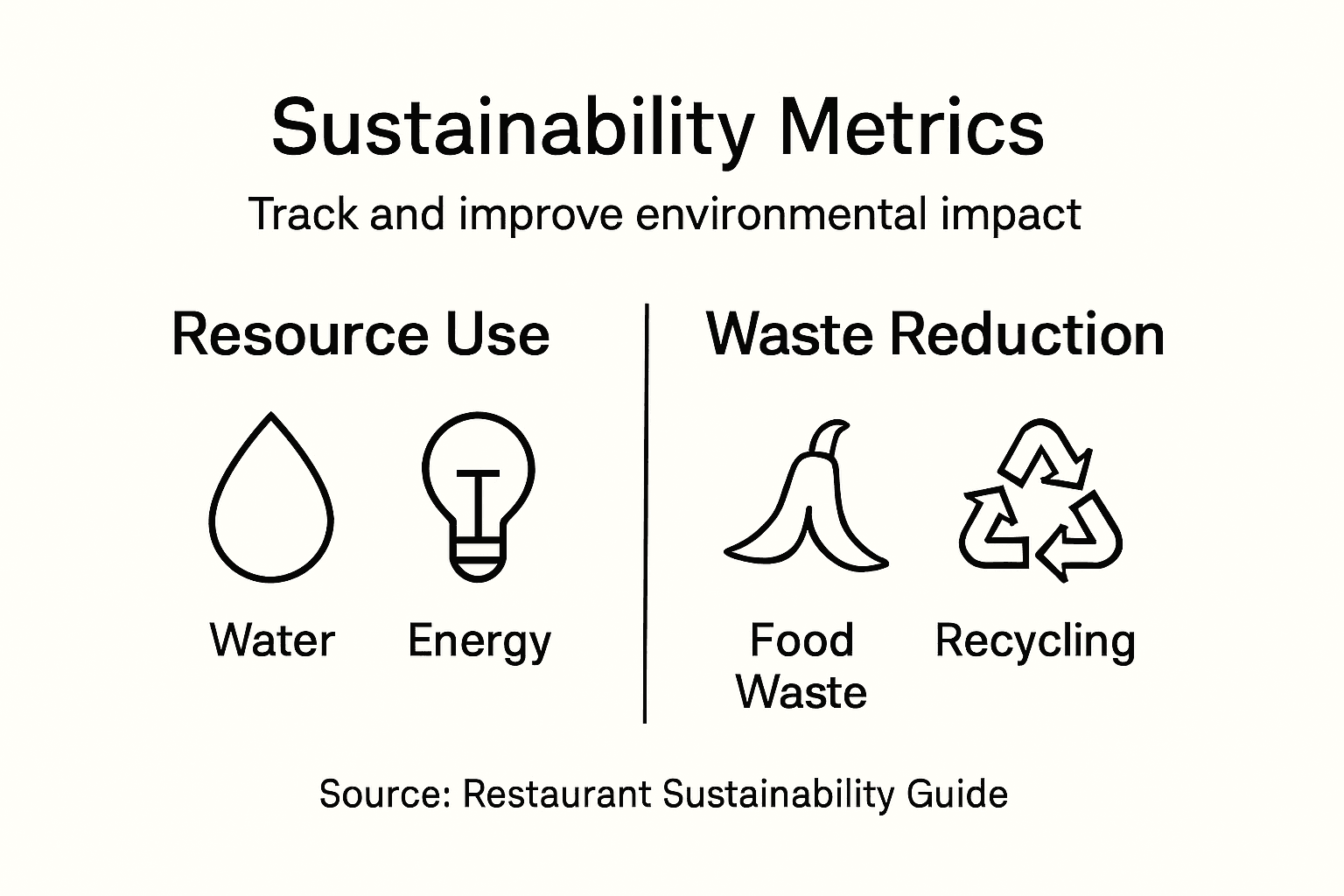
Implement performance review cycles to assess effectiveness and adjust tactics accordingly. Quarterly reviews allow you to course-correct quickly rather than discovering problems after a year of implementation.
Analyze cost impacts alongside environmental gains. Did transitioning to reusable straws reduce expenses by 12 percent? Did eco-friendly packaging attract new customers? Understanding financial outcomes builds leadership support for continued sustainability investment.
Metrics prove your sustainability commitment is real, not performative, and show customers and staff that environmental efforts drive tangible results.
Gather qualitative feedback beyond numbers. Survey customers about their perception of your sustainability practices. Ask staff what’s working operationally and what’s creating friction. Interview suppliers about partnership opportunities.
Identify your highest-impact opportunities for next-phase improvements. Maybe water reduction brought the largest savings. Perhaps waste diversion resonates most with your customer base. Let data guide your next priority.
Communicate results transparently. Share progress reports with your team monthly. Update your website and social media quarterly with environmental achievements. Transparency builds credibility and reinforces your sustainability culture.
Here’s a summary of common sustainability metrics and what they reveal:
| Metric | What It Measures | Why It Matters | Example Insights |
|---|---|---|---|
| Water consumption | Daily gallons per customer | Identifies waste patterns | High use flags leaks or waste |
| Energy usage | Monthly kilowatt hours | Tracks efficiency gains | Declining use marks progress |
| Waste volume | Pounds diverted monthly | Reveals reduction success | Drop indicates better sorting |
| Eco-friendly purchases | Percent of sustainable items | Guides supplier choices | Increase shows commitment |
Refinement is continuous. If a supplier fails to deliver quality products consistently, switch suppliers. If staff resist a particular protocol, redesign the workflow. Sustainability is not a one-time project but an evolving system.
Pro tip: Set one ambitious but achievable sustainability goal for the next 12 months, track it weekly, and celebrate monthly milestones with your team to maintain momentum and demonstrate that environmental progress compounds over time.
Make a Real Impact with Sustainable Straw Solutions
Reducing environmental impact naturally means addressing daily operational challenges like single-use waste and resource consumption. This article highlights the importance of evaluating current practices and adopting eco-friendly alternatives such as reusable straws to lower plastic waste and enhance your brand’s sustainability. If you are aiming to replace conventional plastic straws with durable, biodegradable options that align with your commitment to reducing landfill volume and improving customer perception, you need trusted, innovative products.
Explore how TheOceanStraw.com offers cutting-edge wooden and plant-based reusable straws designed specifically for hospitality businesses seeking eco-conscious solutions. Benefit from products that combine durability and safety with environmental responsibility. Visit our site to request samples, learn about bulk ordering, and see how you can integrate sustainable straw alternatives into your menu today. Take action now to strengthen your sustainability initiatives and inspire both your team and customers by making the switch to eco-friendly straws immediately.
Frequently Asked Questions
How can I evaluate my restaurant’s current environmental impact?
Start by tracking major resource categories such as water usage, energy consumption, waste streams, and supply chain practices. Spend a week observing your operations without making changes, then document your findings to establish a clear baseline.
What are some eco-friendly product alternatives I can implement in my restaurant?
Begin replacing high-impact items like plastic straws, food service containers, and single-use plastics with biodegradable or reusable options. Focus on switching out the most frequently used items first to maximize the environmental impact quickly.
How do I engage my staff in sustainability initiatives?
Communicate your sustainability vision clearly and explain how each team member contributes to these goals. Consider implementing training programs and establishing feedback channels to encourage staff involvement and ownership of eco-friendly practices.
What metrics should I use to measure my progress in reducing environmental impact?
Track key performance indicators such as water consumption, energy usage, waste volume, and the percentage of eco-friendly purchases. Establish a monthly review process to analyze these metrics and refine your strategies based on your results.
How can I ensure the sustainability practices I implement are lasting?
Foster a culture of sustainability by celebrating small wins and involving your staff in decision-making processes. Regularly review and update your strategies, maintaining clear communication about your ongoing environmental goals to keep everyone engaged and accountable.
Recommended
- What is Environmentally Friendly Products? Understanding Their Importa – The Ocean Straw
- 10 Essential Tips on What Are Environmentally Friendly Materials – The Ocean Straw
- How to Measure Environmental Impact in Your Business – The Ocean Straw
- How to Reduce Waste at Home Naturally Step by Step – The Ocean Straw
- Case Study: How Aeoncut Helped a Shop Save 20% on Material Costs – AEONCUT PPF Pre-cut Cutting software