
Most Sustainable Packaging Material: Impact on Eco-Friendly Businesses

Choosing the right packaging can feel like a constant balancing act for restaurant and cafe owners who want both quality and environmental responsibility. Growing consumer demand for greener solutions is driving a shift towards sustainable packaging materials that help reduce waste without sacrificing performance. This article unpacks the core features, benefits, and must-know details of sustainable packaging, so you can make informed choices that support both your business and the planet.
Table of Contents
- Defining Sustainable Packaging Materials
- Popular Sustainable Packaging Types Compared
- Key Features of Eco-Friendly Packaging
- Certifications and Legal Requirements for Packaging
- Real-World Applications in Foodservice
- Cost, Risks, and Alternatives Explained
Key Takeaways
| Point | Details |
|---|---|
| Sustainable Packaging Definition | Sustainable packaging aims to minimize environmental impact throughout a product’s lifecycle by using renewable or recycled materials and promoting recyclability. |
| Emerging Materials | Bioplastics, recycled paper, and compostable materials are key alternatives that reduce carbon emissions and minimize waste in foodservice packaging. |
| Eco-Design Principles | Implementing eco-design in packaging focuses on renewable sourcing, advanced recyclability, and reduced material use, enhancing both sustainability and business efficiency. |
| Regulatory Compliance | Businesses must stay informed about evolving packaging regulations, such as those from the European Union, to ensure compliance and promote circular economy principles. |
Defining Sustainable Packaging Materials
Sustainable packaging represents a critical evolution in environmental responsibility for businesses seeking to minimize their ecological footprint. The U.S. Environmental Protection Agency provides a comprehensive framework, defining sustainable packaging as materials and manufacturing methods strategically designed to reduce environmental impacts throughout a product’s entire lifecycle. Sustainable packaging principles focus on minimizing waste generation, utilizing lightweight materials, and ensuring maximum recyclability.
At its core, sustainable packaging encompasses several key attributes that distinguish it from traditional packaging solutions. These characteristics include sourcing materials from renewable or recycled resources, designing packaging for maximum material and energy efficiency, and creating closed-loop systems that enable complete material recovery. Holistic packaging strategies consider the entire value chain, ensuring that packaging is not just environmentally friendly but also safe, healthy, and aligned with market requirements.
For restaurant and cafe owners, sustainable packaging means selecting materials that balance functional performance with environmental consciousness. Key materials include:
- Biodegradable plant-based plastics
- Recycled paper and cardboard products
- Compostable packaging derived from agricultural waste
- Materials with minimal carbon footprint during production
Pro Tip: When evaluating sustainable packaging, look beyond marketing claims and request third-party certifications that validate environmental performance and material sourcing standards.
Popular Sustainable Packaging Types Compared
Restaurant and cafe owners are increasingly exploring sustainable packaging alternatives that balance environmental responsibility with practical business needs. Traditional packaging materials are being reimagined through innovative approaches that prioritize ecological impact, with several key material types emerging as frontrunners in the sustainable packaging revolution.
The landscape of sustainable packaging materials is diverse, encompassing options like bioplastics, recycled paper products, and innovative natural materials. Bioplastics derived from renewable sources such as starch, hemp, and sugarcane bagasse offer promising alternatives to conventional petroleum-based plastics. These materials can be biodegradable, compostable, and significantly reduce carbon footprint. Life cycle assessment studies reveal that the environmental performance of packaging materials is complex, with each material presenting unique advantages and challenges.
Comparing popular sustainable packaging types reveals nuanced considerations for foodservice businesses:
Here’s a comparison of leading sustainable packaging types and their main advantages for foodservice businesses:
| Material Type | Primary Benefit | Typical Drawback | Example Application |
|---|---|---|---|
| Plant-based Bioplastics | Lower carbon emissions | Higher cost than plastic | Takeout containers |
| Recycled Paper | Widely recycled, lightweight | Lesser durability | Coffee cup sleeves |
| Compostable Film | Reduces landfill waste | Limited shelf life | Food wraps |
| Mycelium Packaging | Minimal resource use | Limited scalability | Specialty packaging |
- Bioplastics: Derived from plant-based sources, offering biodegradability
- Recycled Paper Products: Lightweight, recyclable, and widely available
- Compostable Materials: Break down naturally, reducing landfill waste
- Mycelium Packaging: Innovative fungus-based material with minimal environmental impact
Pro Tip: Conduct a comprehensive environmental assessment of packaging materials, considering not just their initial carbon footprint but also their entire lifecycle, including production, transportation, and end-of-life disposal.
Key Features of Eco-Friendly Packaging
Modern foodservice businesses are increasingly adopting eco-design packaging principles that transform traditional packaging approaches. These innovative strategies go beyond simple material selection, integrating comprehensive sustainability considerations that address environmental impact, consumer behavior, and business performance.

The core features of eco-friendly packaging encompass multiple critical dimensions. Smart packaging technologies are revolutionizing how businesses approach packaging design, introducing multifunctional elements that enhance both environmental sustainability and product performance. Key characteristics include:
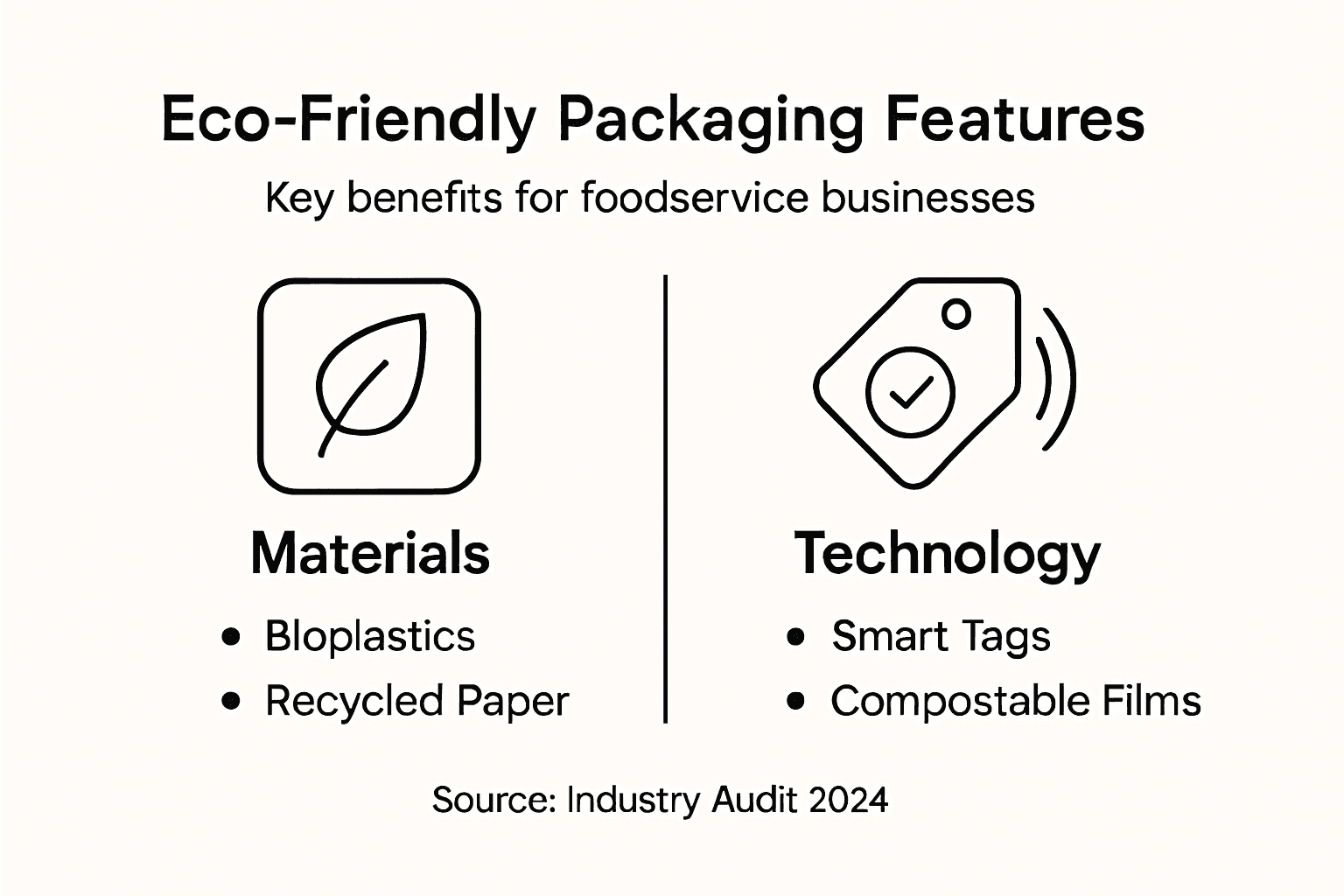
Below is a summary of the most important eco-friendly packaging features and their business impact:
| Feature | Environmental Benefit | Business Advantage |
|---|---|---|
| Renewable Sourcing | Reduces fossil resource use | Enhances brand image |
| Minimal Material Design | Lowers resource demand | Cuts material costs |
| Advanced Recyclability | Improves recycling rates | Facilitates regulatory compliance |
| Smart Monitoring | Prevents food waste | Boosts food safety assurance |
- Renewable Material Sourcing: Using materials from sustainable, regenerative sources
- Minimal Resource Consumption: Designing packaging with reduced material requirements
- Advanced Recyclability: Ensuring packaging can be effectively recycled or composted
- Toxic Substance Elimination: Avoiding harmful chemicals and potential environmental contaminants
- Smart Monitoring Features: Incorporating sensors for food safety and quality tracking
Pro Tip: Conduct a comprehensive packaging audit that evaluates not just material composition, but the entire lifecycle environmental impact, including production, transportation, and end-of-life disposal strategies.
Certifications and Legal Requirements for Packaging
The landscape of packaging regulations is rapidly evolving, with global jurisdictions implementing increasingly stringent sustainable packaging standards that prioritize environmental protection and circular economy principles. These regulations are transforming how businesses approach packaging design, production, and waste management across multiple industries.
European Union regulations are particularly pioneering, with the Packaging and Packaging Waste Regulation establishing comprehensive guidelines that will reshape packaging requirements by 2030. Key legal mandates include:
- Mandatory Recyclability: Packaging must be designed for efficient recycling
- Waste Reduction Targets: Specific goals for minimizing packaging waste
- Producer Responsibility: Manufacturers accountable for entire product lifecycle
- Hazardous Substance Limitations: Strict controls on chemical content
- Circular Economy Compliance: Design for reuse and material recovery
Pro Tip: Proactively audit your packaging against emerging international standards, establishing relationships with certification bodies to ensure ongoing compliance and competitive advantage.
Real-World Applications in Foodservice
The foodservice industry is experiencing a transformative shift towards sustainable packaging technologies that address environmental challenges while maintaining operational efficiency. Innovative approaches are emerging that integrate advanced materials, digital tracking, and circular economy principles to revolutionize how restaurants and cafes approach packaging.
Modern foodservice businesses are implementing cutting-edge solutions through eco-friendly polymer nanocomposites that provide multiple benefits beyond traditional packaging. These advanced materials offer enhanced food protection, extended shelf life, and significantly reduced environmental impact. Key real-world applications include:
- Smart Packaging Solutions: Incorporating IoT sensors for food safety monitoring
- Biodegradable Film Technologies: Creating compostable food wrap alternatives
- Blockchain Traceability: Enhancing supply chain transparency
- Circular Economy Design: Implementing reusable packaging systems
- Nanocomposite Material Integration: Developing stronger, more sustainable packaging
Pro Tip: Implement a comprehensive packaging assessment program that evaluates material performance, environmental impact, and cost-effectiveness across your entire product line.
Cost, Risks, and Alternatives Explained
Businesses exploring sustainable packaging must carefully evaluate strategic packaging redesign approaches that balance economic constraints with environmental objectives. Innovative design strategies can yield significant material reduction without compromising functional performance, potentially creating substantial cost savings across packaging portfolios.
However, sustainable packaging transitions are not without challenges. Sustainable packaging alternatives present complex considerations for foodservice businesses, including higher initial production costs, technological implementation barriers, and potential supply chain disruptions. Critical risk factors businesses must navigate include:
- Production Cost Implications: Higher upfront investment in sustainable materials
- Technological Feasibility: Ensuring new materials meet performance standards
- Supply Chain Complexity: Managing transitions with existing vendor networks
- Regulatory Compliance: Meeting evolving environmental packaging regulations
- Market Acceptance: Ensuring consumer receptiveness to new packaging approaches
Pro Tip: Conduct a comprehensive pilot program that tests sustainable packaging solutions in controlled environments, allowing for iterative improvements and risk mitigation before full-scale implementation.
Embrace Sustainable Packaging with Innovative Straw Solutions
Navigating the complexities of sustainable packaging materials is a challenge for foodservice businesses striving to reduce waste and carbon footprint while maintaining product quality. This article highlights key pain points like balancing environmental impact with cost and functionality through renewable sourcing and advanced recyclability. One effective way to enhance your eco-friendly initiatives is by choosing packaging and accessories designed with these principles in mind.
At TheOceanStraw.com, we offer durable, reusable straws crafted from a unique wood and plant-based material that aligns perfectly with sustainable packaging goals. Our products eliminate reliance on single-use plastics, contributing to waste reduction and compliance with environmental regulations. Explore options tailored for businesses by visiting The Ocean Straw Growth Pack and learn how integrating these straws can boost your brand’s environmental credibility.
Ready to make a meaningful impact with sustainable packaging? Visit TheOceanStraw.com today to discover innovative straw solutions designed to elevate your commitment to eco-friendly practices. Start your journey now toward smarter, greener packaging that works for your business and the planet.
Frequently Asked Questions
What are the key attributes of sustainable packaging materials?
Sustainable packaging materials typically include attributes such as sourcing from renewable or recycled resources, maximizing material and energy efficiency, and facilitating closed-loop systems for complete material recovery.
How do bioplastics compare to traditional petroleum-based plastics?
Bioplastics are derived from renewable sources like starch and sugarcane, offering benefits such as biodegradability and a lower carbon footprint compared to traditional petroleum-based plastics, which are more harmful to the environment.
What are some examples of sustainable packaging options for foodservice businesses?
Popular sustainable packaging options for foodservice businesses include biodegradable plant-based plastics, recycled paper products, compostable packaging made from agricultural waste, and mycelium packaging.
What challenges do businesses face when transitioning to sustainable packaging?
Businesses may face challenges such as higher initial production costs, technological feasibility of new materials, supply chain complexities, regulatory compliance with evolving standards, and consumer acceptance of new packaging approaches.