
How Recycling Reduces Pollution in Foodservice

Every restaurant owner faces the question of what happens to waste once it leaves the kitchen. Managing recycling is more than just sorting cans and bottles—it is a direct intervention that limits pollution and supports a responsible brand identity. When you adopt recycling to reduce pollution, you cut down on air, water, and soil contamination from raw material extraction. This guide offers practical steps for foodservice managers to integrate recycling methods that genuinely lower environmental impact while strengthening your sustainability reputation.
Table of Contents
- Recycling’s Role in Pollution Reduction
- Types of Recycling and Their Environmental Impact
- How Recycling Processes Lower Air, Water, and Soil Pollution
- The Economic and Sustainability Benefits for Businesses
- Avoiding Common Pitfalls in Practical Recycling Initiatives
Key Takeaways
| Point | Details |
|---|---|
| Recycling Reduces Pollution | Recycling minimizes the demand for raw material extraction, thereby lowering air, water, and soil pollution through effective waste management strategies. |
| Effective Recycling Practices | Implementing proper sorting protocols and choosing the right recycling methods enhances the environmental benefits and reduces contamination risks. |
| Economic Incentives | Robust recycling programs lower waste disposal costs and can attract eco-conscious customers, strengthening brand reputation and increasing revenue. |
| Avoid Common Pitfalls | Clear guidelines, ongoing education, and regular audits are critical for successful recycling initiatives to prevent contamination and ensure compliance. |
Recycling’s Role in Pollution Reduction
Recycling operates as a direct intervention against pollution at multiple stages of production and waste management. When your restaurant or foodservice operation recycles materials, you’re actively cutting the demand for new raw material extraction, which is one of the most polluting phases of manufacturing.
Here’s why this matters for your business and the environment:
The Pollution Prevention Cycle
Recycling reduces pollution by eliminating energy-intensive extraction and refining processes that release harmful pollutants into air, water, and soil. Traditional manufacturing requires mining, harvesting, and processing virgin materials—steps that generate massive carbon emissions, chemical runoff, and habitat destruction.
When you implement recycling programs in your foodservice operation, you’re closing the material loop. Instead of extracting new resources, recycling converts used materials back into production cycles, dramatically reducing environmental impact.
What Gets Prevented
Recycling directly addresses multiple pollution sources:
- Air pollution: Extracting and processing virgin materials generates greenhouse gases and particulate matter that contaminate the air your community breathes.
- Water contamination: Mining operations and manufacturing facilities leak chemicals into groundwater and nearby waterways, affecting ecosystems and drinking water supplies.
- Soil degradation: Resource extraction destroys habitats and causes erosion, permanently altering landscapes.
- Climate impact: Plastic waste recycling reduces greenhouse gas emissions significantly compared to landfill disposal or incineration.
Your Foodservice Role
As a foodservice manager, you control consumption patterns that drive demand. By choosing reusable alternatives like durable wood-based straws instead of single-use plastics, and by establishing strong recycling protocols, you reduce the pressure on extraction industries.
Meaningful recycling in foodservice includes separating materials by type, educating staff on proper sorting, and partnering with certified recyclers who actually process materials into new products. The key is ensuring your recycling efforts create real environmental benefit, not just feel-good gestures.
Understanding how to reduce, reuse, and recycle for foodservice success gives you concrete strategies to implement these principles effectively in your operation.
Pro tip: Track what your operation recycles and calculate the equivalent pollution prevented—this data becomes powerful marketing material for eco-conscious customers while holding your team accountable to sustainability goals.
Types of Recycling and Their Environmental Impact
Not all recycling works the same way. Different materials require different recycling methods, and each approach has distinct environmental consequences. Understanding what your foodservice operation can recycle effectively helps you make decisions that actually reduce pollution rather than shifting it elsewhere.
Three Main Recycling Methods
Recycling involves collecting and processing materials into new products through several distinct types. Each method suits different materials and delivers different environmental outcomes:
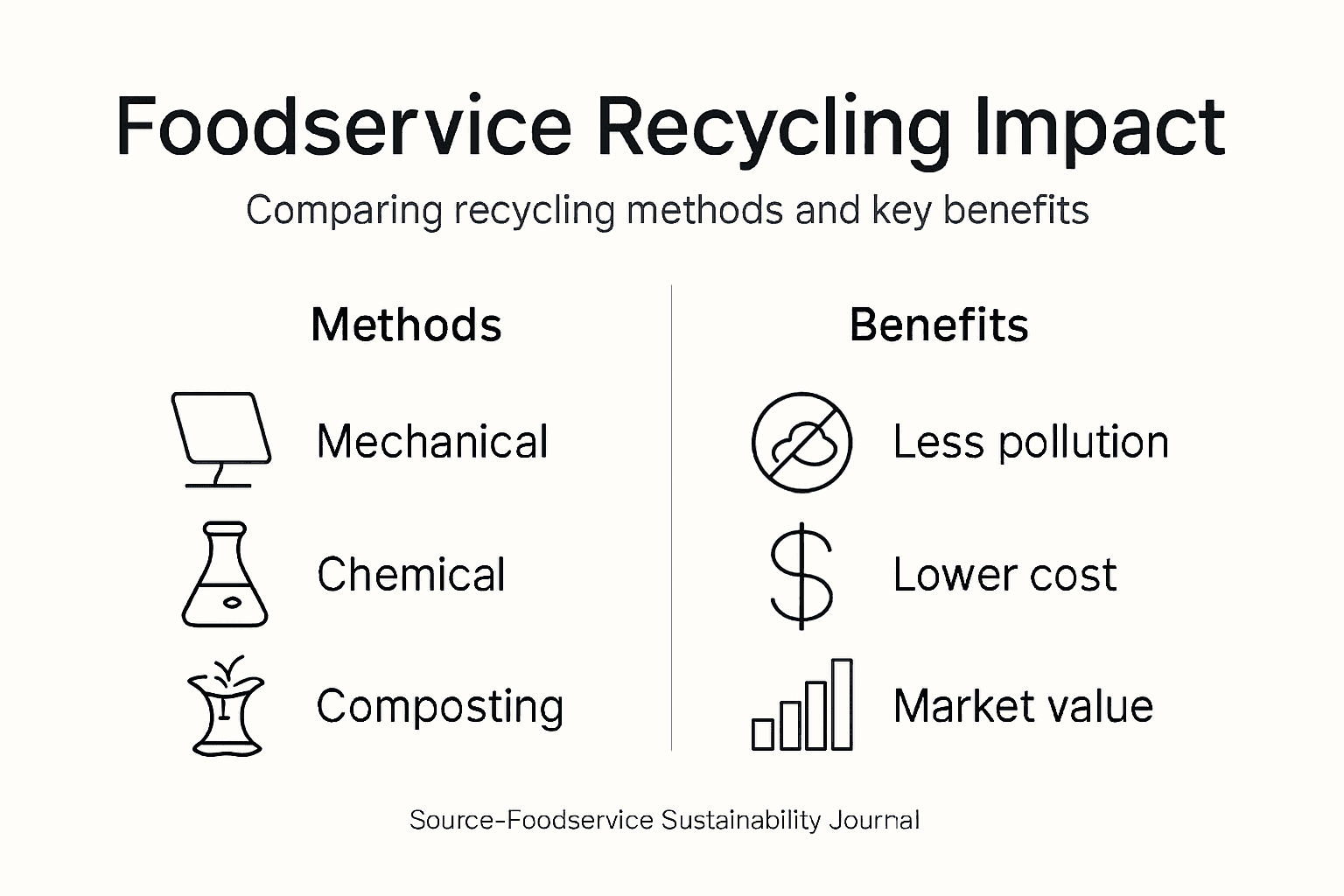
- Mechanical recycling: Physical processing of materials like plastics and metals into new products. Lower energy demands but limited by contamination and sorting challenges.
- Chemical recycling: Breaking down materials into raw molecular components for remanufacturing. More energy-intensive but recovers polymers unsuitable for mechanical recycling.
- Composting: Organic waste recycling that returns nutrients to soil. Prevents methane emissions from landfills while creating usable soil amendments.
Environmental Impact Varies by Method
Mechanical recycling works best for foodservice operations because it’s energy-efficient and straightforward. When your staff separates aluminum cans, glass bottles, and rigid plastics, you’re supporting a lower-energy recycling stream.
Plastic recycling technologies have varying environmental and economic impacts depending on contamination levels and material purity. Contaminated batches often end up in landfills anyway, making proper sorting critical to your success.
Chemical recycling handles complex plastic blends that mechanical systems reject, but it requires significant energy input. For most foodservice operations, prioritizing clean mechanical recycling streams delivers better overall results.
Composting Organic Waste
Here’s a comparison of the three main recycling methods relevant to foodservice operations:
| Recycling Method | Ideal Materials | Energy Use Level | Key Environmental Benefit |
|---|---|---|---|
| Mechanical Recycling | Aluminum, glass, rigid plastics | Low | Reduces raw material extraction impacts |
| Chemical Recycling | Mixed or hard-to-recycle plastics | High | Recovers polymers unfit for other processes |
| Composting | Food scraps, compostable paper | Low/Moderate | Prevents methane and improves soil health |
Foodservice generates substantial organic waste—food scraps, napkins, and compostable packaging. Composting this material prevents it from decomposing in landfills where it produces methane, a greenhouse gas 25 times more potent than carbon dioxide.
Many cities now mandate organic waste separation. Implementing composting programs reduces your waste hauling costs while supporting local soil health.
Making the Right Choice
Your operation should focus on what recycling methods actually exist in your region. Contaminated recycling loads get rejected and end up in landfills, negating any environmental benefit. Understanding the environmental impact of plastic recycling helps you implement systems that work.
Start with mechanical recycling for your highest-volume items, establish clear staff training on sorting rules, and verify your recycler actually processes your materials.
The environmental benefit of recycling depends entirely on execution—clean materials processed locally deliver real pollution reduction, while contaminated batches create waste management problems.
Pro tip: Request documentation from your recycler showing what happens to your collected materials; if they can’t confirm processing actually occurs, your recycling program may be creating false environmental impact claims that damage your brand credibility.
How Recycling Processes Lower Air, Water, and Soil Pollution
Recycling addresses three critical pollution pathways simultaneously. By diverting waste from landfills and reducing raw material extraction, your recycling efforts directly combat air, water, and soil contamination at their sources.
Air Pollution Reduction
Manufacturing virgin products from raw materials generates enormous air pollution. Mining operations, refineries, and processing plants release sulfur dioxide, nitrogen oxides, and particulate matter—all major respiratory hazards.
Recycling bypasses these extraction processes entirely. When you recycle aluminum cans instead of mining new bauxite, you eliminate the smelting emissions that poison the air. Recycling reduces emissions that cause air pollution like sulfur dioxide and nitrogen oxides.
Your foodservice operation participates in this cycle every time contaminated items get properly sorted. Clean recycling means less mining, less refining, and cleaner air in surrounding communities.
Water Pollution Prevention
Industrial processing generates toxic wastewater that contaminates groundwater and rivers. Mining operations create acid drainage that poisons ecosystems for decades. Recycling eliminates these pollution sources by eliminating the need for extraction.
Landfills create another water crisis: leachate. This toxic liquid forms when rainwater percolates through decomposing waste, carrying heavy metals and chemicals into soil and groundwater. Recycling diverts waste that would otherwise create this contamination.
Soil Degradation Stops Here
Landfills produce two soil hazards simultaneously. First, toxic leachate contaminates soil with heavy metals and chemical residues. Second, decomposing organic waste generates methane gas, a greenhouse gas 25 times more potent than carbon dioxide.
Recycling decreases pollution by diverting waste from landfills, which are major sources of methane emissions and toxic leachate. Every ton diverted from landfills prevents years of soil contamination.
Additionally, recycling eliminates habitat destruction from mining and logging. Intact ecosystems naturally filter pollutants from air and water, so preserving them multiplies your recycling benefits.
The Cumulative Effect
Your operation’s recycling program works across all three pollution types simultaneously:
- Reduces extraction emissions that poison air
- Eliminates industrial wastewater that contaminates water
- Prevents landfill leachate that destroys soil
When your foodservice operation recycles properly, you’re preventing three distinct pollution pathways at once—that’s exponential environmental impact from a single operational choice.
Pro tip: Document the waste weight your operation diverts from landfills monthly and calculate equivalent methane emissions prevented; this data transforms recycling from a compliance task into a measurable sustainability metric you can market to environmentally conscious customers.
The Economic and Sustainability Benefits for Businesses
Recycling isn’t just an environmental gesture—it’s a financial strategy. Foodservice operations that implement robust recycling programs reduce costs, strengthen brand reputation, and access growing market segments of environmentally conscious consumers.
Direct Cost Reduction
Waste disposal fees represent a significant operational expense. Every pound diverted from landfills reduces your hauling costs immediately. Recycling in food and drink manufacturing reduces costs related to waste disposal and raw material extraction, offering significant savings.
Beyond waste fees, recycling programs lower your raw material costs. When you switch to reusable alternatives—durable wooden straws instead of plastic—you eliminate repeated purchasing cycles. The upfront investment pays back through volume savings.
Sustainability Creates Market Value
Today’s customers vote with their wallets. Eco-conscious diners actively seek restaurants demonstrating genuine environmental commitment. Recycling visibility attracts this demographic while justifying premium pricing.
Your sustainability efforts become marketing content. Social media engagement increases when you document recycling metrics and pollution reduction. Environmental certifications and awards generate credibility that paid advertising cannot match.
Employee Engagement and Culture
Staff members increasingly value working for responsible companies. Recycling programs create shared purpose, improving retention and workplace morale. Employees take pride in contributing to measurable environmental impact.
This cultural shift reduces turnover costs while building stronger team cohesion. Your team becomes brand ambassadors when they genuinely believe in your mission.
Below is a summary table of the major business benefits when integrating recycling in foodservice:
| Benefit Type | Example Impact | Resulting Business Advantage |
|---|---|---|
| Cost Savings | Reduced landfill hauling fees | Extra budget for operations or upgrades |
| Market Differentiation | Documented recycling metrics | Attracts eco-conscious customers |
| Employee Engagement | Staff feel pride in contribution | Improved retention and workplace morale |
| Operational Efficiency | Cleaner waste streams | Fewer compliance issues, smoother processes |
Innovation and Competitive Advantage
Recycling in the foodservice industry mitigates economic and environmental burdens through circular economy principles. Forward-thinking operations gain first-mover advantages in sustainability markets.
Your business becomes attractive to investors, partners, and premium suppliers prioritizing sustainability alignment. You’ll access partnerships unavailable to competitors still relying on single-use systems.
The Compounding Effect
These benefits reinforce each other:
- Lower waste costs fund sustainability investments
- Stronger brand attracts premium-paying customers
- Increased revenue funds equipment upgrades
- Better systems reduce operational headaches
- Employee satisfaction improves service quality
Recycling programs transform from cost centers into revenue drivers when implemented strategically—your environmental responsibility becomes your competitive advantage.
Pro tip: Calculate your actual annual savings from reduced waste fees and higher customer retention rates; present this financial data to leadership and investors to secure funding for expanded recycling infrastructure and sustainable material transitions.
Avoiding Common Pitfalls in Practical Recycling Initiatives
Well-intentioned recycling programs fail constantly. Most failures trace back to predictable mistakes that you can avoid with proper planning and execution. Understanding these pitfalls protects your investment and ensures your initiative actually reduces pollution.
The Contamination Crisis
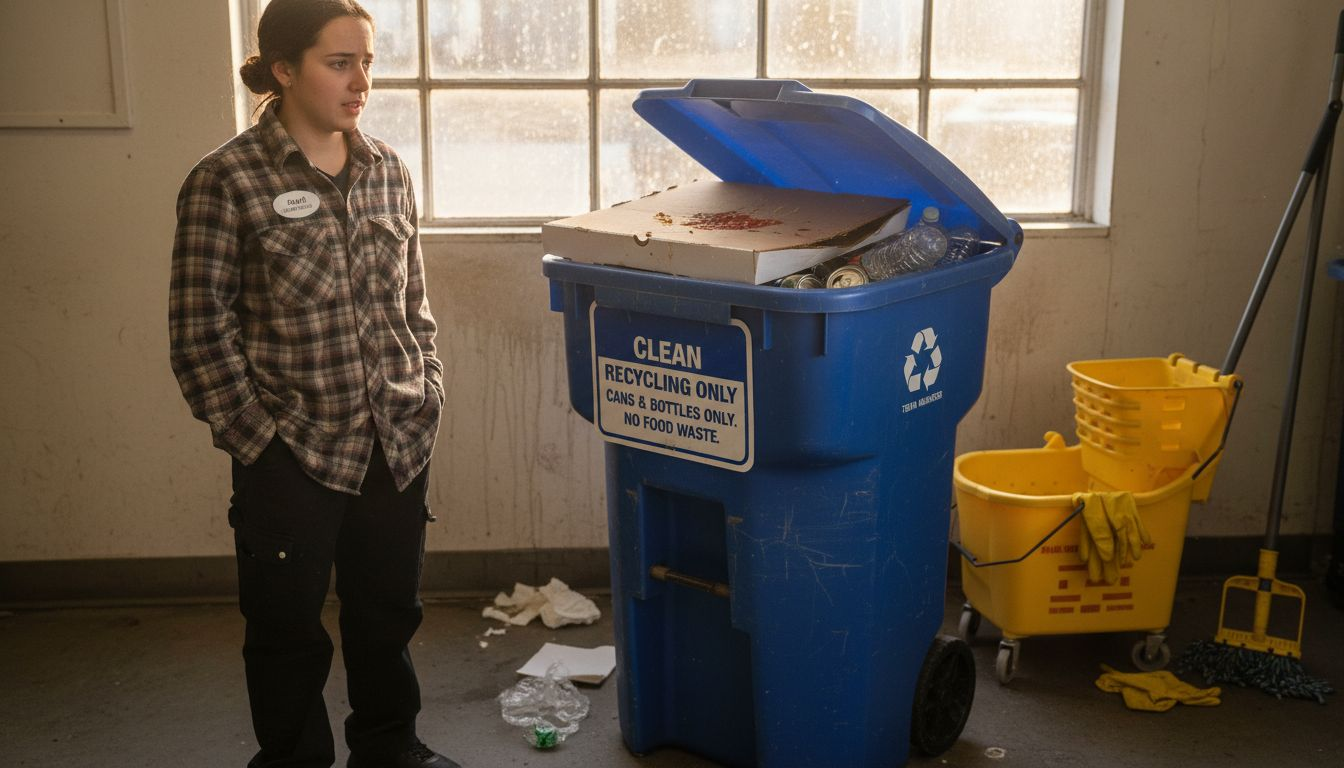
Contamination sabotages entire recycling loads. A single plastic bag containing food residue, or a pizza box soaked with grease, contaminates an entire batch destined for processing. The recycler rejects the entire load, sending it to the landfill.
Your staff must understand that clean materials only enter your recycling stream. Educate your team on what contamination looks like and why it matters. Post visual guides at collection points showing acceptable versus rejected items.
Unclear Goals and No Measurement
Successful recycling programs establish comprehensive waste audits and set measurable targets. Without baseline data, you cannot track progress or identify problems.
Conduct a waste audit before launching your program. Weigh and categorize everything your operation discards for one week. This reveals your actual waste composition and identifies opportunities.
Infrastructure Accessibility Matters
If recycling requires extra effort, your staff won’t do it. Collection bins must be convenient, clearly labeled, and positioned where waste naturally accumulates. If the compost bin sits in a distant back room, organic waste ends up in trash.
Place recycling containers at point-of-generation—where staff generate waste. Make the easy choice the right choice through strategic placement.
Greenwashing and False Claims
Common pitfalls include greenwashing and behavioral challenges in consumer participation. Marketing a recycling program you don’t actually implement damages credibility permanently.
Only claim recycling activities you verify actually occur. Request documentation from your recycler. If materials get diverted elsewhere, your environmental claims become false advertising.
Ongoing Review and Adjustment
Recycling programs require continuous monitoring. What works initially may become inefficient as waste streams change or staff turnover occurs. Regular audits catch problems before they undermine your entire system.
Schedule quarterly reviews examining collection volumes, contamination rates, and staff compliance. Adjust procedures based on what you discover.
Critical Success Factors
Avoid failure by implementing these fundamentals:
- Conduct waste audits before and after implementation
- Establish clear, measurable recycling targets
- Educate staff repeatedly on sorting rules
- Position containers for maximum convenience
- Verify your recycler actually processes materials
- Review performance quarterly and adjust systems
Recycling programs fail not from lack of intention but from insufficient planning and inconsistent execution—the opposite of your competitors’ approach.
Pro tip: Assign one staff member monthly responsibility for auditing your recycling bins and documenting contamination incidents; this person becomes your contamination control officer and ensures standards stay consistent across all shifts.
Empower Your Foodservice Sustainability with Reusable Eco-Friendly Straws
The challenge of effectively reducing pollution through recycling demands practical changes in daily foodservice operations. Key concerns like contamination, single-use plastic waste, and achieving measurable environmental impact call for innovative, durable solutions you can trust. Our sustainable wood and plant-based straws offer a robust alternative to disposable plastics that aligns perfectly with your recycling and waste reduction goals.
Using reusable straws from TheOceanStraw.com supports cleaner waste streams by cutting single-use plastic demand and preventing contamination in mechanical recycling cycles. These straws are built for durability, safety, and biodegradability, making it easier for your team to implement effective reuse programs that genuinely reduce air, water, and soil pollution.
Take the next step toward a measurable environmental impact by exploring our product range at TheOceanStraw.com. Learn how switching to reusable straws can enhance your pollution prevention strategy, reduce waste hauling costs, and boost your sustainability credentials today.
Frequently Asked Questions
How does recycling reduce air pollution in foodservice?
Recycling directly reduces air pollution by eliminating the need for energy-intensive extraction and manufacturing processes. Instead of mining raw materials, recycling repurposes existing materials, thus minimizing emissions like sulfur dioxide and nitrogen oxides that contribute to air quality issues.
What are the main types of recycling methods used in foodservice?
The three main recycling methods relevant to foodservice include mechanical recycling, chemical recycling, and composting. Mechanical recycling processes materials like aluminum and plastics, chemical recycling breaks down complex plastics into raw components, and composting recycles organic waste into nutrient-rich soil amendments.
Why is proper sorting crucial in a recycling program?
Proper sorting is critical because contamination can render an entire recycling load unusable. Items contaminated with food waste or incorrect materials can lead to rejected loads, which then end up in landfills, negating the environmental benefits of recycling.
What economic benefits can my foodservice operation expect from recycling?
Recycling can significantly reduce waste disposal costs and raw material expenses. Additionally, strong recycling practices can enhance your brand’s reputation, attract eco-conscious customers, and foster employee engagement, ultimately driving long-term financial benefits.