
Social Impacts of Plastic Pollution: Complete Guide

Over eight million tons of plastic enter our oceans every year, yet the true cost of this pollution reaches far beyond shorelines. Plastic waste not only damages ecosystems, it also fuels widespread social, health, and economic harm in communities worldwide. Everyday lives, local businesses, and public health all face growing risks as the problem deepens. Understanding these interconnected impacts reveals why confronting plastic pollution is about justice and global responsibility.
Key Takeaways
| Point | Details |
|---|---|
| Social Justice Crisis | Plastic pollution disproportionately impacts marginalized communities, affecting their health, economy, and cultural practices. |
| Health Emergency | Toxic exposure and associated health risks from plastic pollution pose significant threats to global health and economic stability. |
| Economic Threat | The hospitality industry faces considerable financial repercussions due to plastic pollution, with damage to reputation and revenue losses. |
| Collective Responsibility | Addressing plastic pollution requires a coordinated, multi-sector approach that fosters innovation and engages communities in sustainable solutions. |
Table of Contents
- Defining The Social Impacts Of Plastic Pollution
- Health Hazards To Communities Worldwide
- Plastic Pollution And Social Equity Issues
- Economic Burdens For Hospitality Businesses
- Global Responsibility And Organizational Roles
Defining the Social Impacts of Plastic Pollution
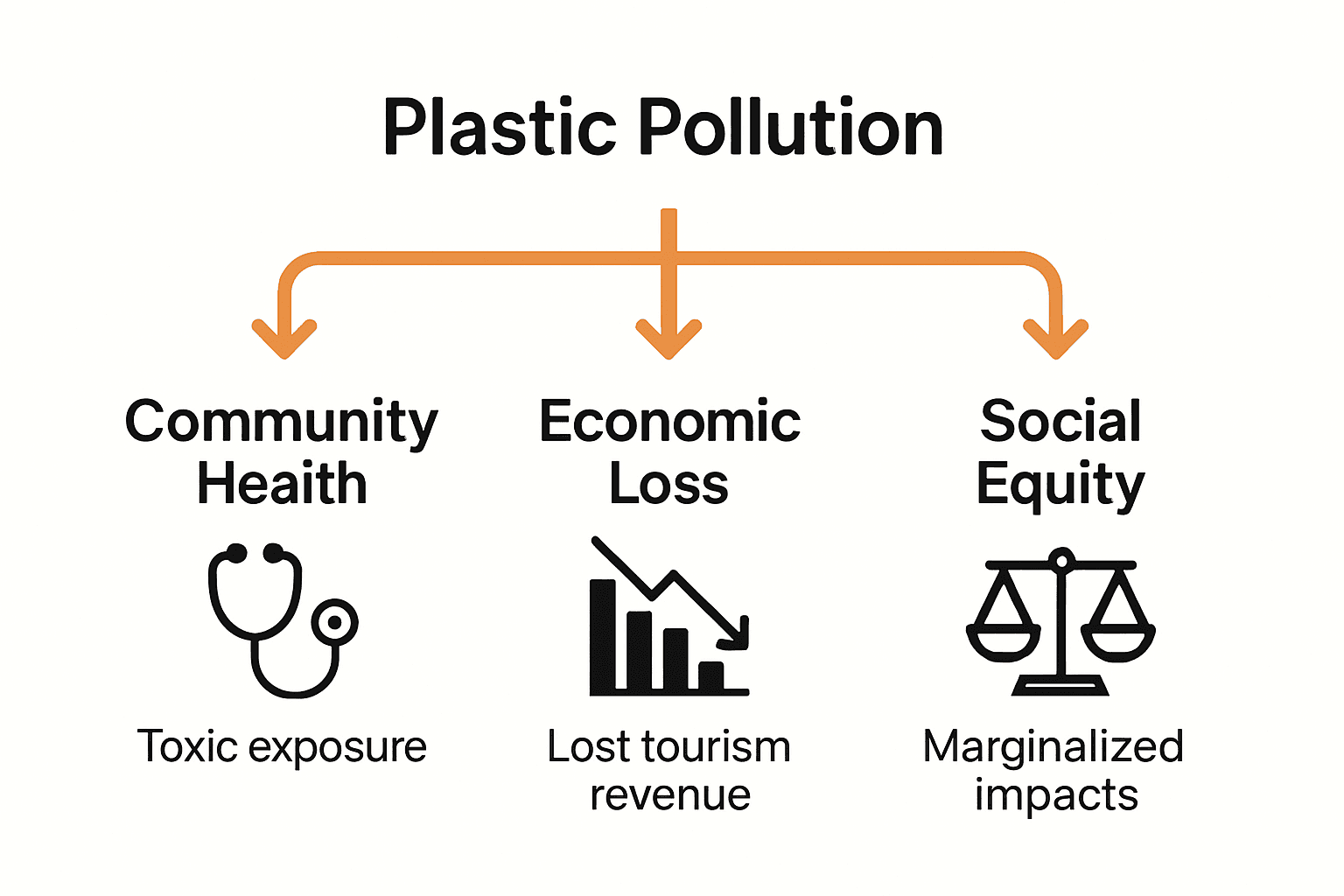
Plastic pollution transcends environmental damage—it’s a profound social justice crisis that systematically undermines vulnerable communities worldwide. According to the UN Environment Programme, this issue is not merely about ecological harm but represents a complex web of interconnected social challenges that impact human dignity, economic opportunities, and community well-being.
The social impacts of plastic pollution are deeply multifaceted and disproportionately affect marginalized populations. Research from the University of Washington highlights how coastal communities bear unequal burdens from marine plastic pollution. These impacts manifest in several critical ways:
Here’s a comparison of the core social impacts of plastic pollution on vulnerable communities:
| Impact Area | Description | Example or Consequence |
|---|---|---|
| Economic Disruption | Loss of income and jobs | Fisherfolk losing catch Tourism decline |
| Health Risks | Exposure to pollutants and toxins | Waterborne diseases Cardiovascular deaths |
| Cultural & Livelihood Loss | Erosion of traditional practices | Loss of fishing traditions |
| Equity & Justice | Unequal burdens on marginalized groups | Limited legal recourse Poor representation |
- Disruption of local fishing economies
- Reduction in tourism potential
- Health risks from contaminated water sources
- Loss of traditional livelihood practices
- Increased economic vulnerability for communities dependent on marine resources
Moreover, the UN Environment Programme emphasizes that plastic pollution directly challenges fundamental Sustainable Development Goals. It undermines progress in critical areas such as:
- Poverty alleviation
- Zero hunger initiatives
- Marine ecosystem protection
- Access to environmental justice
Understanding these social dimensions requires recognizing plastic pollution not just as an environmental problem, but as a complex socioeconomic challenge that demands comprehensive, community-centered solutions.
Health Hazards to Communities Worldwide
Plastic pollution has emerged as a global health emergency that threatens human well-being across multiple dimensions. According to an expert review published in The Lancet, this environmental crisis generates staggering economic and health consequences, with an estimated $1.5 trillion in annual costs impacting populations from infancy to old age through pervasive toxic exposures.
Research from eBioMedicine reveals alarming connections between plastic-associated chemicals and human health. Specifically, phthalate chemicals were linked to over 350,000 cardiovascular deaths globally in 2018, with particularly significant impacts in regions like Asia, the Middle East, and the Pacific.
The health risks associated with plastic pollution span multiple critical areas:
- Toxic Chemical Exposure: Persistent organic pollutants embedded in plastics
- Microplastic Ingestion: Contamination of food and water sources
- Respiratory Complications: Particulate matter from plastic degradation
- Reproductive Health Disruptions: Endocrine-disrupting chemical interactions
- Compromised Immune Systems: Long-term inflammatory responses
These health hazards demonstrate that plastic pollution is not just an environmental issue, but a profound public health challenge requiring comprehensive global intervention and systemic transformation of our current plastic consumption patterns.

Plastic Pollution and Social Equity Issues
Plastic pollution has become a stark manifestation of environmental inequality, systematically impacting the most vulnerable populations worldwide. According to the United Nations Environment Programme (UNEP), existing global efforts fall critically short of addressing the disproportionate environmental burdens faced by marginalized communities.
Research from the University of Washington emphasizes the urgent need for equity-focused approaches in managing marine plastic pollution. The research highlights that affected coastal communities must be active participants in developing comprehensive strategies, rather than passive recipients of external interventions.
Key dimensions of social equity in plastic pollution context include:
- Community Representation: Ensuring local voices shape environmental policies
- Access to Information: Transparent communication about environmental risks
- Legal Rights: Protecting communities’ ability to challenge harmful practices
- Economic Compensation: Supporting communities impacted by plastic-related economic disruptions
- Cultural Preservation: Recognizing traditional ecological knowledge
UNEP critically underscores that genuine environmental justice requires more than symptomatic solutions. This means embedding principles of consent, participation, and fair representation into marine conservation efforts. The goal is not just mitigating plastic pollution, but creating a more inclusive, collaborative approach that recognizes the interconnected social and environmental challenges facing our global community.
Economic Burdens for Hospitality Businesses
Plastic pollution represents a critical economic threat to the hospitality industry, particularly for businesses operating in coastal and tourism-dependent regions. According to the World Economic Forum, the financial implications extend far beyond immediate waste management costs, potentially undermining entire economic ecosystems that rely on pristine environmental conditions.
Research from the World Economic Forum reveals that plastic pollution significantly damages destination reputations, especially during peak tourist seasons. This reputation damage translates directly into economic consequences, with increasing customer backlash and demands for sustainable practices becoming a decisive factor in business survival.
The economic burdens manifest in several critical areas:
- Reputation Damage: Negative perceptions of environmentally irresponsible businesses
- Tourism Revenue Loss: Decreased visitor attraction to polluted destinations
- Operational Costs: Increased waste management and disposal expenses
- Compliance Expenses: Investments required to meet emerging environmental regulations
- Brand Perception: Potential loss of market share to more sustainable competitors
Moreover, hospitality businesses face mounting pressure to proactively address plastic pollution. This means not just reducing single-use plastics, but fundamentally reimagining operational strategies to demonstrate environmental responsibility and maintain competitive advantage in an increasingly sustainability-conscious market.
Global Responsibility and Organizational Roles
Addressing plastic pollution requires a coordinated, multilayered approach that engages organizations across different sectors and scales. The global plastics challenge demands collaborative strategies that transform traditional waste management paradigms and create systemic solutions beyond individual interventions.
The Ocean Cleanup’s pioneering efforts demonstrate how targeted organizational initiatives can generate meaningful environmental impact. As of mid-2025, this Dutch nonprofit has removed over 30,000 metric tons of plastic waste from rivers and oceanic environments, showcasing the potential of dedicated technological and ecological interventions.
Organizational responsibilities span multiple critical domains:
- Private Sector Innovation: Developing sustainable product designs
- Corporate Accountability: Reducing plastic production and waste
- Technological Solutions: Creating advanced recycling and cleanup technologies
- Policy Advocacy: Supporting regulatory frameworks that limit plastic pollution
- Community Engagement: Educating and empowering local populations
The Alliance to End Plastic Waste exemplifies the potential of collective organizational action. This coalition of over 80 member organizations has pledged US$1.5 billion to reduce plastic waste and increase recycling, highlighting how collaborative approaches can drive substantial environmental transformation. However, true progress requires moving beyond waste reduction to fundamentally reimagining our relationship with plastic consumption and environmental stewardship.
Help Your Business Lead the Social Change Against Plastic Pollution
Plastic pollution does more than harm ecosystems: it disrupts lives, jobs, and the future of entire communities. As highlighted in our guide, hospitality businesses face reputation loss, increased costs, and growing demands for responsible action. Choosing compostable alternatives is not just an option—it is a way to support health, justice, and economic sustainability for all.
Stand out as a true leader who protects both people and the planet. Switch to genuinely compostable straws for your HoreCa business today. Visit The Ocean Straw now to discover real solutions that your customers and your community will value. Act today and join the movement for a cleaner, fairer future.
Frequently Asked Questions
What are the social impacts of plastic pollution on communities?
Plastic pollution has significant social impacts, including economic disruption, health risks, loss of cultural practices, and issues of equity and justice that disproportionately affect marginalized populations.
How does plastic pollution affect public health?
Plastic pollution creates a public health emergency by exposing communities to toxic chemicals, leading to serious health risks such as cardiovascular diseases, respiratory complications, and reproductive health disruptions.
What role does economic disruption play in plastic pollution?
Economic disruption due to plastic pollution can lead to loss of income, decreased tourism, and the erosion of traditional livelihoods, particularly for communities reliant on marine resources.
How can organizations contribute to reducing plastic pollution?
Organizations can reduce plastic pollution by innovating sustainable product designs, advocating for policy changes, engaging communities in education, and actively participating in clean-up initiatives.