
How to Study Wildlife Management for Eco-Friendly Operations

More than 80 percent of american organizations now recognize the urgent need to balance business growth with environmental stewardship. As sustainable practices move to the forefront, finding the right approach to wildlife management and eco-friendly operations has become essential for lasting impact. Understanding how to identify relevant conservation strategies, assess local challenges, and integrate effective solutions will help you protect natural habitats while successfully meeting modern sustainability goals.
Table of Contents
- Step 1: Identify Relevant Wildlife Management Practices
- Step 2: Assess Local Environmental Challenges and Opportunities
- Step 3: Integrate Sustainable Solutions into Business Operations
- Step 4: Monitor Impact and Adjust Eco-Friendly Strategies
- Step 5: Verify Sustainable Outcomes and Promote Achievements
Quick Summary
| Major Insight | Insight Explanation |
|---|---|
| 1. Identify Relevant Practices | Conduct thorough research to determine effective wildlife management strategies tailored to specific ecosystems and species. |
| 2. Assess Local Challenges | Gather data on environmental challenges and opportunities using advanced technologies to optimize conservation efforts. |
| 3. Integrate Sustainable Solutions | Audit business operations to incorporate sustainability actively, setting measurable goals aligned with global frameworks. |
| 4. Monitor and Adjust Strategies | Establish a comprehensive monitoring system to track environmental metrics and adapt strategies responsively. |
| 5. Verify and Promote Outcomes | Develop robust reporting frameworks to document sustainable achievements and transparently share successes with stakeholders. |
Step 1: Identify Relevant Wildlife Management Practices
Identifying relevant wildlife management practices is a critical first step in developing an eco-friendly approach to conservation and ecosystem protection. According to research from Allied Academies, effective wildlife management requires a comprehensive understanding of multiple strategic approaches that balance human needs with ecological preservation.
To successfully identify appropriate wildlife management practices, you will need to conduct thorough research and assessment of the specific ecosystem and species you aim to protect. This process involves examining multiple dimensions, including habitat characteristics, species population dynamics, environmental pressures, and potential human interactions. The Journal of Wildlife Management suggests focusing on key areas such as habitat preservation, species monitoring, and developing targeted conservation strategies.
Practical identification strategies include conducting comprehensive ecological surveys, consulting regional wildlife experts, reviewing scientific literature, and analyzing existing conservation data. Pay special attention to local biodiversity patterns, potential environmental threats, and the unique characteristics of the wildlife populations in your target area. Your goal is to develop a nuanced understanding that allows for targeted, scientifically grounded management practices that support both wildlife preservation and ecosystem stability.
As you move forward, remember that wildlife management is an iterative process. The practices you identify should remain flexible and adaptable, allowing for adjustments based on ongoing research and changing environmental conditions.
Step 2: Assess Local Environmental Challenges and Opportunities
Assessing local environmental challenges and opportunities is a crucial step in developing effective wildlife management strategies. Innovative technologies are transforming how we approach conservation, with artificial intelligence emerging as a powerful tool for understanding complex ecological systems.
Arxiv Research highlights the potential of AI in urban biodiversity conservation, demonstrating how advanced technologies can provide unprecedented insights into local environmental dynamics. By leveraging AI-driven frameworks, you can systematically analyze species distribution, habitat conditions, and potential environmental threats with remarkable precision. The Conservation AI platform offers sophisticated methods for monitoring wildlife populations, assessing habitat health, and identifying critical conservation needs specific to your local ecosystem.
To effectively assess local environmental challenges, start by gathering comprehensive data through multiple channels. Conduct field surveys, review historical ecological records, engage with local wildlife experts, and utilize advanced monitoring technologies. Focus on understanding the unique ecological interactions, identifying potential stress factors affecting wildlife populations, and mapping out both environmental vulnerabilities and potential restoration opportunities. Your assessment should create a holistic picture that balances scientific observation with practical conservation strategies.
Remember that environmental assessment is not a one time event but an ongoing process. As ecosystems constantly evolve, your approach must remain flexible, adaptable, and responsive to emerging data and changing environmental conditions.
Step 3: Integrate Sustainable Solutions into Business Operations
Integrating sustainable solutions into business operations represents a critical transformation strategy for modern organizations committed to environmental responsibility. This process requires a comprehensive approach that goes beyond simple compliance to create meaningful ecological impact.
According to Science Direct, transitioning to sustainable business models is increasingly driven by global initiatives such as the United Nations Sustainable Development Goals. These frameworks provide strategic guidance for embedding sustainability into core business practices. Research from MDPI further emphasizes the importance of developing performance management systems that actively incorporate sustainability metrics, enabling companies to track and improve their environmental contributions.
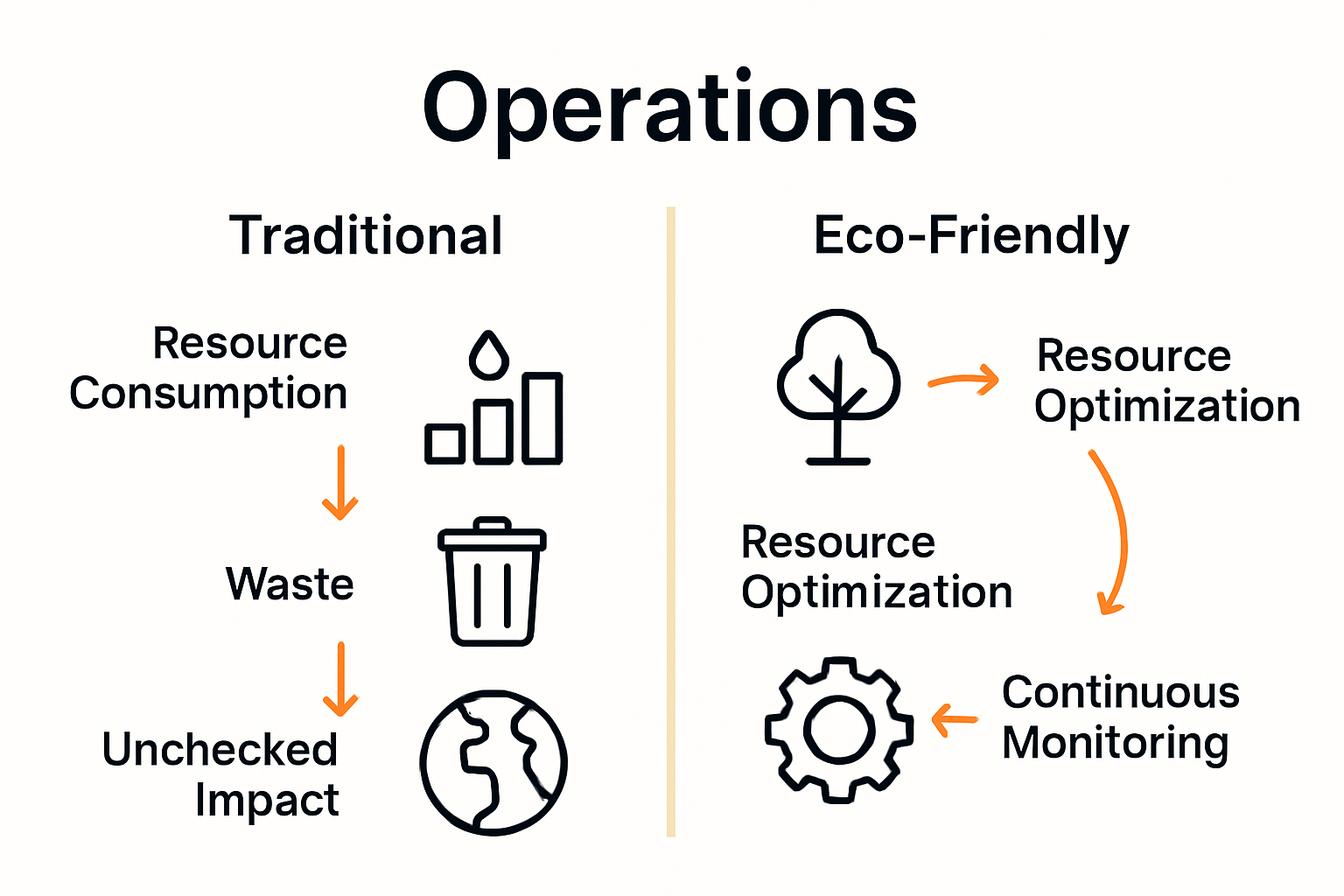
To successfully integrate sustainable solutions, start by conducting a comprehensive audit of your current operations. Identify areas where environmental improvements can be made, such as resource consumption, waste management, energy efficiency, and supply chain sustainability. Develop clear, measurable goals that align with established sustainability frameworks, and create implementation strategies that involve every level of your organization. This might include investing in renewable energy, implementing circular economy principles, reducing carbon emissions, and developing environmentally friendly product design.
Remember that sustainable integration is an ongoing journey. Your approach must remain flexible, continuously adapting to new technologies, emerging environmental challenges, and evolving best practices in sustainable business operations.

Step 4: Monitor Impact and Adjust Eco-Friendly Strategies
Monitoring and adjusting eco-friendly strategies is a critical process that ensures your wildlife management efforts remain effective and responsive to changing environmental conditions. This step transforms sustainability from a static concept into a dynamic, adaptive approach that continuously improves your operational impact.
Cutting-edge research from Arxiv reveals how emerging technologies like blockchain and digital twins can revolutionize sustainability monitoring. These innovative tools provide unprecedented transparency and data security, enabling organizations to optimize resource use and track environmental performance with remarkable precision. Journal of Corporate Social Responsibility further emphasizes how digital business process integration can significantly enhance operational efficiency and environmental outcomes.
To effectively monitor and adjust your eco-friendly strategies, establish a comprehensive tracking system that captures key environmental metrics. This involves creating detailed performance indicators, implementing regular assessment protocols, and developing flexible adaptation mechanisms. Focus on collecting data across multiple dimensions, including resource consumption, wildlife population dynamics, habitat health, and ecosystem interactions. Utilize advanced digital tools to analyze trends, identify potential improvement areas, and generate actionable insights that can be immediately transformed into strategic adjustments.
Remember that successful monitoring is an ongoing, iterative process. Your approach must remain agile, continuously learning from data and adapting to the complex, ever changing landscape of wildlife conservation and environmental management.
Step 5: Verify Sustainable Outcomes and Promote Achievements
Verifying sustainable outcomes and promoting your achievements is a crucial final step in demonstrating the tangible impact of your wildlife management and conservation efforts. This process not only validates your ecological contributions but also builds credibility and inspires broader environmental engagement.
Research from Science Direct highlights the critical importance of integrating sustainability verification into corporate strategy. The study reveals multiple organizational factors that influence successful sustainability implementation, emphasizing the need for comprehensive assessment and transparent communication. MDPI Research further underscores the significance of marketing strategies in effectively communicating and verifying sustainable achievements to stakeholders.
To effectively verify and promote your sustainable outcomes, develop a robust documentation and reporting framework. This involves collecting precise data, conducting independent audits, and creating comprehensive impact reports that showcase quantifiable environmental improvements. Focus on presenting clear metrics such as wildlife population changes, habitat restoration progress, resource conservation achievements, and ecosystem health indicators. Leverage multiple communication channels including scientific publications, stakeholder presentations, digital platforms, and industry conferences to share your verified achievements.
Remember that promoting sustainability is about storytelling and transparency. Your achievements should not only demonstrate ecological impact but also inspire other organizations to adopt similar environmentally responsible practices.
Enhance Your Eco-Friendly Wildlife Management with Sustainable Solutions
Understanding wildlife management requires balancing ecological preservation with sustainable business practices. This article highlights the challenges of integrating eco-friendly strategies and monitoring environmental impact in ever-changing conditions. If you are committed to promoting sustainability while supporting conservation efforts, adopting durable, reusable products can significantly reduce your operation’s environmental footprint and demonstrate your commitment to eco-responsibility.
Make a tangible difference today by choosing innovative alternatives like those offered by TheOceanStraw.com. Their wood and plant-based reusable straws provide a biodegradable, safe, and durable solution that aligns perfectly with wildlife protection and ecosystem preservation goals. These products support your environmental initiatives by minimizing plastic waste and advancing your sustainable business model.

Take the next step in integrating sustainability into your operations with eco-friendly consumables. Explore the benefits and join the movement toward protecting nature while offering high-quality service. Visit TheOceanStraw.com now to discover wholesale options and elevate your eco-friendly strategy with trusted sustainable products.
Frequently Asked Questions
What are the first steps to study wildlife management for eco-friendly operations?
To start studying wildlife management, you should first identify relevant wildlife management practices in your area. Research local ecosystems, species, and conservation strategies, then conduct ecological surveys to gather data about the habitat and population dynamics.
How can I assess local environmental challenges in wildlife management?
You can assess local environmental challenges by conducting field surveys and collecting historical ecological records. Engage with wildlife experts in your region to identify stress factors affecting wildlife and map out restoration opportunities, ensuring you understand the unique characteristics of your local ecosystem.
What are effective methods to integrate sustainability into wildlife management practices?
Integrating sustainability involves auditing your current practices to identify areas for improvement, such as energy efficiency and waste management. Set measurable goals and create implementation strategies that include everyone in your organization, such as investing in renewable energy or adopting circular economy principles.
How do I monitor the impact of my wildlife management strategies?
To monitor the impact of your strategies, establish a system to capture key environmental metrics and track progress regularly. Analyze data on resource consumption and wildlife dynamics to identify areas for improvement and make informed adjustments, aiming to assess your strategies every few months.
What steps can I take to verify and promote my sustainability achievements?
To verify your sustainability achievements, develop a framework to document your efforts, including data collection and independent audits. Create impact reports showcasing quantifiable improvements, then share your results through presentations, publications, and online platforms to inspire others in the field.
How can I ensure my wildlife management practices remain flexible and up-to-date?
Continuously gather new data and stay informed about emerging technologies and environmental challenges. Regularly review and adjust your management strategies based on ongoing research, aiming to reassess your practices at least annually.