
Sustainable Building Materials: Choices That Shape Eco-Friendly Spaces

Most American builders and designers now recognize that sustainable building materials are reshaping the future of construction. With over forty percent of global carbon emissions linked to buildings, the impact of smarter material choices is impossible to ignore. As demand rises for spaces that support both people and the planet, understanding which options meet strict sustainability criteria can make all the difference for anyone involved in building or renovating in the United States.
Table of Contents
- Defining Sustainable Building Materials Today
- Categories And Examples Of Sustainable Materials
- Performance, Durability, And Environmental Benefits
- Certifications And Global Standards Explained
- Selecting Materials For Foodservice And Hospitality
Key Takeaways
| Point | Details |
|---|---|
| Sustainable Building Materials are Essential | They prioritize environmental responsibility and reduce carbon emissions while enhancing architectural design. |
| Key Characteristics | These materials are renewable, durable, energy-efficient, and often recyclable, setting them apart from traditional options. |
| Categories and Innovations | Sustainable materials include natural, recycled, and bio-based options, fostering innovation in construction. |
| Importance of Certification | Certifications like LEED establish benchmarks for sustainability and drive industry-wide ecological accountability. |
Defining Sustainable Building Materials Today
Sustainable building materials represent a transformative approach to construction that prioritizes environmental responsibility and long-term ecological balance. These materials are carefully selected not just for their functional performance, but for their minimal environmental footprint and potential to reduce carbon emissions. Sustainable materials are domestically produced and sourced, strategically reducing transportation costs and CO2 emissions, creating a more holistic approach to architectural design.
At their core, sustainable building materials embody several critical characteristics that distinguish them from traditional construction resources. They originate from renewable sources, demonstrate exceptional energy efficiency, and can typically be reused or recycled at the end of their lifecycle. Materials selected under sustainability principles have a significantly reduced environmental impact, transforming how architects and builders conceptualize construction projects.
The key attributes of sustainable building materials include:
- Renewable resource origin
- Lower carbon emissions during production
- Minimal energy consumption in manufacturing
- High durability and longevity
- Potential for recycling or biodegradation
- Economically competitive pricing
These materials represent more than just an environmental choice - they signal a fundamental shift in architectural thinking. By prioritizing resources that work in harmony with natural systems, sustainable building materials create spaces that are not only functional but regenerative, supporting broader ecological health while meeting human design needs.
Categories and Examples of Sustainable Materials
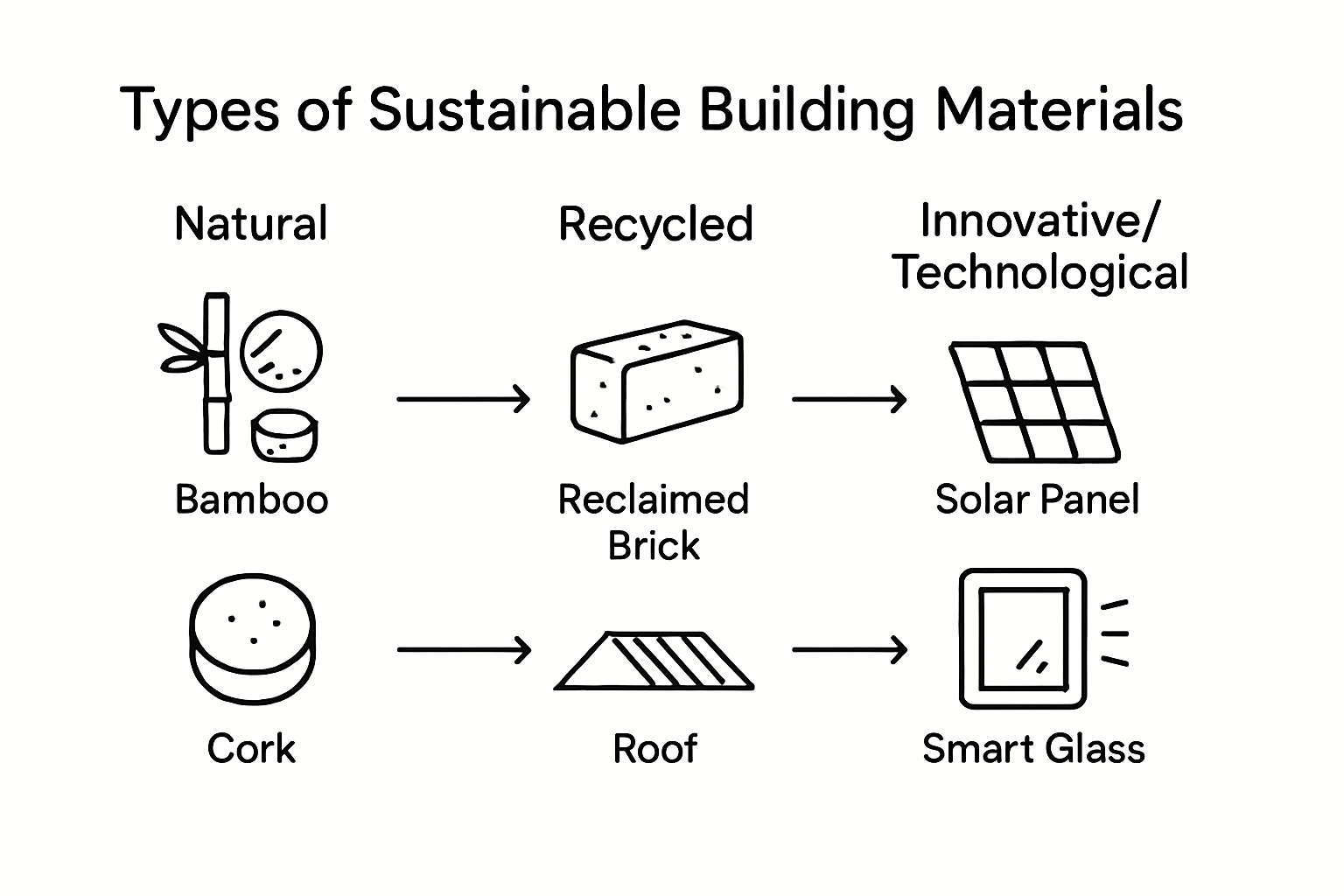
Sustainable materials represent a diverse and innovative spectrum of construction resources designed to minimize environmental impact while delivering exceptional performance. These materials can be broadly categorized into several key groups that offer unique advantages for eco-conscious architectural and design projects. From natural and renewable resources to recycled and upcycled options, the range of sustainable materials continues to expand with technological advancements.
Natural and bio-based materials form a significant category of sustainable building resources. Hempcrete, a biocomposite material made from hemp hurds and lime, exemplifies the potential of innovative natural construction materials. This remarkable substance not only provides excellent insulation but also acts as a moisture regulator, demonstrating superior performance characteristics compared to traditional concrete. Other notable natural materials include:
- Bamboo
- Cork
- Reclaimed wood
- Straw bales
- Recycled agricultural waste products
Recycled and upcycled materials represent another critical category of sustainable building resources. These materials transform waste streams into valuable construction components, reducing landfill impact and conserving raw material extraction. Innovative sustainable materials offer architects and builders unprecedented opportunities to create environmentally responsible structures that minimize carbon footprint while maintaining structural integrity and aesthetic appeal.

The future of sustainable materials lies in continuous innovation and integration of cutting-edge technologies. Advanced composites, bio-based polymers, and regenerative materials are emerging as powerful alternatives to traditional construction resources. By prioritizing materials that can be safely recycled, efficiently produced, and designed with lifecycle considerations, the construction industry can significantly reduce its environmental impact and contribute to a more sustainable built environment.
Performance, Durability, and Environmental Benefits
Sustainable building materials represent a sophisticated intersection of performance engineering and environmental stewardship. These innovative resources are meticulously designed to deliver exceptional structural integrity while minimizing ecological impact. The key differentiator lies in their ability to balance technical requirements with environmental responsibility, creating building solutions that perform optimally across multiple critical dimensions.
Straw-bale construction demonstrates the remarkable potential of sustainable materials, offering unique advantages including renewable sourcing, cost-effectiveness, and impressive insulation properties. These materials provide natural fire-retardant characteristics and exceptional thermal performance, challenging traditional assumptions about alternative construction resources. The performance metrics of sustainable materials often exceed conventional building components through:
- Superior thermal regulation
- Enhanced energy efficiency
- Reduced carbon footprint
- Improved indoor air quality
- Lower long-term maintenance requirements
Green building technologies, such as advanced glass systems, showcase how sustainable materials can dramatically improve building performance, particularly in areas of natural lighting and energy management. By carefully integrating materials that optimize transparency, acoustic control, and thermal efficiency, architects can create spaces that are both environmentally responsible and technologically sophisticated.
The environmental benefits of sustainable materials extend far beyond immediate construction applications. These resources represent a holistic approach to building design, considering entire lifecycle impacts from raw material extraction through eventual decomposition or recycling. By prioritizing materials with low embodied energy, minimal waste generation, and potential for future reuse, the construction industry can significantly reduce its environmental footprint while delivering high-performance architectural solutions that meet the most stringent sustainability standards.
Certifications and Global Standards Explained
Certifications and global standards represent the critical framework that validates and ensures the integrity of sustainable building materials. These rigorous evaluation systems provide a standardized approach to measuring environmental performance, creating accountability and transparency across the construction industry. By establishing clear benchmarks, these standards enable architects, builders, and manufacturers to objectively assess the ecological impact of their material choices.
The U.S. Green Building Council’s Leadership in Energy and Environmental Design (LEED) rating system stands as the most prominent certification framework for sustainable construction, offering a comprehensive methodology for evaluating building materials and design strategies. LEED certification encompasses multiple performance categories, including:
- Energy efficiency
- Water conservation
- Indoor environmental quality
- Sustainable material selection
- Waste reduction
- Carbon emission minimization
Research institutions like the Centre for Interactive Research on Sustainability (CIRS) play a crucial role in advancing global sustainability standards, conducting critical research that informs future certification protocols. These academic and research-driven initiatives help develop more sophisticated evaluation methods that continuously raise the bar for environmental performance in construction.
Global certification standards extend beyond simple compliance, serving as powerful tools for driving innovation and transforming industry practices. By creating clear incentives and measurable benchmarks, these frameworks encourage manufacturers to develop increasingly sophisticated sustainable materials that minimize environmental impact while delivering exceptional performance. The evolving landscape of certifications reflects a collective commitment to creating built environments that are not just less harmful, but actively regenerative and supportive of ecological health.
Selecting Materials for Foodservice and Hospitality
Selecting sustainable materials for foodservice and hospitality requires a strategic approach that balances environmental responsibility, performance, and practical application. Businesses in these industries must consider multiple factors when choosing materials that not only meet stringent health and safety standards but also align with increasingly sophisticated sustainability goals. The selection process demands a comprehensive evaluation of material characteristics, lifecycle impact, and long-term operational efficiency.
Innovative materials like mycelium-based building panels demonstrate the extraordinary potential for transforming sustainable material selection in commercial spaces. These cutting-edge solutions offer biodegradable alternatives that challenge traditional construction and design paradigms, providing foodservice and hospitality businesses with unprecedented opportunities to reduce environmental footprint. Key considerations for material selection include:
- Durability and performance
- Hygiene and food safety standards
- Waste reduction potential
- Carbon emission minimization
- Cost-effectiveness
- Aesthetic and functional compatibility
Pioneering urban development projects, such as Sweden’s Stockholm Wood City, showcase how advanced sustainable materials like cross-laminated timber can revolutionize construction approaches, offering insights for the hospitality sector. By prioritizing materials that store carbon, reduce emissions, and provide superior building efficiency, businesses can create spaces that are not just environmentally responsible, but also technologically sophisticated and aesthetically compelling.
The future of material selection in foodservice and hospitality lies in continuous innovation, collaborative research, and a holistic understanding of sustainability. Successful businesses will be those that view material selection not as a compliance requirement, but as a strategic opportunity to differentiate themselves, reduce operational costs, and contribute to broader environmental conservation efforts. By embracing materials that are regenerative, adaptable, and aligned with circular economy principles, these industries can lead the way in creating more sustainable built environments.
Elevate Your Eco-Friendly Spaces with Sustainable Solutions Today
Choosing sustainable building materials is essential for creating spaces that protect our planet and promote long-term environmental health. This article highlights crucial challenges in reducing carbon footprints, enhancing material durability, and selecting resources that align with circular economy principles. As you explore innovative and regenerative materials like hempcrete, straw bale, and wood composites, consider how every product in your business environment contributes to your overall sustainability goals.
At TheOceanStraw.com, we understand the urgent need for durable, biodegradable alternatives in the hospitality and foodservice industry. Our wood and plant-based reusable straws offer a perfect complement to your sustainable building choices by reducing single-use plastic waste and reinforcing your commitment to renewable resources. Embrace materials that not only perform well but also embody environmental stewardship.

Take the next step to create fully integrated eco-friendly spaces by choosing products that combine innovation, safety, and biodegradability. Explore our range of sustainable straw solutions now at TheOceanStraw.com and join the movement to transform your business into a leader in environmental responsibility.
Frequently Asked Questions
What are sustainable building materials?
Sustainable building materials are resources used in construction that prioritize environmental responsibility. They are selected for their minimal ecological footprint, energy efficiency, and potential for reuse or recycling.
How can sustainable materials impact the performance of a building?
Sustainable materials often provide superior thermal regulation, improved energy efficiency, and enhanced indoor air quality, contributing to a building’s overall performance while minimizing its carbon footprint.
What are some examples of natural and bio-based sustainable materials?
Examples of natural and bio-based sustainable materials include hempcrete, bamboo, cork, reclaimed wood, straw bales, and recycled agricultural waste products, all known for their eco-friendly properties.
Why are certifications important for sustainable building materials?
Certifications, such as LEED, provide a standardized framework to evaluate the environmental performance of building materials, ensuring transparency and accountability while encouraging innovation and higher sustainability standards.
Recommended
- Complete Guide to Eco-Friendly Material Options – The Ocean Straw
- What is Environmentally Friendly Products? Understanding Their Importa – The Ocean Straw
- Understanding Eco Friendly Hotel Amenities for Sustainable Stays – The Ocean Straw
- Eco Friendly Restaurant Supplies: Complete Guide – The Ocean Straw
- The Ultimate Guide to Hardwood Floor Finishes - J.R. Hardwood Floor Refinishing & Cleaning