
Sustainable Development Strategies for Hotel Success

More than eight million tons of plastic waste end up in the ocean every year, putting pressure on American hotels to rethink daily operations. For sustainability officers at mid-sized hotels seeking to champion eco-friendly practices, innovative biodegradable straw solutions offer a practical way to cut single-use plastics and strengthen environmental programs. This overview delivers actionable insights into how switching to new straw options can align your hotel with top sustainability standards and guest expectations.
Table of Contents
- What Is Sustainable Development in Hospitality?
- Key Types of Sustainability Strategies Used
- How Eco-Friendly Sourcing Works for Hotels
- Waste Reduction and Circular Business Models
- Certifications, Partnerships, and Compliance
- Common Pitfalls and Misconceptions to Avoid
Key Takeaways
| Point | Details |
|---|---|
| Importance of Sustainability | Sustainable development in hospitality is a fundamental business strategy that integrates environmental, social, and economic considerations. |
| Comprehensive Strategies | Hotels are adopting multi-faceted sustainability frameworks that target energy efficiency, waste reduction, and local community support. |
| Eco-Friendly Sourcing | Implementing eco-friendly sourcing practices is essential for reducing environmental impact and enhancing supply chain sustainability. |
| Certification and Compliance | Sustainability certifications serve as strategic tools that facilitate improved operational efficiency and reinforce commitment to environmental practices. |
What Is Sustainable Development in Hospitality?
Sustainable development in hospitality represents a strategic approach to integrating environmental, social, and economic considerations into hotel operations, transforming traditional business models toward more responsible practices. At its core, this concept goes beyond mere environmental conservation, encompassing a holistic framework that balances economic growth with ecological stewardship and social equity.
The hospitality industry increasingly recognizes that sustainability is not just an optional strategy but a fundamental business imperative. Comprehensive sustainability frameworks now guide hotels in implementing practices that reduce environmental impact while maintaining operational efficiency. These frameworks include international standards like the United Nations World Tourism Organization (UNWTO) guidelines, Global Reporting Initiative protocols, and ISO 14001 environmental management standards.
Key components of sustainable development in hospitality include reducing carbon footprints, minimizing waste generation, implementing energy-efficient technologies, supporting local communities, and creating economically viable models that protect natural resources. Research indicates that hotels committed to sustainability can achieve significant benefits, including cost savings, enhanced brand reputation, and increased customer loyalty among environmentally conscious travelers. Sustainability-sensitive learning approaches have emerged as critical tools for embedding these practices across organizational cultures.
Pro tip: Begin your sustainability journey by conducting a comprehensive environmental audit to identify immediate areas for improvement and establish baseline metrics for tracking progress.
Key Types of Sustainability Strategies Used
Hotels are increasingly adopting comprehensive sustainability strategies that address environmental, social, and economic dimensions of their operations. Sustainability strategies in hospitality encompass a wide range of targeted approaches designed to reduce environmental impact, improve operational efficiency, and create long-term value for both the business and its stakeholders.
The primary sustainability strategies can be categorized into several key areas. Environmental strategies focus on critical aspects such as energy efficiency, water conservation, and waste reduction. Hotels are implementing advanced technologies like smart energy management systems, low-flow water fixtures, and comprehensive recycling programs. Waste management strategies have become particularly crucial, with many hotels developing robust systems to minimize single-use plastics, implement composting programs, and reduce overall waste generation.
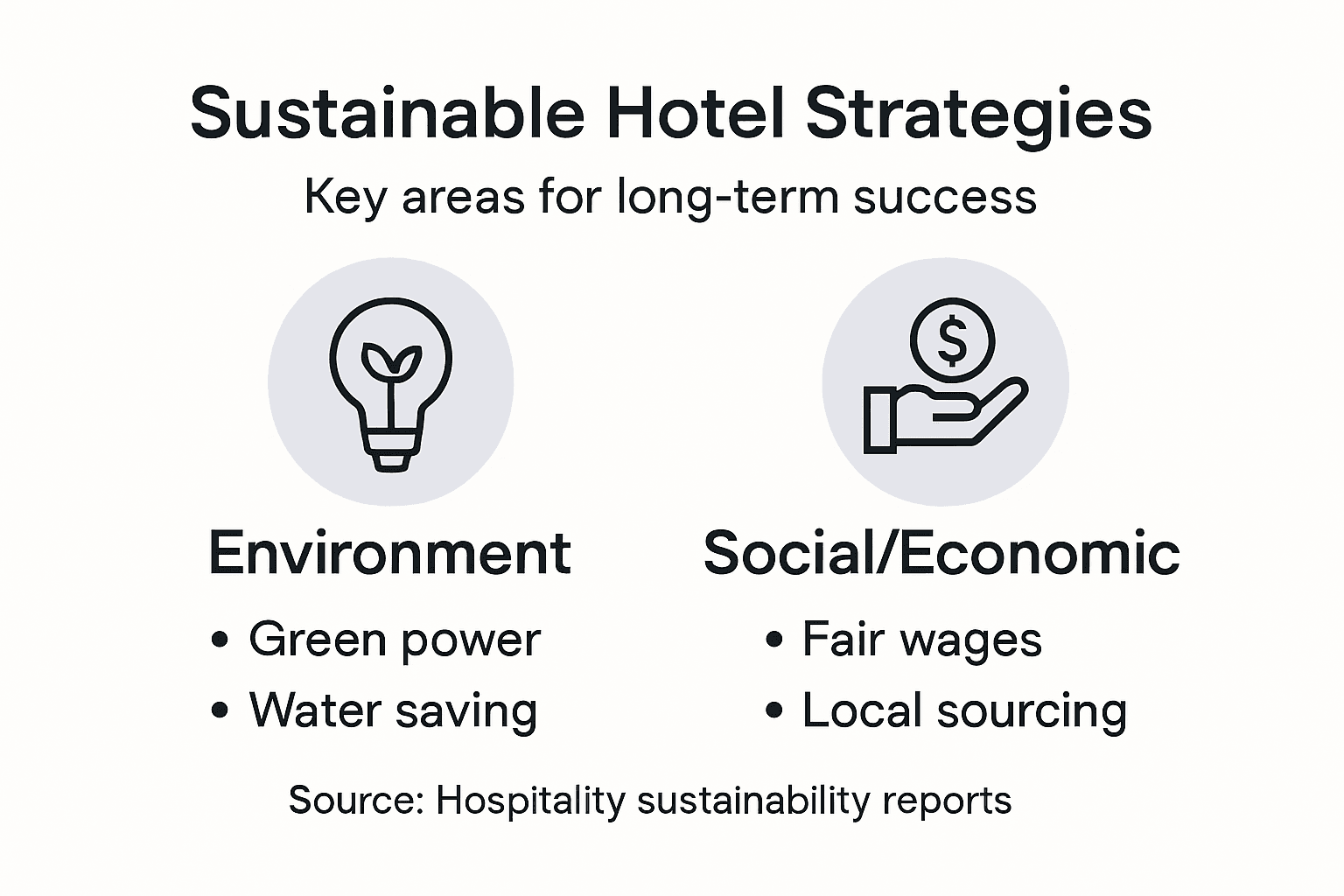
Social and economic sustainability strategies complement environmental efforts by addressing broader organizational impacts. These include local community engagement, supporting regional economies, implementing fair labor practices, and developing sustainable sourcing initiatives. Comprehensive environmental assessment tools help hotels track and improve their sustainability performance across multiple dimensions. Companies are also focusing on employee training programs that embed sustainability principles into organizational culture, creating a holistic approach to responsible business practices.
Pro tip: Develop a cross-functional sustainability team that includes representatives from different departments to ensure comprehensive strategy implementation and ongoing innovation.
Here’s a summary comparing key sustainability strategies in hospitality:
| Strategy Type | Example Practices | Main Impact |
|---|---|---|
| Environmental | Energy efficiency, waste reduction | Lower carbon footprint, reduced costs |
| Social | Community engagement, fair labor | Stronger local ties, improved brand image |
| Economic | Sustainable sourcing, local procurement | Long-term profitability, market differentiation |
How Eco-Friendly Sourcing Works for Hotels
Eco-friendly sourcing represents a strategic approach to procurement that prioritizes environmental sustainability and social responsibility throughout a hotel’s supply chain. Green supply chain management has become a critical component of modern hospitality operations, focusing on reducing environmental impact while maintaining high-quality service standards.
The process of eco-friendly sourcing involves comprehensive evaluation and selection of suppliers based on their environmental and ethical practices. Hotels now scrutinize potential partners across multiple dimensions, including carbon footprint, waste management, energy efficiency, and social responsibility. This approach extends beyond traditional purchasing considerations, encompassing sustainable product selection in areas such as food and beverage, cleaning supplies, amenities, and operational equipment. Sustainable sourcing strategies typically involve prioritizing local producers, organic ingredients, fair trade certification, and suppliers with demonstrable environmental credentials.
Key implementation strategies include developing robust supplier assessment frameworks, creating long-term partnerships with environmentally conscious vendors, and implementing transparent reporting mechanisms. Hotels are increasingly leveraging technology to track and measure the sustainability performance of their supply chains, integrating advanced metrics that go beyond traditional cost and quality evaluations. This holistic approach allows hospitality businesses to not only reduce their environmental footprint but also create meaningful economic and social value through responsible procurement practices.
Pro tip: Develop a comprehensive supplier scorecard that includes specific sustainability metrics to systematically evaluate and improve your eco-friendly sourcing strategies.
Waste Reduction and Circular Business Models
Circular business models represent a transformative approach to sustainability in the hospitality industry, moving beyond traditional linear waste management strategies. Circular economy initiatives focus on reimagining resource utilization, waste prevention, and creating closed-loop systems that minimize environmental impact while generating economic value.
Hotels are increasingly adopting innovative waste reduction strategies that integrate multiple levels of resource management. These approaches include comprehensive recycling programs, composting organic waste, repurposing materials, and designing systems that eliminate waste at the source. Key circular economy practices involve analyzing the entire product lifecycle, from procurement to disposal, and identifying opportunities to reduce, reuse, and regenerate resources. Strategies might include partnering with local recycling facilities, implementing advanced waste sorting technologies, and developing internal processes that transform potential waste streams into valuable secondary resources.

The implementation of circular business models requires a holistic organizational approach that goes beyond traditional sustainability efforts. Hotels are developing innovative strategies such as converting food waste into compost for local farms, redesigning packaging to minimize single-use materials, and creating closed-loop systems for water and energy consumption. These approaches not only reduce environmental footprint but also create potential new revenue streams and demonstrate corporate commitment to sustainability principles.
Pro tip: Conduct a comprehensive waste audit to identify specific opportunities for waste reduction and develop targeted circular economy strategies tailored to your hotel’s unique operational context.
Certifications, Partnerships, and Compliance
Sustainability certifications have become critical strategic tools for hotels seeking to demonstrate environmental commitment and gain competitive advantages in an increasingly eco-conscious market. Global sustainability certification frameworks provide comprehensive guidelines that help hotels systematically reduce environmental footprints, improve operational efficiency, and validate their sustainability efforts through independent verification.
Key sustainability certifications such as LEED, Green Key, and EarthCheck offer structured approaches to measuring and improving environmental performance. These certifications typically assess critical areas including energy consumption, water usage, waste management, biodiversity protection, and social responsibility. Certification processes involve rigorous documentation, on-site audits, and continuous improvement requirements that push hotels beyond basic compliance. Sustainable tourism certification criteria emphasize holistic approaches that integrate environmental, social, and economic dimensions of sustainability.
Successful sustainability certification requires strategic partnerships with local communities, environmental organizations, and supply chain partners. Hotels must develop comprehensive stakeholder engagement strategies that go beyond simple compliance, creating meaningful collaborations that drive genuine sustainability innovation. These partnerships help hotels navigate complex environmental challenges, access specialized knowledge, and demonstrate authentic commitment to sustainable development principles.
Pro tip: Develop a cross-functional sustainability team with dedicated responsibility for tracking, implementing, and maintaining certification requirements to ensure consistent progress and compliance.
This table provides an overview of leading hospitality sustainability certifications:
| Certification | Focus Areas | Business Benefits |
|---|---|---|
| LEED | Energy, water, waste, indoor air | Higher efficiency, global recognition |
| Green Key | Environmental management, CSR | Enhanced guest loyalty, marketing edge |
| EarthCheck | Operational, social, biodiversity | Comprehensive benchmarking, best practices |
Common Pitfalls and Misconceptions to Avoid
Sustainability challenges in hospitality reveal complex barriers that can derail even the most well-intentioned sustainable development initiatives. Many hotels mistakenly view sustainability as an optional strategy or an expensive undertaking, rather than a fundamental business transformation that can drive operational efficiency and competitive advantage.
One of the most significant misconceptions is reducing sustainability to environmental conservation alone. Holistic sustainability requires integrating environmental, social, and economic dimensions. Hotels often struggle with implementation due to budget constraints, staff resistance, and limited understanding of long-term benefits. Hospitality sustainability challenges indicate that successful strategies demand comprehensive approaches that go beyond surface-level green initiatives, requiring deep organizational culture change and strategic stakeholder engagement.
Additional pitfalls include inadequate staff training, fragmented implementation approaches, and failure to measure and communicate sustainability progress. Many organizations implement green technologies without developing comprehensive frameworks for tracking impact, leading to ineffective sustainability efforts. Successful hotels recognize that sustainability is an ongoing process requiring continuous learning, investment in employee education, and adaptable strategies that respond to evolving environmental and market demands.
Pro tip: Create a sustainability scorecard that tracks both quantitative metrics and qualitative improvements to maintain transparency and drive continuous organizational learning.
Elevate Your Hotel’s Sustainability with Smart Eco-Friendly Choices
The journey toward sustainable development in hospitality includes overcoming challenges like reducing plastic waste and enhancing eco-friendly sourcing. Hotels aiming to implement circular business models and waste reduction strategies need reliable partners that align with their environmental goals. By integrating durable, biodegradable alternatives such as innovative wood and plant-based straws, your hotel can reduce its carbon footprint while enhancing brand reputation among environmentally conscious guests.

Discover how TheOceanStraw.com offers industry-leading reusable straw solutions designed specifically for the foodservice and hospitality sectors. Offering not only eco-friendly benefits but also certifications and regional support, our straws empower your sustainability strategy to go beyond compliance. Take the next step today by exploring our range of sustainable products at TheOceanStraw.com and see how easy it is to make a tangible impact on your hotel’s green initiatives. Act now to strengthen your sustainability credentials and delight guests with thoughtful, responsible choices.
Frequently Asked Questions
What are the key components of sustainable development in hospitality?
Sustainable development in hospitality involves reducing carbon footprints, minimizing waste generation, implementing energy-efficient technologies, supporting local communities, and creating economically viable models that protect natural resources.
How can hotels adopt effective waste reduction strategies?
Hotels can adopt waste reduction strategies through comprehensive recycling programs, composting organic waste, repurposing materials, and designing systems that eliminate waste at the source, all of which contribute to circular economy practices.
What role does eco-friendly sourcing play in hotel operations?
Eco-friendly sourcing prioritizes environmental sustainability and social responsibility in procurement by evaluating suppliers based on their ethical practices and carbon footprints, focusing on sustainable product selection and partnerships with environmentally conscious vendors.
Why are sustainability certifications important for hotels?
Sustainability certifications demonstrate a hotel’s commitment to environmental practices, providing structured guidelines to reduce environmental footprints and improve operational efficiency, while also enhancing brand reputation and attracting eco-conscious travelers.