
What Can We Do to Stop Microplastics: Effective Steps

Plastic waste can quietly undermine even the most well-intentioned sustainability efforts at restaurants and cafes across North America. With growing attention on microplastic pollution, understanding your daily operations is more than a checkbox for compliance—it is a direct reflection of your brand’s values and environmental stewardship. Certified sustainable alternatives and measurable reduction strategies can help transform your business’s impact while positioning your brand as a proactive leader in eco-friendly dining.
Table of Contents
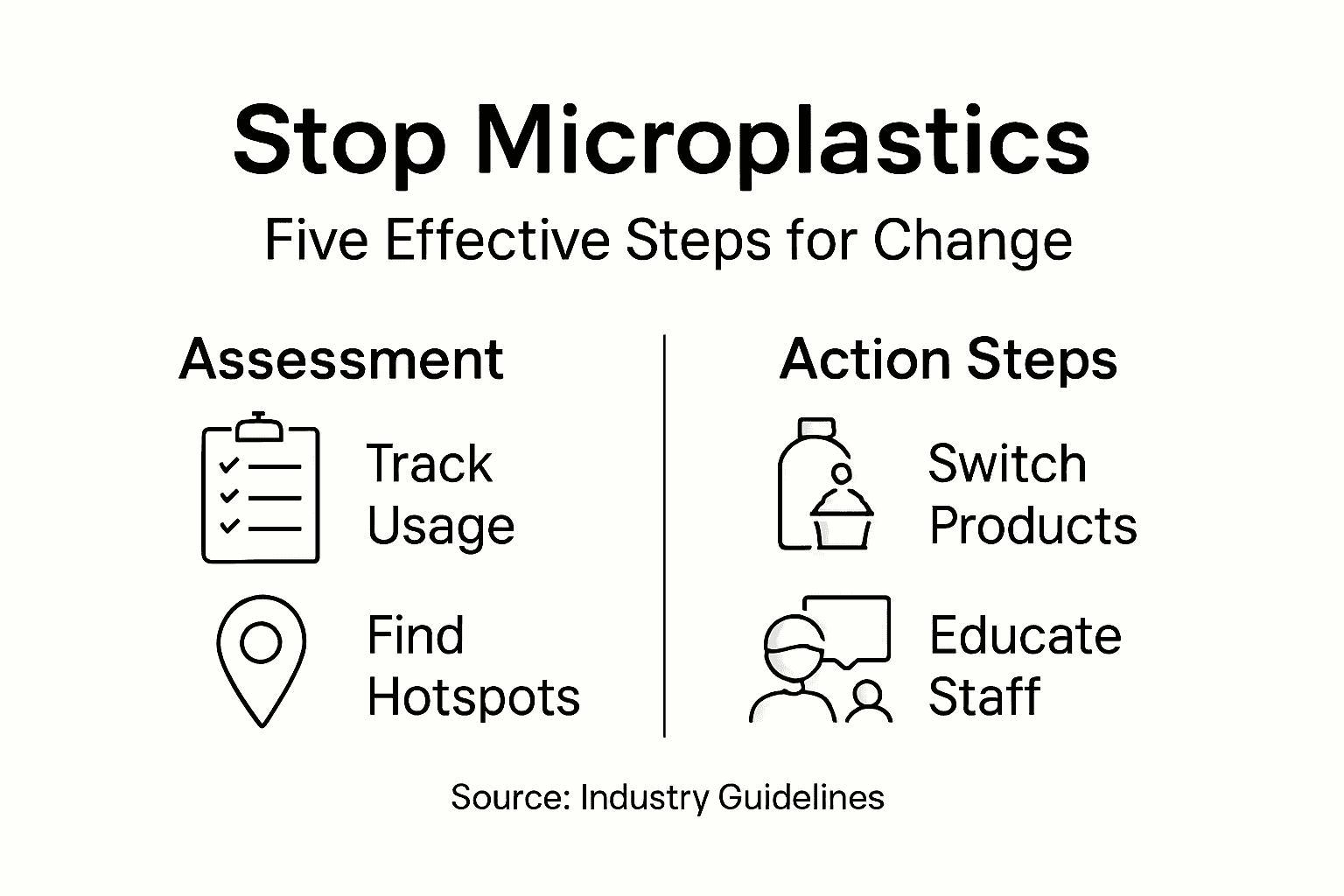
- Step 1: Assess Your Current Plastic Usage
- Step 2: Switch To Certified Sustainable Products
- Step 3: Educate Staff And Customers On Alternatives
- Step 4: Monitor Microplastic Reduction Progress
- Step 5: Promote Verified Eco-Friendly Initiatives
Quick Summary
| Key Takeaway | Explanation |
|---|---|
| 1. Assess Plastic Usage | Conduct a plastic inventory to track usage and identify areas for reduction. |
| 2. Switch to Sustainable Products | Transition to certified sustainable items to minimize future microplastic waste. |
| 3. Educate Staff and Customers | Implement educational programs to raise awareness about microplastic pollution. |
| 4. Monitor Reduction Progress | Establish a tracking system to measure the effectiveness of waste reduction efforts. |
| 5. Promote Eco-Friendly Initiatives | Showcase verified sustainability efforts to build credibility and engagement. |
Step 1: Assess your current plastic usage
Microplastic pollution starts with understanding your organization’s current plastic consumption. Restaurant and cafe managers need a systematic approach to tracking and evaluating plastic use across different operational areas.
To effectively assess microplastic waste, begin by conducting a comprehensive plastic inventory. Track single-use items like straws, containers, packaging, and disposable utensils. Create a detailed spreadsheet documenting:
- Types of plastic products used
- Quantity of each plastic item consumed monthly
- Estimated weight or volume of plastic waste generated
- Specific departments or processes generating the most plastic waste
Utilize digital tracking tools to monitor consumption patterns. Some strategies include:
- Weighing trash bags from different operational zones
- Photographing waste streams for visual documentation
- Training staff to segregate and log plastic waste
Accurate measurement is the foundation of effective microplastic reduction strategies.
Analyzing your plastic footprint reveals critical insights into potential reduction opportunities. Legal regulations increasingly mandate microplastic monitoring, making proactive assessment not just environmentally responsible but potentially legally necessary.
Pro tip: Involve your entire team in the plastic assessment process to create a culture of sustainability and collective responsibility.
Step 2: Switch to certified sustainable products
Reducing microplastic pollution requires strategic shifts in product selection. Restaurant and cafe managers can make significant environmental impacts by transitioning to certified sustainable alternatives that minimize microplastic generation.
Upstream responses to microplastic pollution demonstrate that selecting environmentally friendly materials is crucial. Focus on products with recognized sustainability certifications like:
- Forest Stewardship Council (FSC) certified wood products
- Biodegradable packaging materials
- Bio-based polymers with low microplastic release
- Products from manufacturers with transparent environmental policies
Evaluate potential sustainable replacements through these key steps:
- Research certification standards
- Request product environmental impact documentation
- Compare material composition and microplastic potential
- Conduct small-scale testing before full implementation
Sustainable product choices are fundamental to reducing microplastic pollution across industries.
The European regulatory landscape increasingly supports sustainable product transitions. Microplastic reduction strategies are becoming mandatory, making proactive sustainable sourcing not just environmentally responsible but potentially a legal requirement.
Pro tip: Develop relationships with suppliers who prioritize transparent sustainability practices and can provide comprehensive environmental certifications.

Here’s a comparison of popular sustainable product certifications and their business benefits:
| Certification Type | Example Products | Environmental Impact | Business Benefit |
|---|---|---|---|
| FSC Certified | Wood utensils | Preserves forests | Brand credibility |
| Biodegradable | Packaging, cups | Reduces landfill waste | Lower disposal costs |
| Bio-Based Polymer | Straws, containers | Minimizes microplastic release | Meets regulations |
| Manufacturer Policy | All product types | Ensures supply chain transparency | Easier reporting |
Step 3: Educate staff and customers on alternatives
Mitigating microplastic pollution requires a comprehensive approach that starts with awareness and education. Restaurant and cafe managers play a crucial role in transforming organizational culture by helping staff and customers understand the environmental impact of their choices.
Educational strategies for microplastic reduction demonstrate the powerful impact of targeted communication. Develop a multilayered education program that includes:
- Interactive training sessions for staff
- Visual infographics highlighting microplastic sources
- Comparative demonstrations of sustainable versus traditional products
- Regular updates on environmental impact metrics
Implement education strategies through these key methods:
- Create engaging staff training modules
- Design customer-facing informational materials
- Host sustainability workshops and information sessions
- Develop transparent reporting on environmental progress
Knowledge is the first step in transforming environmental practices across your organization.
Government research highlights that consumer awareness programs are essential for driving systemic change. By consistently communicating the importance of microplastic reduction, you can inspire both staff and customers to make more environmentally conscious decisions.
Pro tip: Use storytelling and real-world examples to make microplastic education more relatable and impactful for both staff and customers.
Step 4: Monitor microplastic reduction progress
Establishing a robust tracking system is critical for understanding the effectiveness of your microplastic reduction strategies. Restaurant and cafe managers must develop systematic methods to measure and evaluate environmental improvements over time.
State-level monitoring programs demonstrate the importance of consistent and scientific tracking. Design a comprehensive monitoring approach that includes:
- Quarterly waste composition analysis
- Detailed tracking of plastic product replacements
- Weight-based measurements of plastic waste generation
- Comparative assessments of sustainable alternatives
Implement monitoring through these strategic steps:
- Establish baseline plastic consumption metrics
- Create standardized reporting templates
- Schedule regular internal environmental audits
- Develop visual dashboards for tracking progress
Consistent measurement transforms environmental intentions into measurable outcomes.
EPA research methods provide critical guidance for developing robust tracking protocols. By quantifying your microplastic reduction efforts, you transform abstract environmental goals into concrete, actionable data.
Pro tip: Invest in digital tracking tools that automate data collection and provide real-time insights into your sustainability performance.
For quick reference, here’s how different tracking methods aid microplastic reduction monitoring:
| Tracking Method | Data Collected | Frequency | Managerial Value |
|---|---|---|---|
| Scales for waste | Plastic weight/volume | Weekly/Monthly | Identify problem areas |
| Dashboards | Overall reduction trends | Real-time/Quarterly | Fast decision-making |
| Internal audits | Compliance metrics | Quarterly | Ensure strategy success |
| Visual documentation | Waste composition | As needed | Verify process changes |
Step 5: Promote verified eco-friendly initiatives
Establishing credibility in your microplastic reduction efforts requires more than good intentions. Restaurant and cafe managers must strategically showcase verified environmental commitments that demonstrate genuine sustainability leadership.
Multifaceted sustainability responses emphasize the importance of transparent and certified eco-friendly practices. Develop a comprehensive promotional strategy that highlights your organization’s environmental achievements:
- Display official green certification logos
- Share quantitative reduction metrics
- Highlight third-party environmental audits
- Create compelling storytelling around sustainability efforts
Implement promotional strategies through these key actions:
- Create dedicated sustainability webpage
- Document environmental impact consistently
- Engage local media with progress updates
- Participate in industry sustainability forums
Authentic communication transforms environmental commitments into competitive advantages.
European regulatory frameworks underscore the growing importance of verified eco-friendly initiatives. By publicly demonstrating your commitment, you not only reduce microplastic pollution but also position your business as an industry leader.
Pro tip: Leverage social media and visual storytelling to make your sustainability journey engaging and transparent to customers and stakeholders.
Take Real Action to Stop Microplastic Pollution Today
The article highlights the urgent need for restaurants and cafes to reduce microplastic pollution by assessing plastic use, switching to certified sustainable products, and educating staff and customers. One of the biggest challenges is finding durable, eco-friendly alternatives to single-use plastics that truly minimize microplastic waste and align with sustainability goals. If your business wants to lead the charge in this critical environmental movement you need solutions that deliver both reliability and authenticity.
Discover how TheOceanStraw.com offers innovative, reusable drinking straws made from wood and plant-based materials that are not only safe and biodegradable but also certified sustainable. These straws help you meet growing regulatory demands and customer expectations while significantly cutting down microplastic pollution. Stay ahead by integrating our eco-friendly straws into your operations, backed by detailed product info and trusted certifications. Take the first step by exploring our product offerings, requesting samples, or connecting for wholesale options. Act now to transform your environmental impact and set a bold example in the hospitality industry.
Frequently Asked Questions
How can I assess my organization’s current plastic usage?
To assess your organization’s plastic usage, conduct a comprehensive inventory tracking single-use items like straws, containers, and packaging. Create a detailed spreadsheet documenting the types, quantities, and estimated waste generated each month, focusing on areas with the highest waste production.
What sustainable product alternatives can I switch to in my restaurant or cafe?
You can transition to certified sustainable products such as Forest Stewardship Council (FSC) certified wood utensils and biodegradable packaging. Research certification standards and request documentation from suppliers to ensure the materials you choose minimize microplastic generation.
How can I educate my staff about microplastic pollution?
Start an awareness program with interactive training sessions and visual infographics that highlight the sources of microplastics. Organize workshops to demonstrate the benefits of sustainable practices and show your staff how their actions directly contribute to reducing environmental impact.
What are effective methods for monitoring microplastic reduction progress?
Establish a tracking system that includes quarterly waste analysis and detailed measurement of plastic product replacements. Create standardized reporting templates to enable regular audits, allowing you to quantify your progress and identify areas for improvement over time.
How can I promote my restaurant’s eco-friendly initiatives?
Promote your eco-friendly initiatives by displaying certification logos, sharing quantitative metrics on reductions, and highlighting any third-party audits. Use social media platforms to engage your audience and tell compelling stories about your sustainability journey, showcasing authentic commitment to reducing microplastics.