
What Makes a Material Sustainable: Key Factors for Foodservice

Most American businesses in the foodservice sector now realize sustainable material decisions are more than a trend. With over 60 percent of global consumers seeking brands that prioritize eco-friendly practices, the pressure to balance environmental care with reliable performance has never been higher. This article breaks down key elements of sustainability in materials, highlights game-changing innovations, and clarifies what it all means for American companies aiming for lasting impact.
Table of Contents
- Defining Sustainability In Material Choices
- Sustainable Material Types And Variations
- Key Characteristics For Eco-Friendly Use
- Certifications, Standards, And Legal Requirements
- Comparing Sustainable Vs. Conventional Materials
Key Takeaways
| Point | Details |
|---|---|
| Sustainability Definition | Sustainable material choices balance environmental, economic, and social considerations in resource selection. |
| Material Types | The foodservice industry increasingly utilizes sustainable materials like bioplastics and natural fibers to reduce ecological impact. |
| Certification Importance | Certifications ensure compliance with sustainability standards, guiding businesses towards genuinely eco-friendly practices. |
| Lifecycle Evaluation | Effective sustainable material selection requires thorough assessments across the entire lifecycle, from sourcing to disposal. |
Defining Sustainability in Material Choices
Sustainability in material choices represents a comprehensive approach to selecting resources that balance environmental responsibility, economic viability, and social impact. Sustainable procurement involves strategically choosing materials and services that meet current needs without compromising future generations’ ability to meet their own requirements. This holistic perspective goes beyond simple environmental considerations, integrating complex interconnected factors.
In the foodservice industry, sustainable material choices require analyzing multiple dimensions. Environmental criteria play a crucial role, focusing on reducing ecological footprints through sustainable packaging strategies that minimize waste, energy consumption, and carbon emissions. Materials must be evaluated across their entire lifecycle from production through disposal, considering factors like:
- Renewable or recycled content percentage
- Energy required for manufacturing
- Potential for reuse or biodegradation
- Carbon emissions during production
- Water consumption in creation process
Economic sustainability equally matters, demanding materials that provide long-term value without excessive costs. Social sustainability completes the triad by ensuring ethical sourcing, fair labor practices, and positive community impacts. Successful sustainable material selection demands a nuanced, multifaceted approach that balances performance, environmental stewardship, and responsible business practices.
Sustainable Material Types and Variations
The foodservice industry increasingly recognizes the importance of diverse sustainable material options that balance environmental performance with functional requirements. Recent advancements in biomass-based biodegradable packaging have dramatically expanded the range of eco-friendly alternatives available to businesses seeking responsible material solutions. These innovative approaches transform agricultural biomass into versatile materials like bioplastics, specialized fibers, and advanced packaging films.
Sustainable material variations in foodservice can be categorized into several key types:
- Bioplastics: Derived from renewable biological sources
- Natural fiber containers: Produced from plant-based materials
- Recycled plastic alternatives: Utilizing post-consumer waste streams
- Biodegradable composites: Engineered materials designed for complete decomposition
Food packaging alternatives now offer nuanced choices that consider not just environmental impact, but also cost-effectiveness and functional performance. The most advanced sustainable materials balance multiple criteria: reduced carbon footprint, minimal resource consumption, durability, and end-of-life recyclability or compostability.
Beyond material composition, sustainable variations also encompass production processes, transportation efficiency, and potential for circular economy integration. Successful implementation requires a holistic approach that evaluates materials across their entire lifecycle, from raw material sourcing through manufacturing, use, and eventual disposal or regeneration. Foodservice professionals must critically assess each material option’s environmental credentials, performance characteristics, and economic feasibility to make truly sustainable choices.
Key Characteristics for Eco-Friendly Use
Sustainability in foodservice extends far beyond material selection, requiring a comprehensive approach to environmental stewardship. Innovations in food waste management have become increasingly critical, highlighting the need for strategic approaches that minimize ecological impact throughout operational processes. Successful eco-friendly implementations demand a holistic view that considers multiple interconnected factors.
Key characteristics for determining eco-friendly material use include:
- Resource Efficiency: Minimizing raw material consumption
- Low Carbon Footprint: Reducing greenhouse gas emissions
- Waste Minimization: Designing for reduced disposal requirements
- Circular Economy Potential: Enabling material reuse or regeneration
- Performance Durability: Ensuring longevity and functional reliability
Sustainability indicators for culinary preparations provide a framework for evaluating environmental impact, emphasizing the importance of comprehensive assessment beyond surface-level metrics. Foodservice professionals must analyze materials through multiple lenses: environmental preservation, economic viability, and operational effectiveness.

Ultimately, eco-friendly use requires continuous assessment and adaptation. Materials must be evaluated not just at point of purchase, but across their entire lifecycle performance. This means understanding sourcing practices, manufacturing processes, transportation impacts, functional durability, and end-of-life disposal or regeneration potential. Successful implementation demands a proactive, data-driven approach that balances environmental responsibility with practical operational requirements.
Certifications, Standards, and Legal Requirements
Sustainable packaging standards represent a critical framework for ensuring environmental responsibility and legal compliance in the foodservice industry. These comprehensive guidelines establish rigorous criteria that materials must meet to qualify as genuinely sustainable, protecting both business interests and ecological systems. Navigating this complex landscape requires a deep understanding of multiple certification mechanisms and their specific requirements.
Key certifications and standards for eco-friendly materials include:
- B Corp Certification: Verifying overall social and environmental performance
- Global Recycling Standard: Ensuring responsible recycling practices
- USDA Biopreferred Program: Validating bio-based material content
- ISO 14001: Demonstrating environmental management systems
- Cradle to Cradle Certification: Evaluating circular economy potential
Sustainable procurement requirements mandate comprehensive evaluations that extend beyond simple material characteristics. Businesses must now demonstrate compliance across environmental, social, and economic dimensions, requiring sophisticated documentation and transparent supply chain practices. These standards help prevent greenwashing and ensure genuine commitment to sustainable principles.
Effective compliance involves more than collecting certificates. Foodservice professionals must develop robust internal processes for tracking, verifying, and continuously improving their material selections. This means conducting regular audits, maintaining detailed documentation, and staying updated on evolving regulatory landscapes. The most successful organizations treat sustainability certifications not as endpoints, but as dynamic benchmarks for ongoing environmental stewardship and innovation.
Comparing Sustainable vs. Conventional Materials
Comparative research on packaging materials reveals critical differences between sustainable and conventional materials in the foodservice industry. Conventional petroleum-based plastics have long dominated the market, offering cheap, lightweight solutions with seemingly convenient disposal. However, these materials come with significant environmental drawbacks that are increasingly challenging traditional manufacturing paradigms.
Key comparative characteristics include:
-
Environmental Impact
- Conventional: High carbon emissions
- Sustainable: Reduced ecological footprint
-
Decomposition Time
- Conventional: Hundreds of years
- Sustainable: Weeks to months
-
Resource Consumption
- Conventional: Petroleum-based
- Sustainable: Renewable biomass sources
-
Production Energy
- Conventional: High energy intensity
- Sustainable: Lower energy requirements
The shift from petroleum-based to biomass-based materials represents a fundamental transformation in material science. Sustainable alternatives now offer comparable performance characteristics while dramatically reducing environmental consequences. This transition involves not just replacing materials, but reimagining entire production systems to prioritize ecological responsibility alongside functional effectiveness.
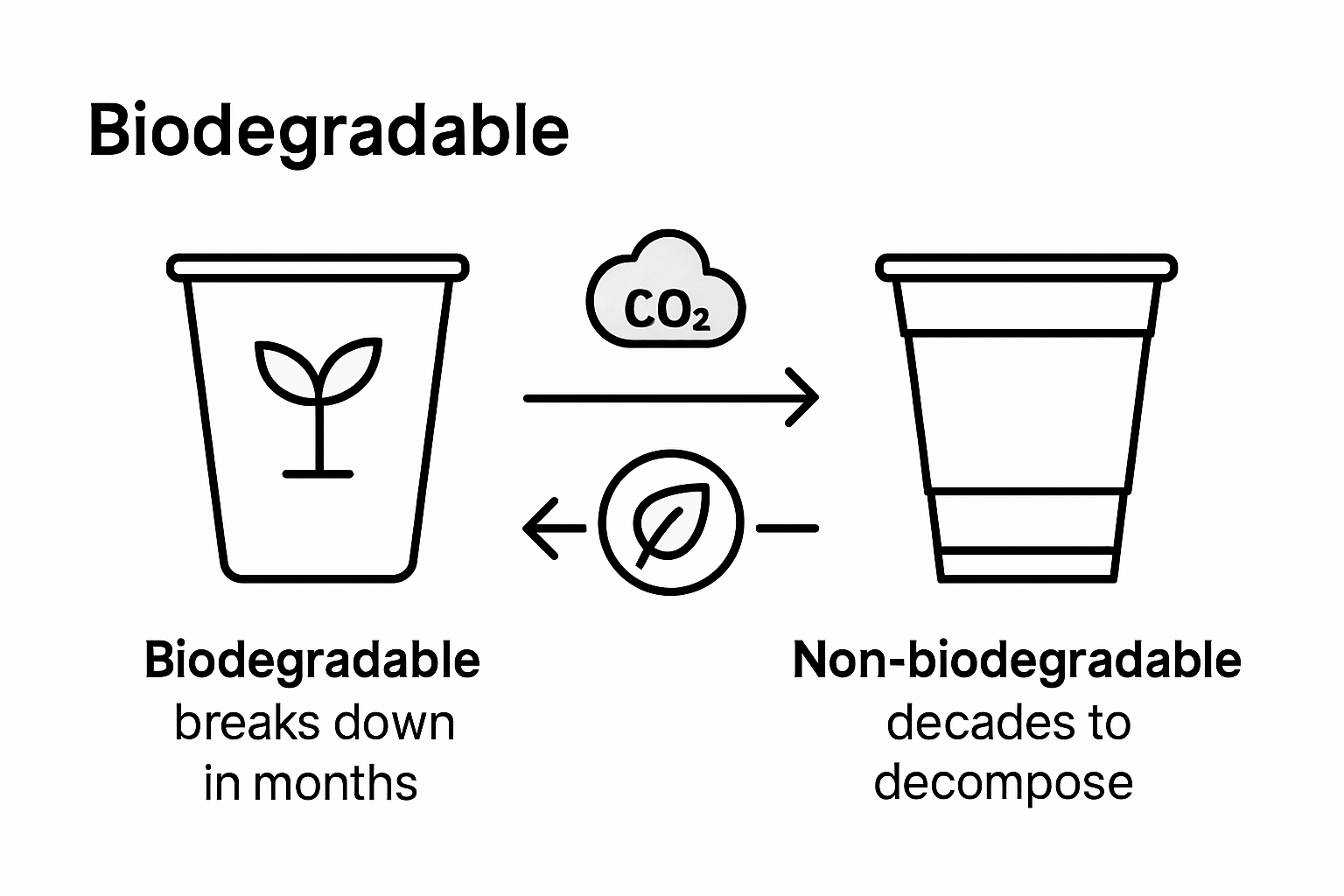
Ultimately, the comparison extends beyond simple material properties. Foodservice professionals must consider lifecycle costs, including environmental externalities, regulatory compliance, and long-term sustainability implications. While sustainable materials might present higher initial investments, they offer substantial strategic advantages through reduced environmental risk, improved brand reputation, and alignment with emerging global sustainability standards.
Elevate Your Sustainability With Eco-Friendly Straw Solutions
The challenge of selecting truly sustainable materials in foodservice is clear. Businesses strive to reduce carbon footprints, ensure biodegradable products, and support circular economy principles while maintaining durability and cost-effectiveness. Your goal is to find practical, eco-conscious alternatives that align with industry standards and demonstrate genuine commitment to environmental stewardship.
At TheOceanStraw.com we understand these critical factors. Our innovative wood and plant-based reusable straws offer a perfect balance of durability, biodegradability, and safe sourcing. Crafted with sustainability certifications and designed to minimize waste, our straws help foodservice operations replace single-use plastics with effective, eco-friendly options proven to reduce carbon emissions and plastic pollution.
Explore how integrating our sustainable straw solutions can enhance your environmental initiatives today.
Discover the difference yourself and make a lasting positive impact. Visit TheOceanStraw.com now to learn about our product specifications, environmental benefits, and wholesale opportunities. Join leading businesses embracing responsible material choices by requesting samples or contacting us for a tailored collaboration. Take the next step in sustainable foodservice procurement with TheOceanStraw.com and become a pioneer in the movement towards eco-friendly dining experiences.
Frequently Asked Questions
What are the key factors that make a material sustainable in foodservice?
Sustainable materials in foodservice are defined by their environmental impact, economic viability, and social responsibility. Key factors include resource efficiency, low carbon footprint, waste minimization, circular economy potential, and performance durability.
How do sustainable materials differ from conventional materials in the foodservice industry?
Sustainable materials generally have a reduced ecological footprint, shorter decomposition times, and are derived from renewable sources, whereas conventional materials, like petroleum-based plastics, tend to have high carbon emissions, longer decomposition times, and rely on finite petroleum resources.
What are some examples of sustainable materials used in foodservice?
Examples of sustainable materials in foodservice include bioplastics made from renewable biological sources, natural fiber containers, recycled plastic alternatives, and biodegradable composites that decompose safely in the environment.
How can foodservice professionals ensure compliance with sustainability standards?
Foodservice professionals should familiarize themselves with relevant certifications and standards, conduct regular audits, maintain detailed documentation of material sourcing and practices, and continuously improve their sustainability efforts to ensure compliance.