
Wildlife Conservation Management: Complete Guide

Wildlife populations around the world have dropped by over 60 percent since 1970, revealing the urgent need for smarter conservation efforts. Protecting animals and their habitats is vital not just for nature but for human well-being, food security, and the future health of our planet. Understanding the science and strategies behind wildlife conservation management helps people, businesses, and communities make informed choices that truly benefit biodiversity and society.
Table of Contents
- Wildlife Conservation Management Defined and Explained
- Key Strategies and Approaches Used Worldwide
- Legal Frameworks and Global Regulations Overview
- Benefits and Industry Impacts for Foodservice
- Integrating Conservation Into Sustainable Business Practices
Key Takeaways
| Point | Details |
|---|---|
| Wildlife Conservation Management | Involves strategic practices aimed at maintaining ecological balance and biodiversity while considering human needs. |
| Integrative Approaches | Effective conservation requires a multidisciplinary strategy that combines scientific research, local insights, and adaptive policies. |
| Technological Integration | Advanced tools such as satellite tracking and data analytics enhance conservation strategies and support informed decision-making. |
| Business Relevance | Integrating wildlife conservation into business practices can enhance brand reputation, ensure supply chain resilience, and attract environmentally conscious consumers. |
Wildlife Conservation Management Defined and Explained
Wildlife conservation management represents a sophisticated scientific approach to protecting and sustaining animal populations and their ecosystems. According to the Food and Agriculture Organization, wildlife management is defined as the strategic application of scientific knowledge and local understanding to steward wild animal populations and their natural habitats in ways that benefit both environmental systems and human societies.
At its core, wildlife conservation management involves a complex set of interconnected practices designed to maintain ecological balance. These practices include species conservation, habitat restoration, population monitoring, and comprehensive research into animal behavior patterns. The ultimate goal is to protect biodiversity while simultaneously considering the intricate relationships between wildlife, their environments, and human populations.
The approach goes beyond simple preservation, focusing instead on proactive intervention and strategic ecosystem maintenance. As outlined by Wikipedia, wildlife management aims to halt biodiversity loss by carefully analyzing ecological principles such as:
- Carrying Capacity: Understanding the maximum population an ecosystem can sustainably support
- Disturbance Dynamics: Evaluating how environmental changes impact wildlife populations
- Ecological Succession: Tracking how ecosystems naturally evolve and transform over time
Successful wildlife conservation management requires a multidisciplinary strategy that integrates scientific research, local knowledge, environmental monitoring, and adaptive policy frameworks. Professionals in this field must balance conservation goals with the complex needs of both wildlife populations and human communities, creating sustainable solutions that protect our planet’s incredible biological diversity.

Key Strategies and Approaches Used Worldwide
Wildlife conservation management employs a diverse range of strategic approaches to protect and restore global ecosystems. Rewilding has emerged as a particularly innovative method for ecological restoration. According to Wikipedia, rewilding focuses on reducing human interference and reintroducing key species, particularly large mammals, to help restore natural ecological networks and promote self-sustaining ecosystems.
One of the most comprehensive global strategies is the Biodiversity Action Plan (BAP), an internationally recognized framework for species and habitat protection. As outlined by Wikipedia, these plans involve a systematic approach that includes:
- Comprehensive biological data compilation
- Detailed conservation status assessments
- Establishing clear conservation and restoration targets
- Developing strategic implementation budgets
- Creating collaborative partnerships across scientific and conservation communities
These strategies are further complemented by several critical approaches that wildlife conservationists employ worldwide. Habitat protection remains a cornerstone strategy, involving the establishment of national parks, wildlife reserves, and protected areas that provide safe environments for diverse species. Population monitoring allows researchers to track species health, migration patterns, and potential threats, enabling proactive intervention when ecological imbalances emerge.
Conservation professionals also utilize advanced technological tools to enhance their strategies. Satellite tracking, drone surveillance, genetic sampling, and advanced data analytics now provide unprecedented insights into wildlife populations. These technologies enable more precise interventions, helping scientists understand complex ecosystem dynamics and develop targeted conservation strategies that balance ecological preservation with sustainable human development.
Legal Frameworks and Global Regulations Overview
The landscape of wildlife conservation is fundamentally shaped by complex legal frameworks and international regulations designed to protect biodiversity and ecological systems. These regulatory mechanisms create a structured approach to environmental preservation, establishing clear guidelines for conservation efforts across different jurisdictions and ecosystems.
Innovative partnerships are playing a crucial role in developing comprehensive conservation models. The Science for Nature and People Partnership (SNAPP), according to Wikipedia, collaborates with public, voluntary, and private sector organizations worldwide to transform the relationship between human societies and natural environments. This collaborative approach helps create more nuanced and effective legal frameworks that balance ecological preservation with sustainable development.
Conservation managers utilize sophisticated analytical tools to enhance regulatory effectiveness. Gap analysis emerges as a critical technique in this process. As explained by Wikipedia, this tool helps identify critical areas where current conservation lands may be insufficient, allowing policymakers to improve the representativeness and effectiveness of protected areas in preserving biological diversity.
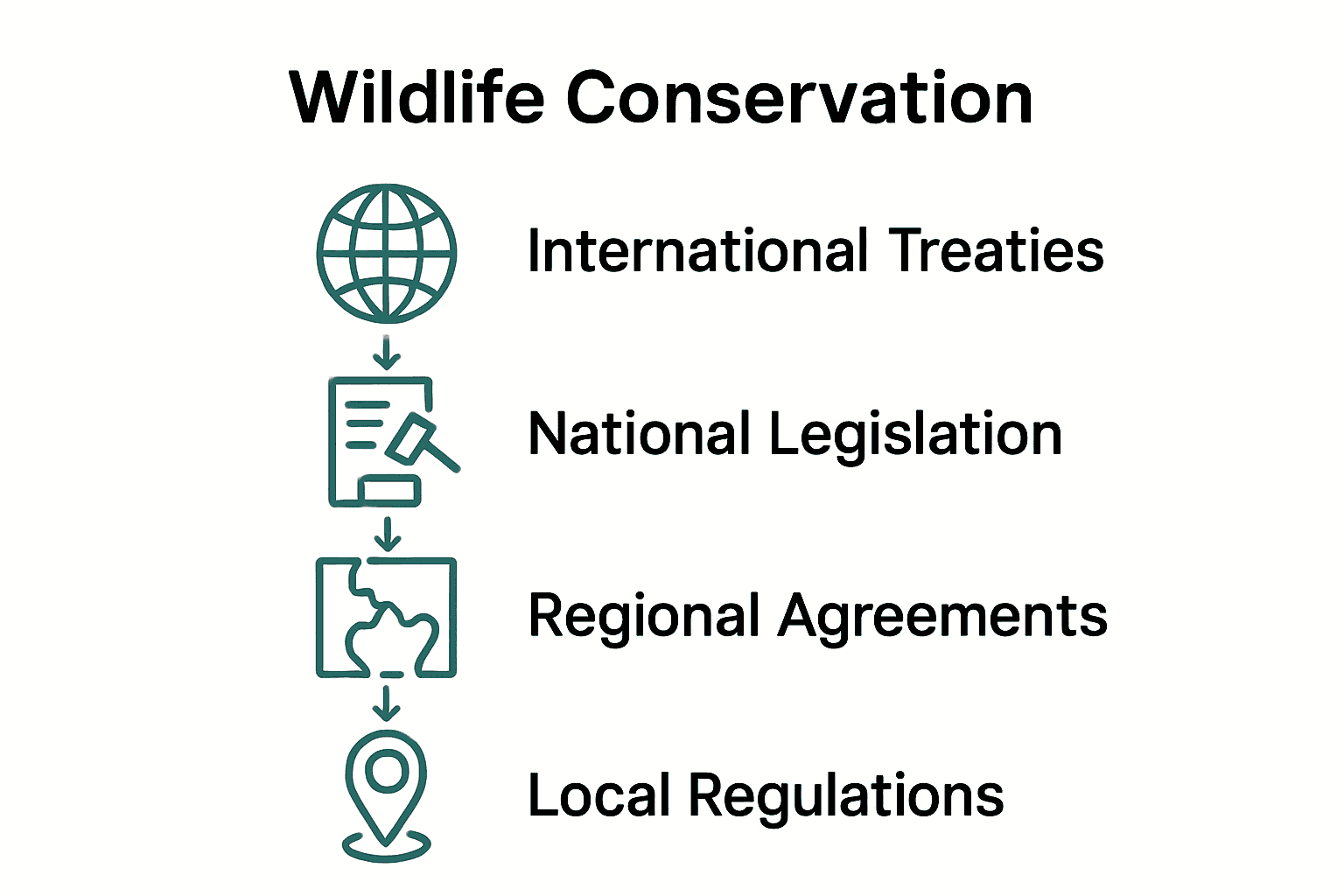
Global wildlife conservation regulations typically operate across multiple levels:
- International Treaties: Establishing cross-border protection standards
- National Legislation: Implementing country-specific conservation policies
- Regional Agreements: Coordinating ecosystem protection among neighboring jurisdictions
- Local Regulations: Providing ground-level enforcement and management strategies
These legal frameworks are continuously evolving, adapting to new scientific understanding, technological capabilities, and emerging environmental challenges. The most effective regulations combine scientific research, stakeholder engagement, and flexible implementation strategies to create meaningful protection for wildlife and their habitats.
Benefits and Industry Impacts for Foodservice
Wildlife conservation management offers profound implications for the foodservice industry, extending far beyond environmental protection. According to the Food and Agriculture Organization, wildlife plays a critical role in supporting national economies through diverse channels, including tourism and sustainable resource management, ultimately providing essential provisioning services that generate food and income for communities worldwide.
The interconnection between wildlife conservation and foodservice is deeply complex and multifaceted. As outlined by Wikipedia, sustainable wildlife practices ensure the availability of critical resources that directly impact food production systems. This means maintaining healthy ecosystems becomes a fundamental prerequisite for long-term food security and industry sustainability.
Key benefits for the foodservice industry include:
- Ecosystem Stability: Preserving biodiversity ensures consistent agricultural productivity
- Supply Chain Resilience: Protecting wildlife habitats maintains reliable food ingredient sources
- Sustainable Sourcing: Supporting conservation enables responsible ingredient procurement
- Brand Reputation: Demonstrating environmental commitment attracts eco-conscious consumers
Progressively minded foodservice businesses are recognizing that wildlife conservation is not just an environmental imperative but a strategic business advantage. By integrating conservation principles into procurement, menu development, and operational strategies, restaurants and food providers can create more resilient, ethical, and forward-thinking business models that respond to growing consumer demand for sustainable practices.
Integrating Conservation Into Sustainable Business Practices
Businesses today are increasingly recognizing the critical importance of integrating wildlife conservation principles into their operational strategies. According to Johns Hopkins Press, effective conservation management requires a sophisticated approach that combines specialist knowledge with practical skills, emphasizing the delicate balance between human economic activities and ecological preservation.
The integration of conservation practices demands a multifaceted approach that goes beyond traditional environmental compliance. Sustainable business practices now require deep understanding of ecological systems and proactive engagement with conservation principles. As highlighted by University of South Wales, this approach involves comprehensive environmental assessment techniques and specialized knowledge that transforms how organizations interact with their surrounding ecosystems.
Key strategies for successful conservation integration include:
- Stakeholder Collaboration: Developing partnerships with conservation organizations
- Environmental Impact Assessment: Conducting thorough ecological evaluations
- Resource Efficiency: Minimizing ecological footprint through strategic resource management
- Transparent Reporting: Documenting and communicating conservation efforts
Businesses can leverage conservation integration as a significant competitive advantage. By demonstrating genuine commitment to ecological preservation, organizations can enhance their brand reputation, attract environmentally conscious consumers, and contribute to long-term global sustainability. This approach transforms conservation from a compliance requirement to a strategic business opportunity that creates value for both the organization and the broader ecosystem. Learn more about measuring environmental impact in our guide on sustainable business practices.
Drive Real Impact with Sustainable Choices in Wildlife Conservation
The article highlights critical challenges in wildlife conservation management such as balancing ecosystem stability and human activity. Protecting biodiversity while ensuring sustainable resource use demands thoughtful solutions that reduce pollution and habitat disturbance. If you are aiming to support ecosystem health and align with conservation goals like habitat protection and sustainable sourcing, adopting eco-friendly alternatives in your business can make a big difference.
At TheOceanStraw.com, we understand the urgency behind preventing biodiversity loss through responsible consumer products. Our durable, plant-based reusable straws offer a practical way for the foodservice and hospitality industry to reduce plastic waste—a major threat to wildlife habitats. By switching to sustainable straws, you decrease environmental disturbance and contribute directly to ecological balance, reflecting the wildlife management principles detailed in the guide.
Take action today to support wildlife conservation with conscious purchasing decisions. Explore how The Ocean Straw can help your business lead with sustainability and make a lasting positive impact. Request samples, check wholesale options, and integrate eco-smart solutions into your operations to honor the delicate relationship between humans and nature. Visit TheOceanStraw.com and become a part of the solution now.
Frequently Asked Questions
What is wildlife conservation management?
Wildlife conservation management is a scientific approach aimed at protecting and sustaining animal populations and their ecosystems through practices like species conservation, habitat restoration, and population monitoring.
What are the key strategies used in wildlife conservation management?
Key strategies include habitat protection, population monitoring, rewilding, and implementing Biodiversity Action Plans to assess and improve species and habitat conservation efforts.
How does wildlife conservation impact the foodservice industry?
Wildlife conservation impacts the foodservice industry by ensuring ecosystem stability, which leads to consistent agricultural productivity, supply chain resilience, sustainable sourcing, and improved brand reputation among eco-conscious consumers.
How can businesses integrate wildlife conservation into their practices?
Businesses can integrate wildlife conservation by collaborating with conservation organizations, conducting environmental impact assessments, improving resource efficiency, and transparently reporting their conservation efforts.